Arnaud Lallement: one product, one garnish, one sauce
L’Assiette Champenoise, Tinqueux (Reims)
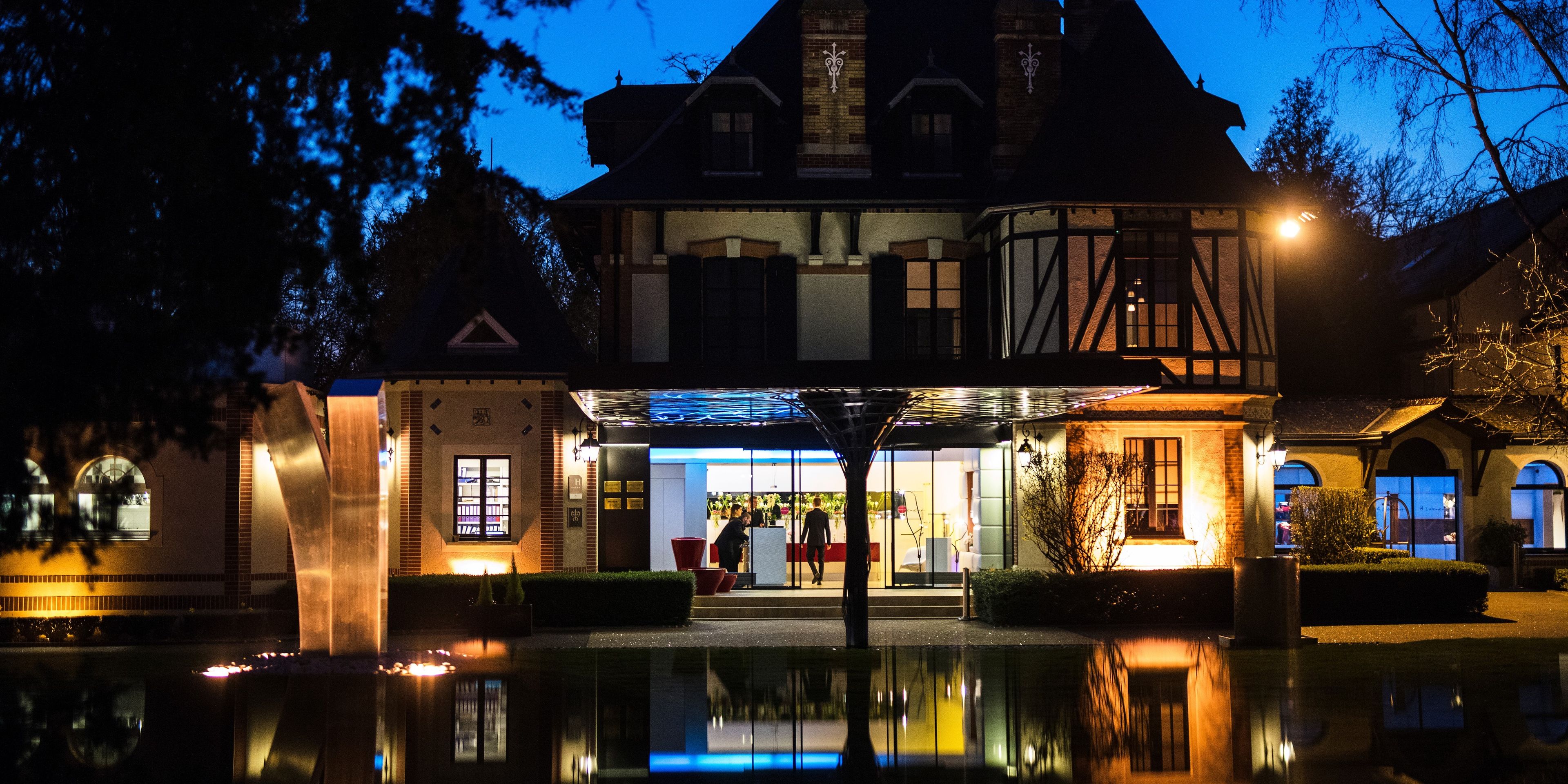
Tinqueux is not central Reims. It is the outskirts, west of the city: a primary school, a bus stop, a petrol station. In the middle, a large neo-Norman house with a garden. It looks comfortable; it is not a palace. This is where the Lallement family moved at the end of the 1980s, and where Arnaud Lallement defends an idea of fine dining that is simple to state and hard to achieve: one product, one garnish, one sauce.
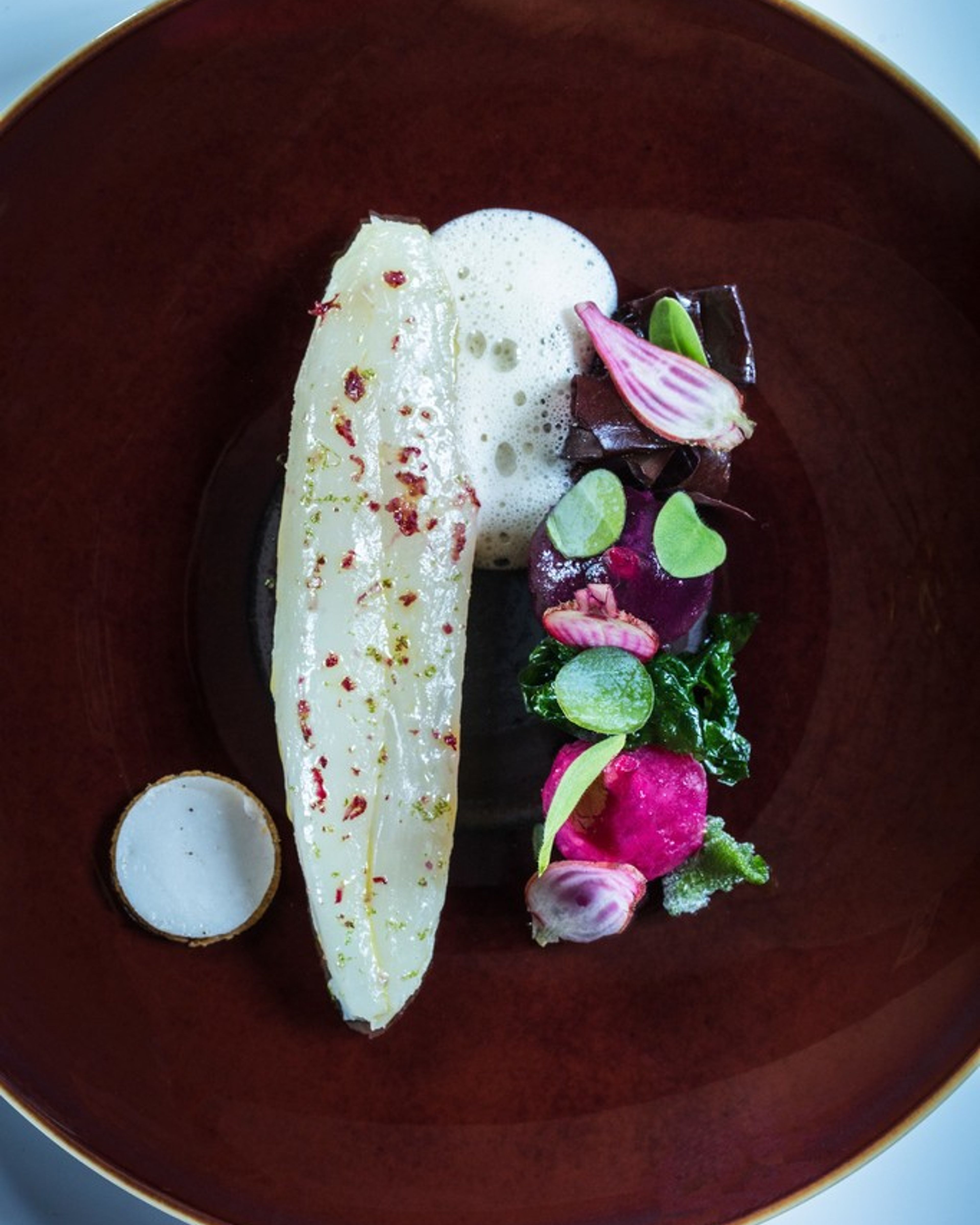
The royal langoustine is seared for one minute on the plancha, flesh side only, seasoned with lime, smoked sweet chilli oil and paprika, then served with a creamy nage made from its roasted heads. Breton turbot comes with confit pearl onions and a vin jaune sauce. The Onjon squab pie, a house classic, embraces the legacy of grand French cooking: puff pastry, flavourful meat, reduced jus, romaine lettuce. Nothing tries to make you forget what you are eating.
The formula sounds austere; on the plate it is not. It describes how a dish is built rather than how many preparations go into it: his father’s lobster involves about ten, but what you eat is the lobster and its sauce. For Lallement, simplicity means neither minimalism nor renunciation. It means removing whatever distracts from the essential. A langoustine must taste of langoustine, a turbot of a great fish, a sweetbread of sweetbread. The cook still has to find the right cooking and build a balance around the product precise enough that nothing masks it. Technique serves the pleasure of the person eating: a dish that is clever or technically flawless is not enough; it has to be good, and make you want to come back. The chef sums it up in two words: “Manger vrai” — eat real food.
The sauce at the centre
To understand this cooking, you have to talk about sauces — not as an accompaniment, but as part of the structure of the dish. Lallement works with a repertoire of jus, reductions, broths, nages, emulsions, sabayons and vinaigrettes: a sauce drawn from lobster heads, a concentrated pigeon jus, a shellfish broth worked on acidity, sauce poulette, a sherry sauce. The Champagne terroir comes in through Reims vinegar and Reims mustard, used in many recipes, and a Coteaux Champenois sauce.
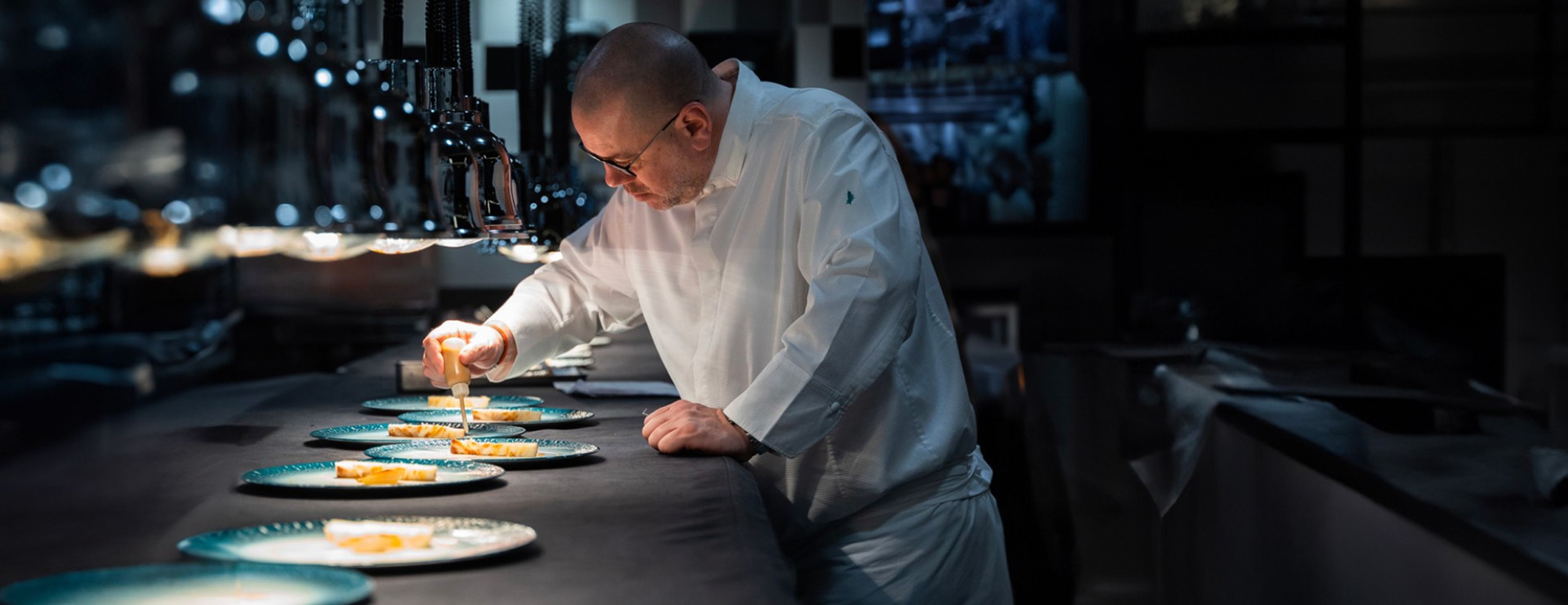
His cookbook shows it: the basic preparations fill its entire first part, and each dish offers, besides its own sauce, two to five alternatives. Some require several successive steps — reductions, infusions, adjustments of acidity and seasoning: work the guest never sees.
Japanese ingredients extend this vocabulary without erasing its French accent. They are confined to condiments: a series of house misos (smoked cabbage, turmeric, langoustine, walnut, onion, whisky) baked with sake, mirin and egg yolk, along with yuzu, shiso, ponzu and sansho pepper.
At the table, the sauces stay within the guests’ reach. They help themselves with a spoon, dip their bread, and carry on after the main product is gone. An almost domestic gesture that says a great deal about his idea of hospitality.
The Audierne lobster
The dish that explains the rest is a lobster. Summer 1978: Arnaud Lallement is four. Returning from a boat trip off Finistère, the family is invited by Adolphe Bosser, chef of Le Goyen in Audierne, to lunch at a fisherman’s home. In a pot, a lobster simmers with small potatoes in a creamy sauce of shallot, paprika and Sauternes. The boy tastes it. Back in Champagne, he asks his father to put the dish on the menu; his father agrees. That day, he says, he knew he would be a cook.
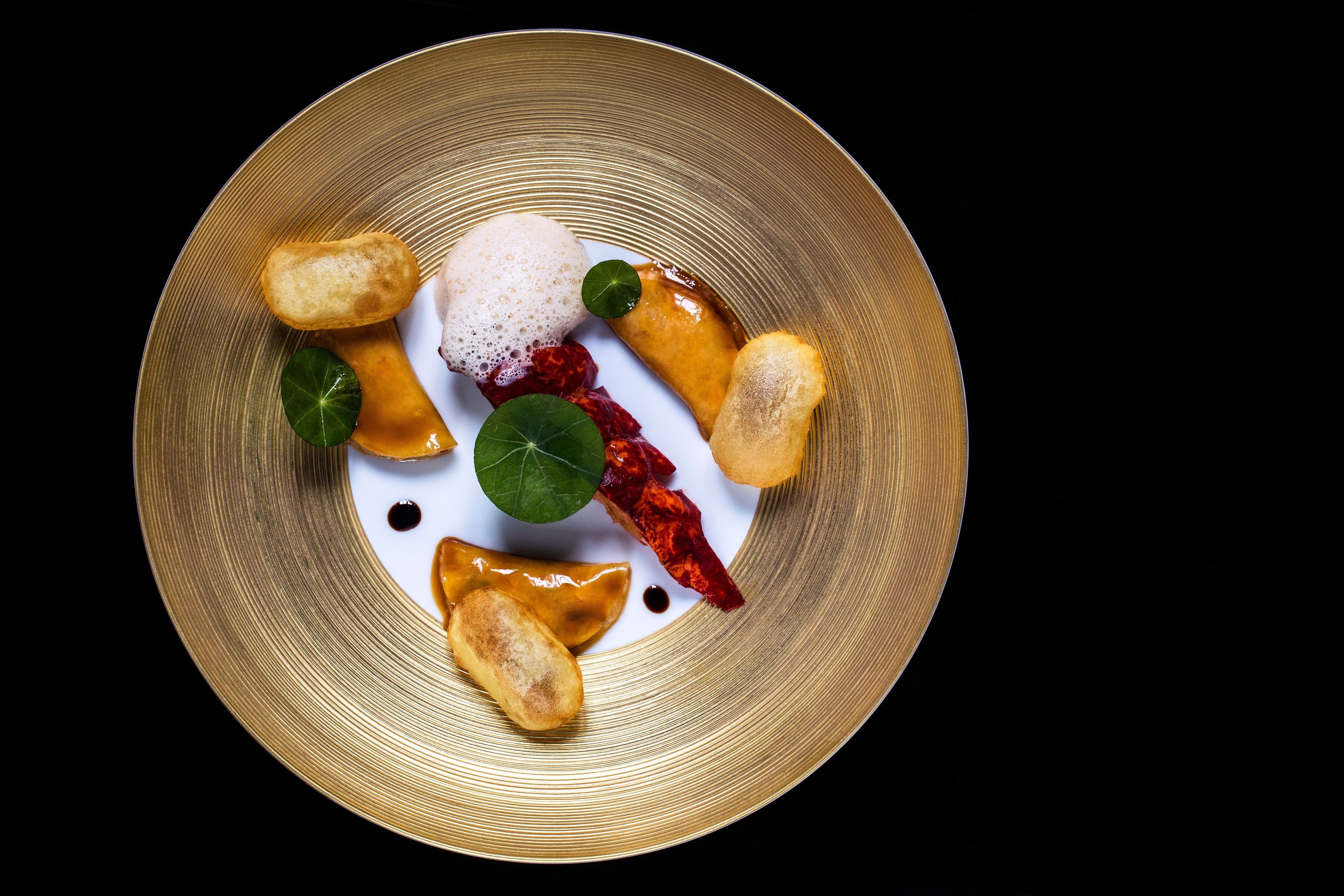
The dish stayed on the menu, and it evolved. The blue lobster “hommage à mon papa” is warmed at 45 °C in a lobster butter with paprika and coral, served with a potato tricorne filled with claw meat and a lobster boudin smoked over vine cuttings. The sauce keeps the Audierne base: shallot, paprika, sweet wine and cream, lifted with Kari Gosse, the Breton curry.
The path
His parents, Jean-Pierre in the kitchen and Colette front of house, opened L’Assiette Champenoise in 1975 in Châlons-sur-Vesle, in the Marne. Arnaud Lallement, born in Reims in 1974, grew up above the restaurant; the smells of the kitchen rose to his bedroom. He trained with Roger Vergé in Mougins, Michel Guérard in Eugénie-les-Bains and Alain Chapel in Mionnay, then returned at twenty-three to the family house, which had meanwhile moved to the Château de La Muire in Tinqueux, to cook alongside his father.
Their time together was brief: Jean-Pierre Lallement died in 2002. His son had to take over the kitchen alone, carry on the family’s work and find his own voice. He responded by taking elements away rather than adding them. “To avoid mistakes, I removed elements out of caution and prudence. My style became purer,” he explains. What might have looked like a young chef’s caution became his rule. His cooking has matured without a break: refining an idea, stripping a dish of artifice, getting more intensity from familiar means.
Two terroirs
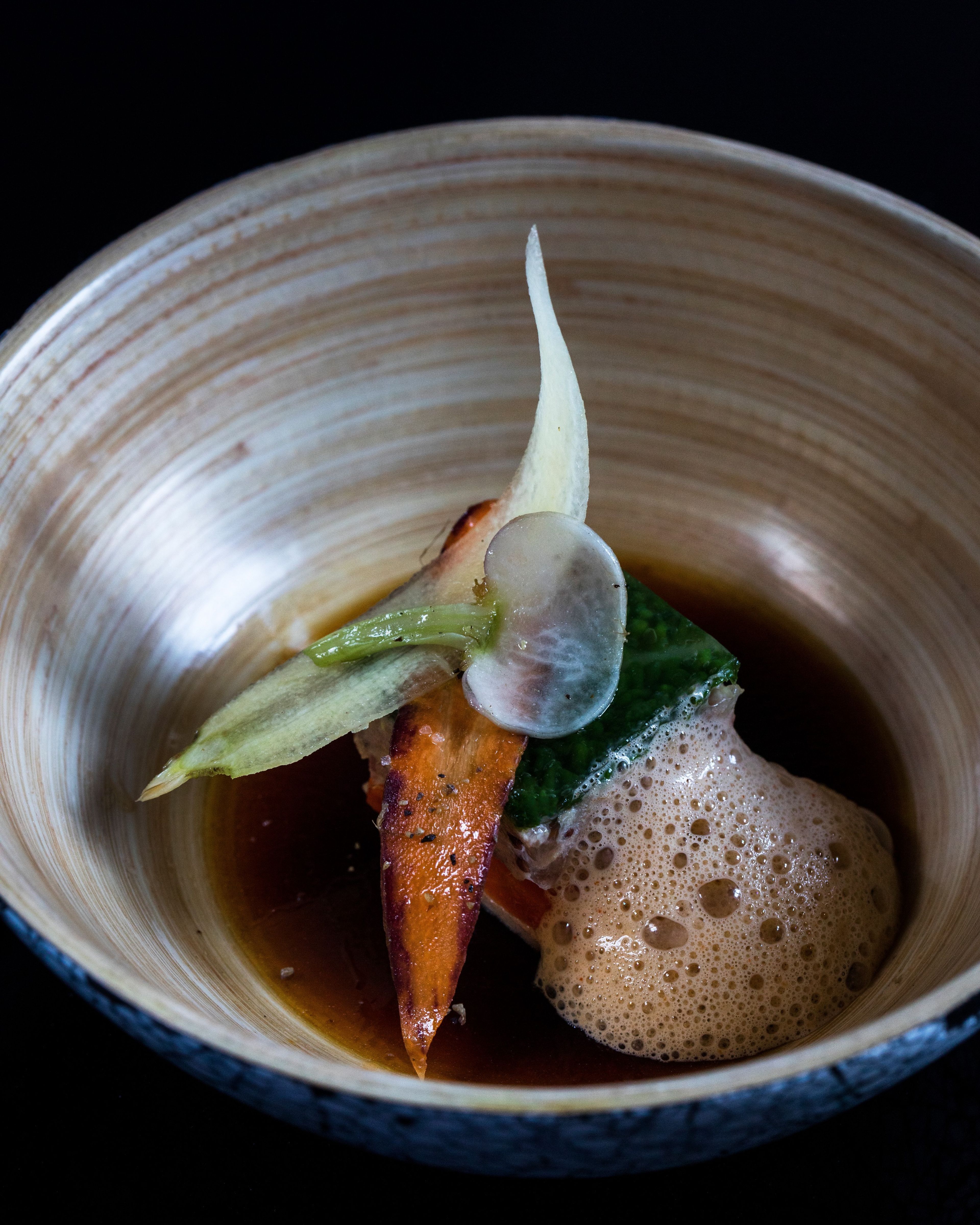
Champagne is everywhere: in the glasses, in the produce, in long-standing relationships with market gardeners and farmers. For thirty years Lallement has put their names in the titles of his dishes: B. Deloffre round radishes and celeriac, M. Guillot turnips and fennel, P. Richard tomatoes, J.-S. Caillot beetroot, S. Laluc milk-fed lamb, raspberries from Louise-Anaïs Viard. The honey comes from the hives in the garden, as do the small salad leaves.
Brittany, his mother Colette’s home region and the setting of the 1978 lobster, supplies the sea: blue lobster, langoustines, sole, turbot, pollack, John Dory, Roscoff crab. L’Assiette Champenoise is less a regional kitchen than a meeting of these two terroirs.
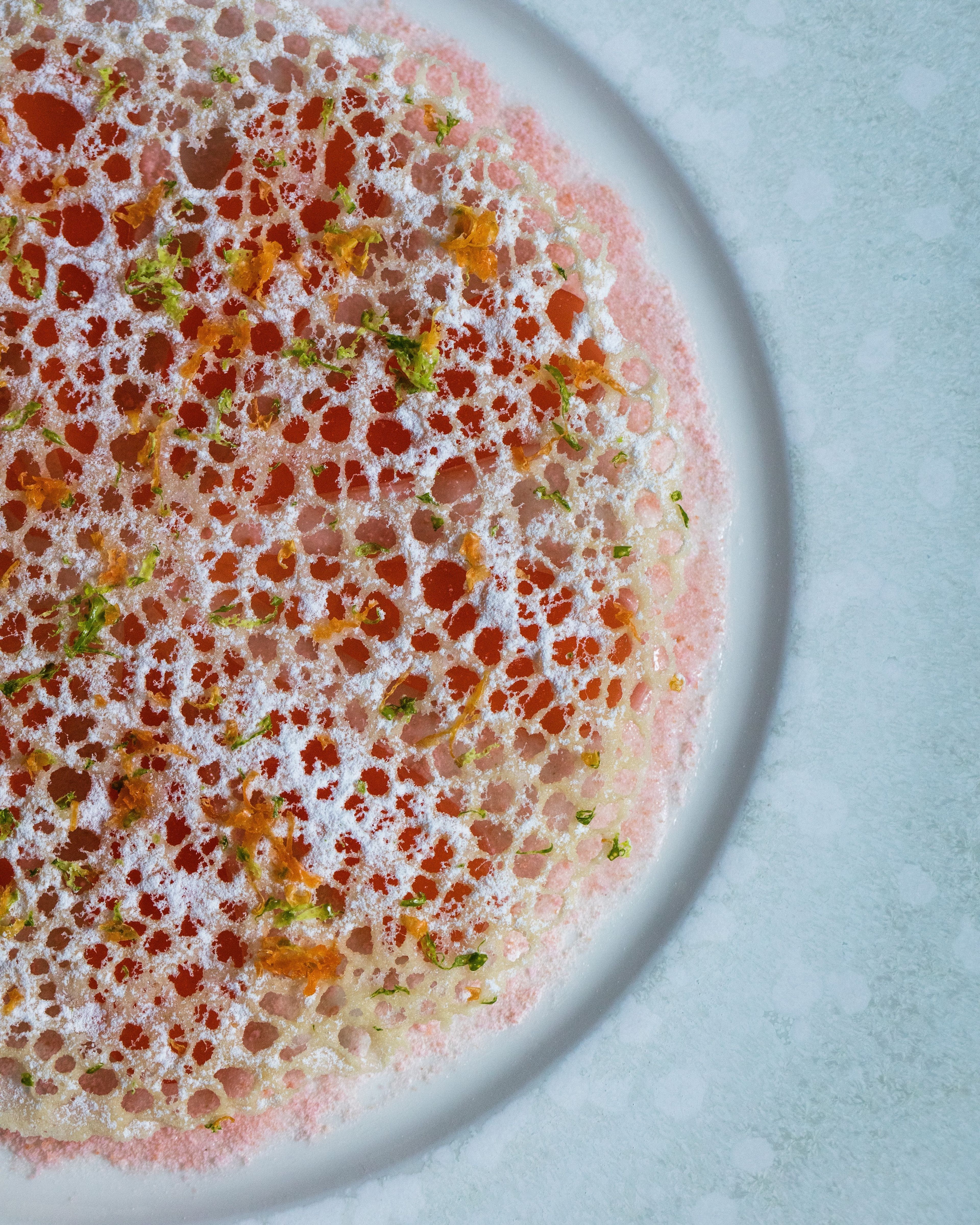
The champagne follows the same logic. Lallement does not stick to the major champagne houses: he pairs most of his dishes with growers’ champagnes, chosen to extend the flavours, particularly the salinity of seafood. Frédéric Savart goes with the royal langoustine, Jérôme Prévost with his father’s lobster, La Côte Faron from the Jacques Selosse estate with the milk-fed lamb, Benoît Lahaye with the sole. The major houses have their place when the dish calls for it, as with Krug 2008 and the turbot in vin jaune sauce. The desserts (Schaller-Bachès citrus, Tuma Yellow chocolate, Sicilian pistachio, honey from the house hives with milk jam) are paired with Champagne ratafias.
An independent house
L’Assiette Champenoise is more than its chef. Colette, his mother, there since opening day, remains the memory of the house. Magali, his wife, welcomes the guests. Mélanie, his sister, runs the establishment and the hotel. Florent Romby, his brother-in-law, leads the dining room. In the kitchen, his sous-chef Cyril has worked alongside him for twenty-five years, Grégory on desserts for fifteen, and his son Brice has joined him.
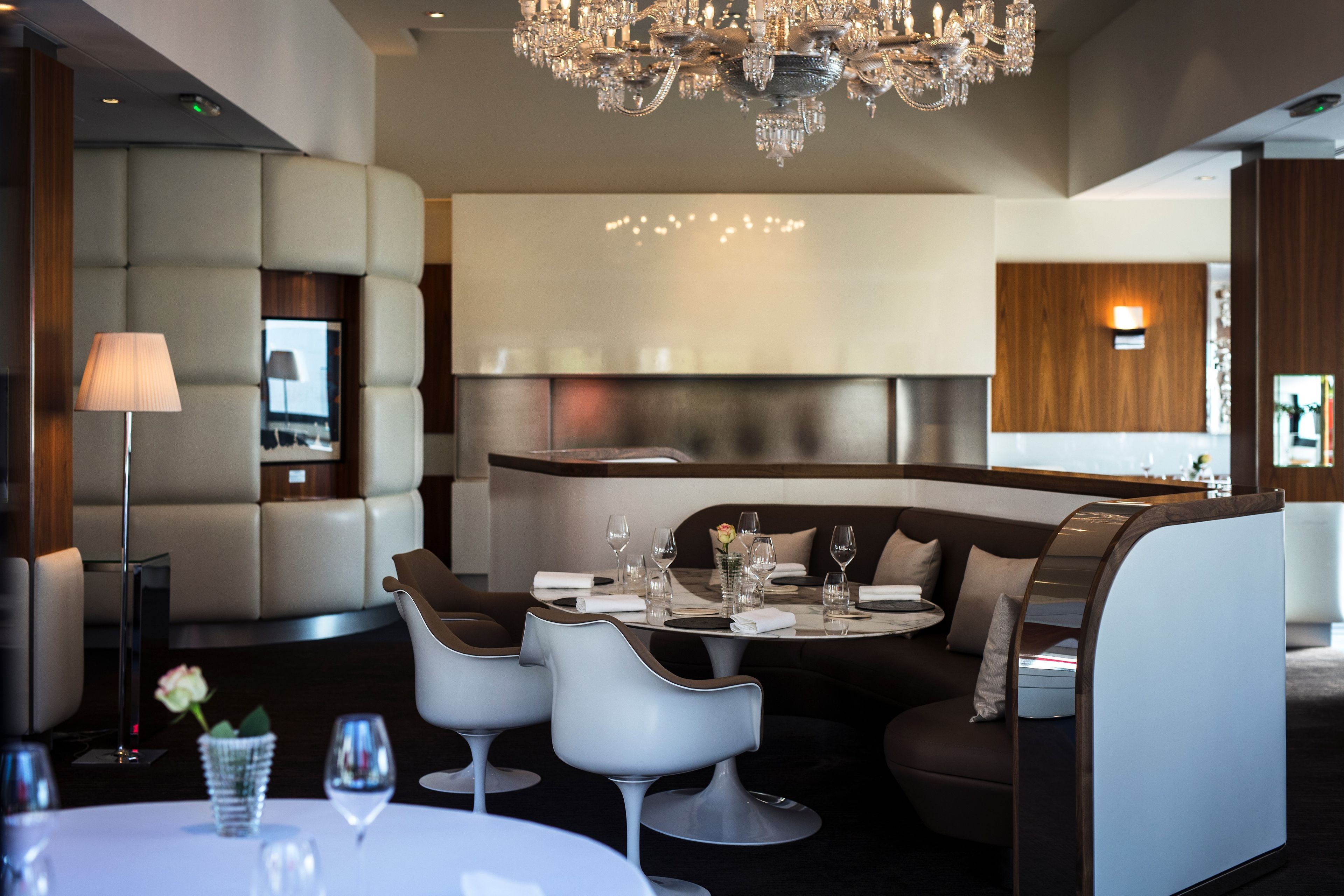
This continuity has become rare. Many top restaurants now belong to hotel groups, investors or luxury brands, and the chef works for an owner. L’Assiette Champenoise remains in the hands of the family that runs it — which has not stopped it from ranking 2nd in La Liste from 2022 to 2025.
With Brice, a third generation is in the kitchen. What is handed down here, Arnaud Lallement himself received from three cooks: Roger Vergé, Michel Guérard and Alain Chapel. That was French cooking at the end of the twentieth century: stocks, jus, reductions, sauces mounted with butter or cream, a product cooked just right. With them, a plate was judged in the mouth, not on a screen. It was an apprenticeship in cooking itself.
All three published their cooking in the same collection, “Les recettes originales de…” from Robert Laffont: Guérard in 1976, Vergé in 1978, Chapel in 1980. Chapel’s book was titled La cuisine, c’est beaucoup plus que des recettes — cooking is much more than recipes. Nearly half a century later, their pupil joins the same collection, and his book applies that title. What he passes on is not a list of recipes but a method: stocks and jus made in-house, precise cooking and seasoning, producers’ names on the menu, sauces left on the table.
The Audierne lobster is the example. Jean-Pierre Lallement put it on the menu because his four-year-old son asked him to; that son turned it into a tribute to his father. The sauce keeps its base: shallot, paprika, sweet wine and cream. What Brice will make of this house, no one can yet say. He inherits what Chapel called “much more than recipes”.
 99.0