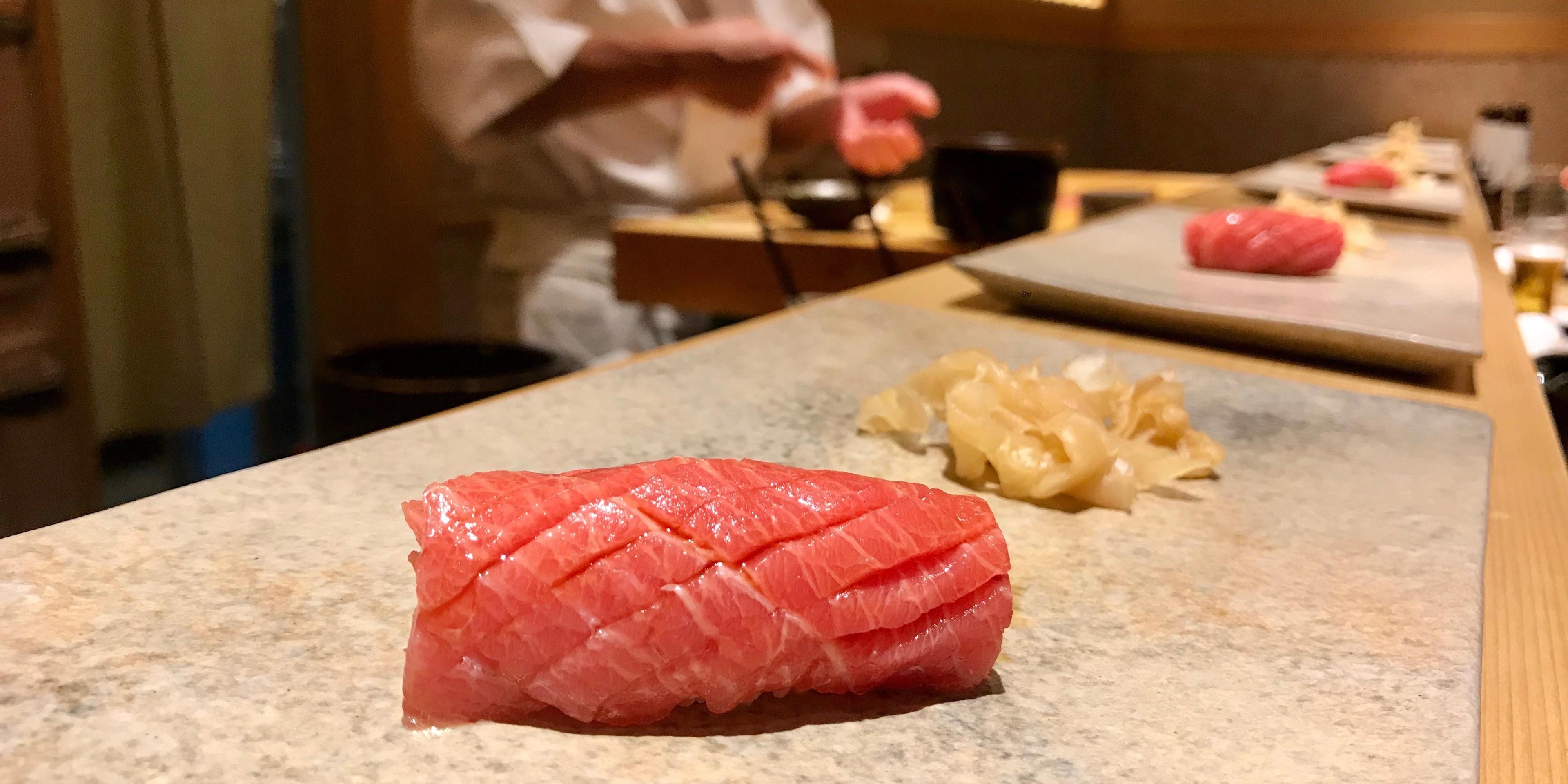
Sushi Saito is on the ground floor of the ARK Hills South Tower in Roppongi, in a corner of an office building. Behind the noren are two doors and two counters: one where Takashi Saito works, and one staffed by chefs he trained. His own counter takes bookings only from existing customers.
His favourite words, he says, are "orthodox" and "simple". He is not looking for new tastes. Almost everyone knows what tuna, sea bream, flounder or conger eel taste like; his work is to make those familiar fish as good as they can be. Buying the best fish is a given. The rest is reading it: the same fish is in a different state every day, and the work has to change with it.
THE RICE
The shari is a blend of several aged rices, stored for a year, which are drier and firmer than new rice. It is seasoned with salt and a mix of several red vinegars. The vinegar stays mild; the salt gives the rice its presence. The seasoning is set against tuna, which fixes the baseline, and the temperature of the rice changes with the fish it carries. A light flounder is served so that the guest can taste what the rice does.
THE CUT
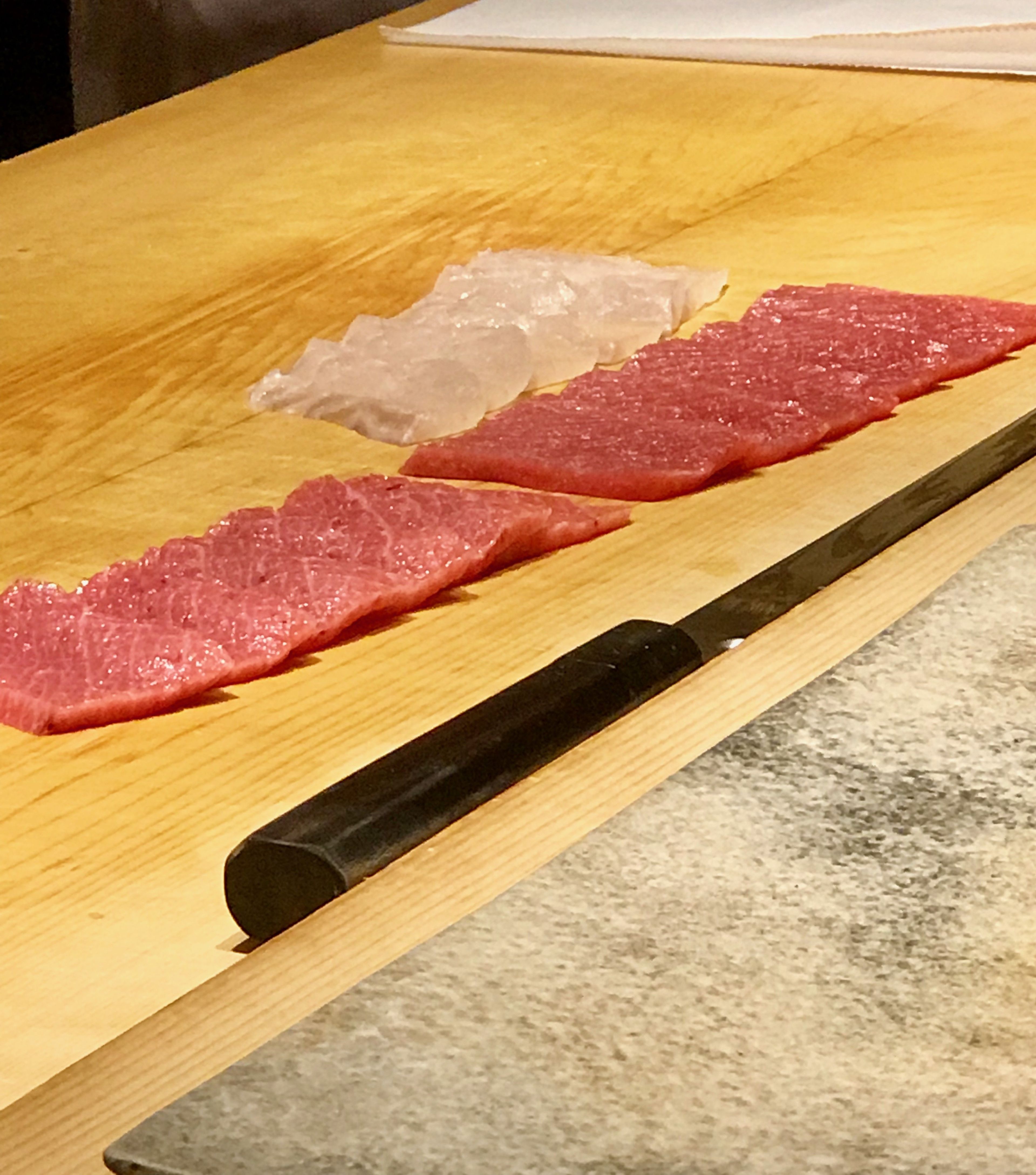
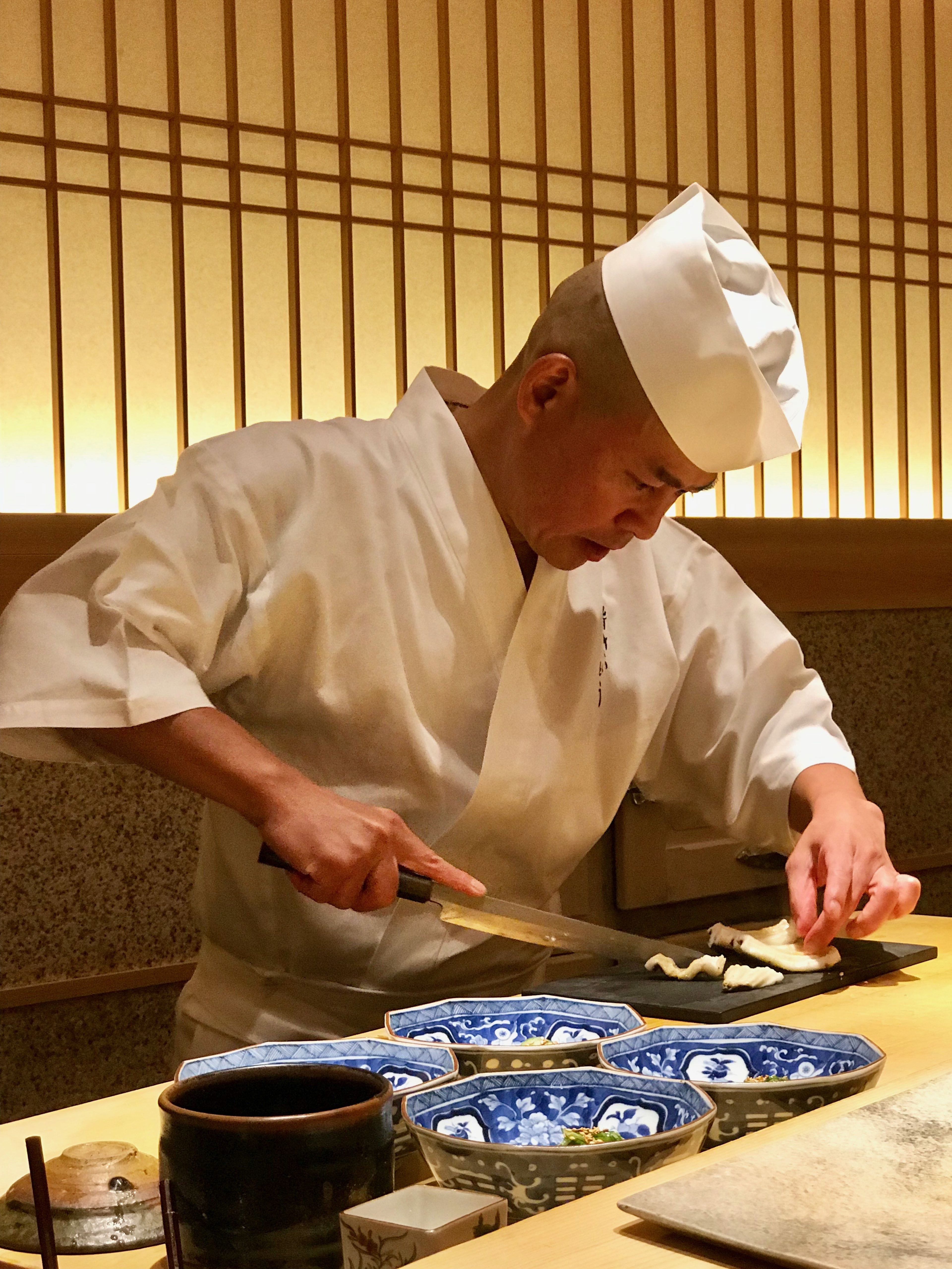
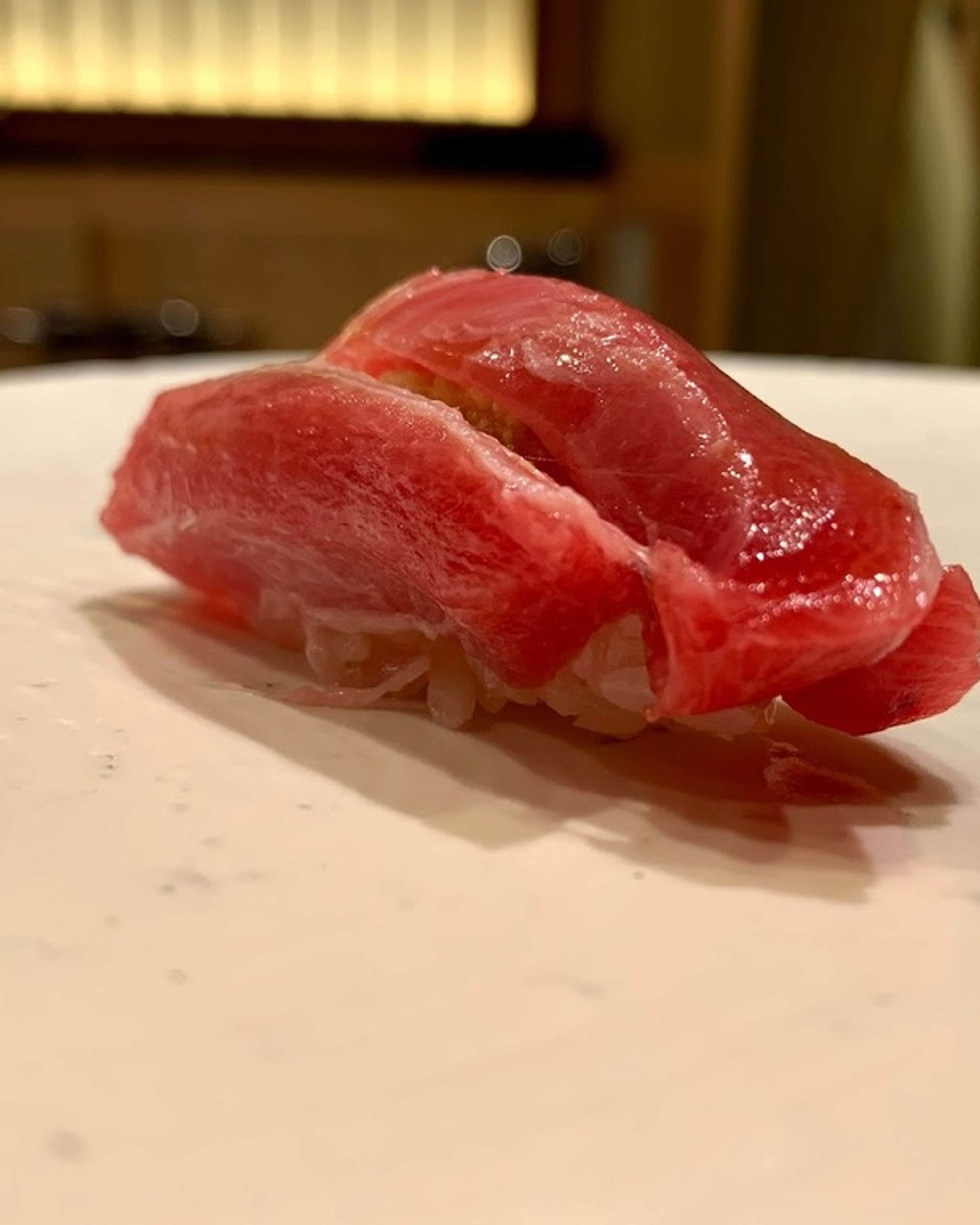
"Sushi lives and dies by the cut," Saito says. With nigiri, the balance between fish and rice decides almost everything, and that balance starts with the knife. Even the best tuna from Yamayuki, the Toyosu wholesaler, will not make good sushi if it is cut the same way every day. He reads how the sinews run and where the fat sits, then decides the thickness of the slice and the width of the cut face. After that he adjusts the rice and the amount of nikiri soy brushed on top to the state of the fish that day. He starts from how the piece should come together in the mouth and works backward.
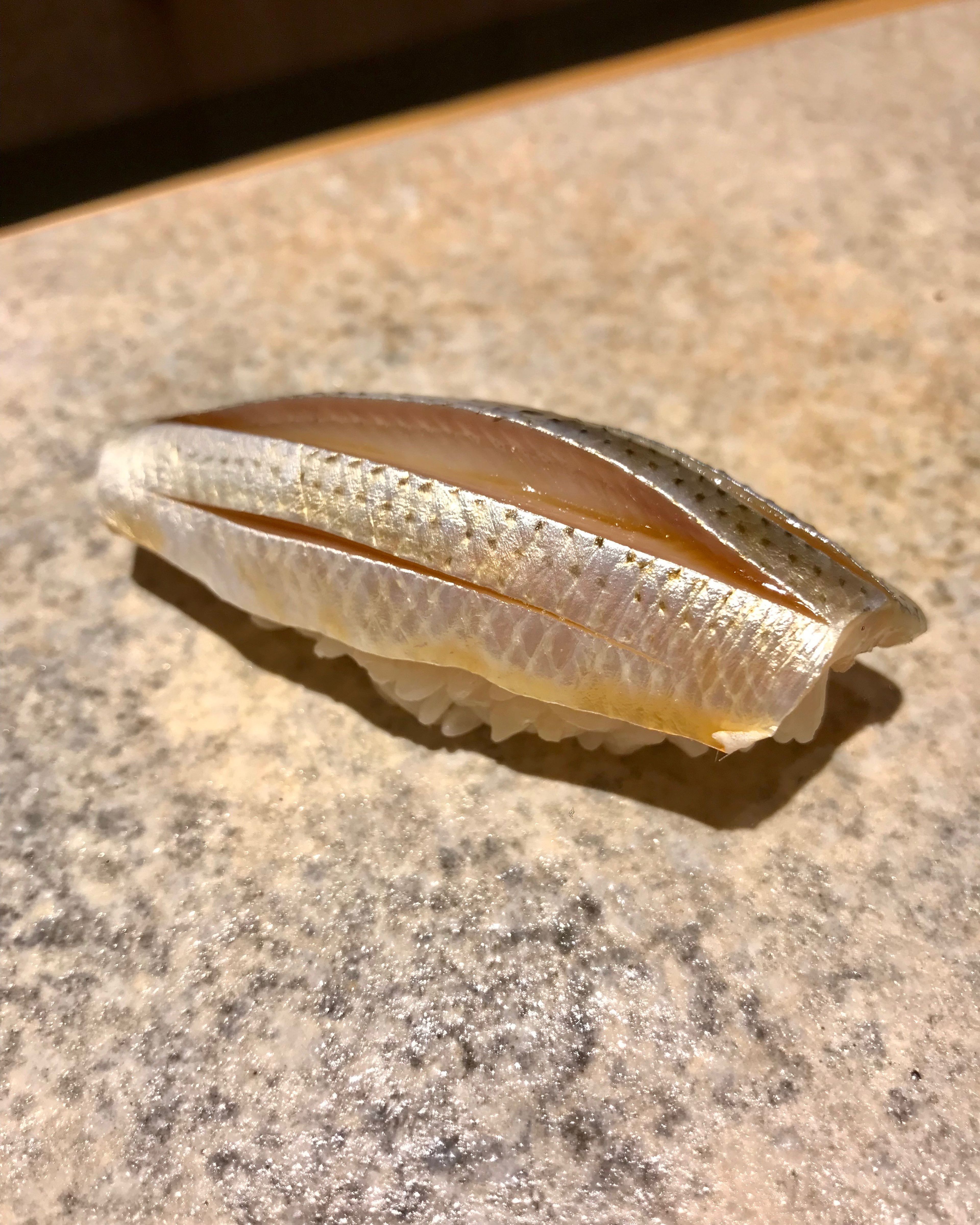
The seasons show in the work. Lean akami has a fresh acidity in summer and gains sweetness and depth in winter; it is dipped in soy for an instant. Kohada is salted and rested for a time Saito adjusts every day. In August the young shinko is thin and soft, so two fillets go on one piece; from autumn the flesh thickens and he scores the skin. Akagai is chosen for its scent and its bite. Prawns are cooked and served warm. Simmered anago, still warm, closes the nigiri.
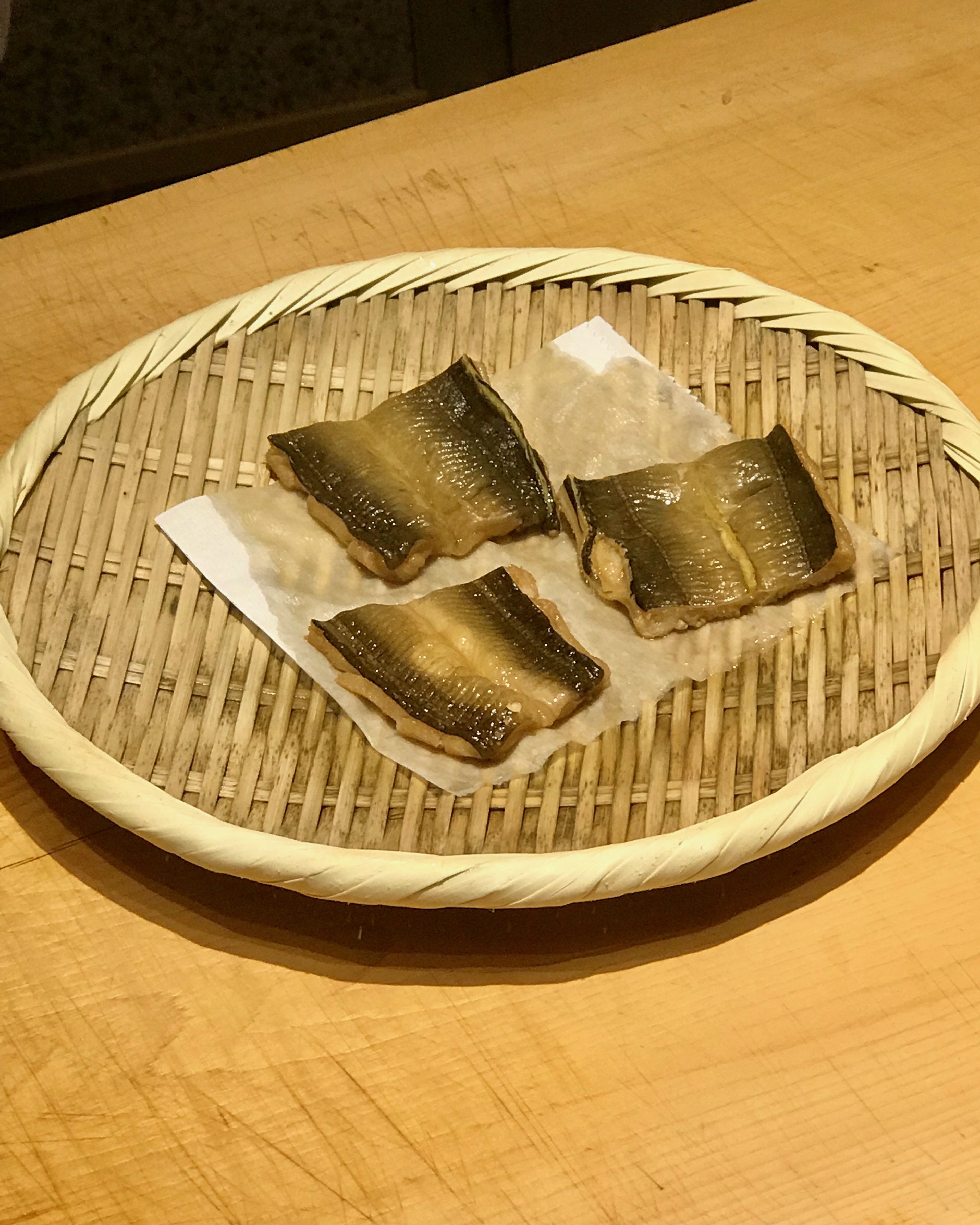
Before the nigiri come small dishes: hairy crab, steamed abalone, grilled nodoguro, seared bonito, and the simmered octopus that is the house tsumami. It took him almost ten years to make it tender while keeping the gelatinous layer between skin and flesh.
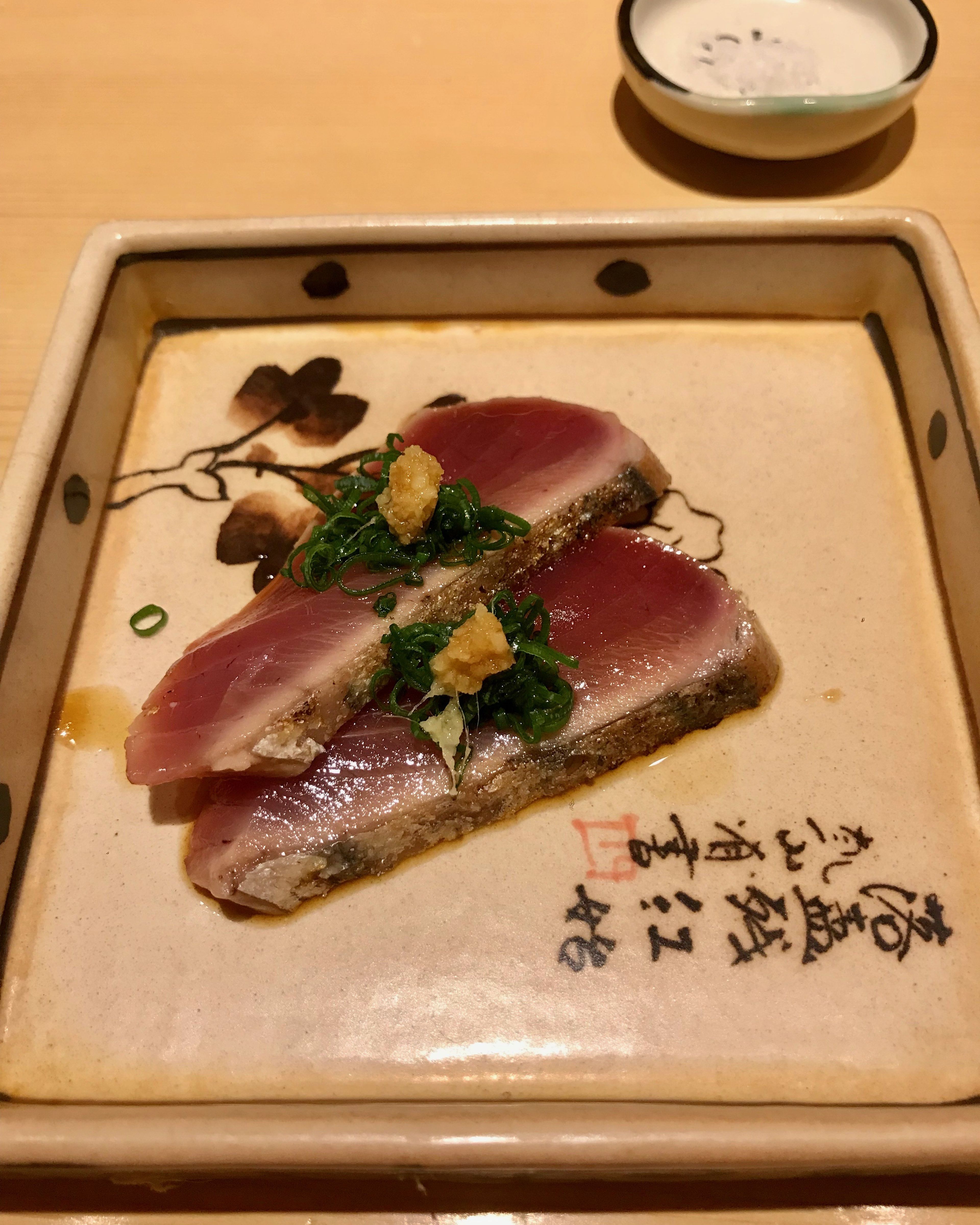
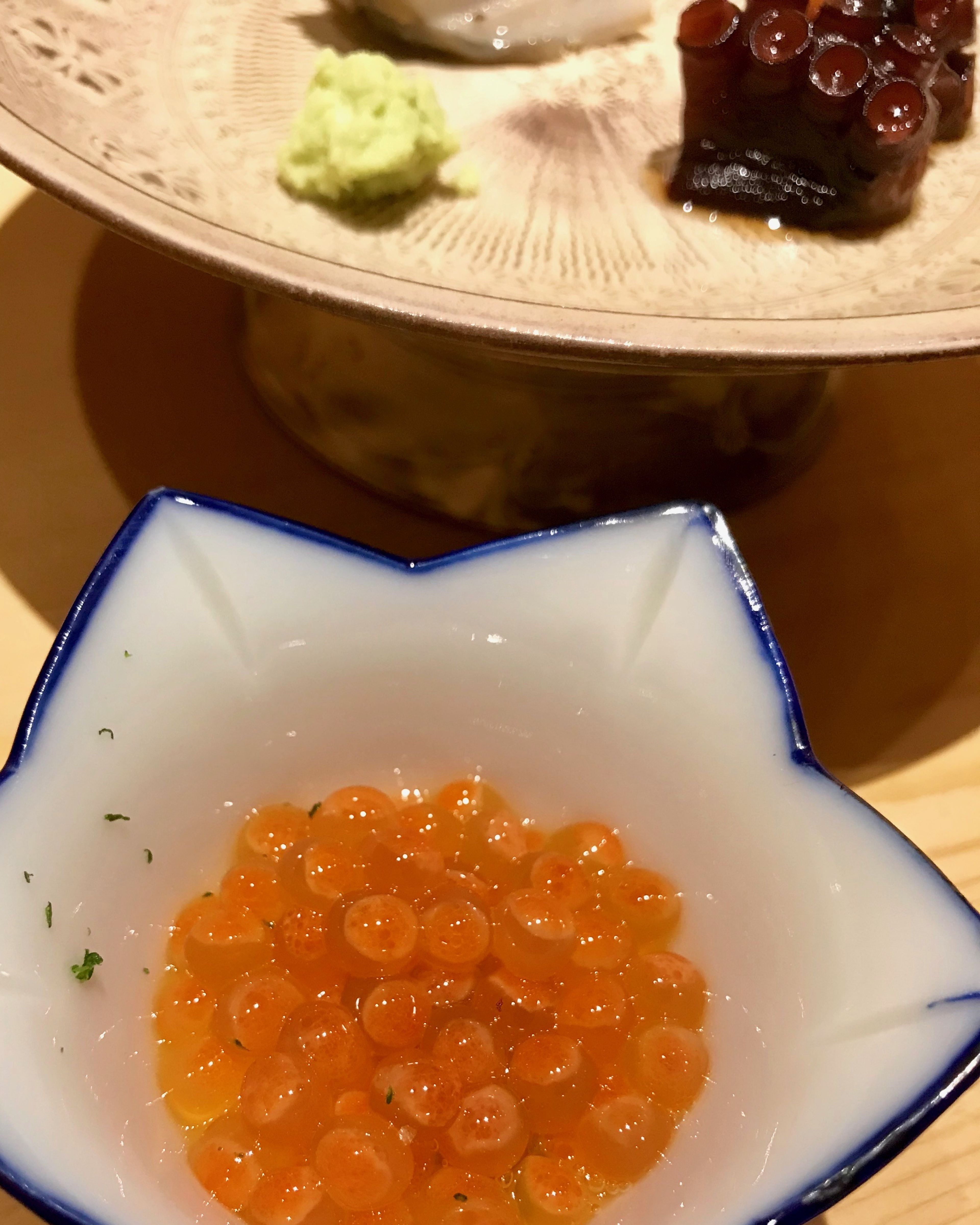
The prep is done before service, so at the counter everything about the fish and the rice is already decided. When he cuts, he is fully focused. Forming the nigiri no longer takes thought: once the rice is in his hand, his body does the work.
THE PATH
Saito was born in 1972 in Yachiyo, in Chiba Prefecture, outside any sushi family. At school he played baseball and admits he had not thought much about his future. In high school he worked part-time at a fish shop, and the owner took him to a local sushi restaurant. The master behind the counter impressed him, the customers were smiling, and Saito thought it was a good job. The master advised him to train at a first-class house, and at eighteen he started at a famous restaurant in Ginza.
The apprenticeship was the old kind. For three years he was not allowed to hold a knife except to make the staff meal; the days were cleaning and watching the seniors work. Many apprentices quit. Around his third month Saito wanted to run away too. A senior, Shinji Kanesaka, told him: "If you quit, it's over. If you keep going, your chance will come someday." He stayed five years. Baseball, he says, had given him the grit.
Then came four years without a clear direction: sushi kappo, Japanese restaurants, and a stretch at his parents' home doing nothing but surfing. It ended with a phone call. Kanesaka was opening his own restaurant and asked Saito to work with him. Saito later ran Kanesaka's Akasaka branch and took it over under his own name.
THE COUNTER
For Saito, good food is the minimum. A guest should leave thinking it was fun, or feeling energised. The counter, he says, is a stage, and his job is to satisfy people who took the trouble to come. As a young cook he practised his smile and his voice in front of a mirror. Cleanliness, furniture, tableware and conversation count as much to him as technique.
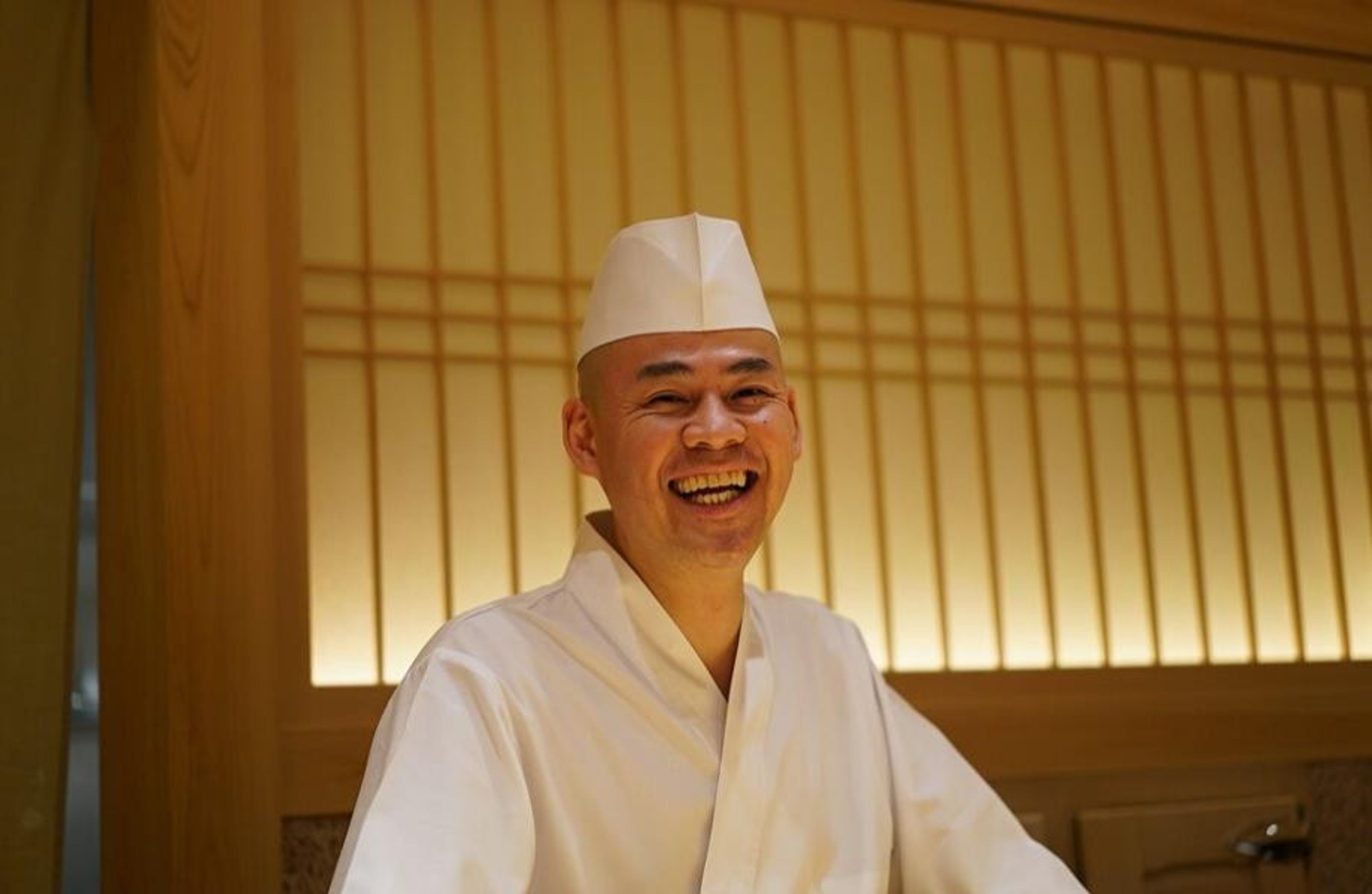
He insists on the basics, greetings and courtesy, but refuses to turn them into a manual: a scripted greeting sounds hollow, and guests notice. What he asks of his staff is to mean it when they say "irasshaimase", apologise, or thank a guest for coming. Prep technique can be taught; the attitude behind hospitality cannot.
TWO COUNTERS
In 2009 the restaurant received three Michelin stars, just as word of mouth on social media took off. The phone did not stop, the restaurant was booked months ahead, and business offers arrived one after another. Saito kept telling himself that he did not do this job for stars or scores. Yet he felt the weight of being judged, fell into over-service, trying to satisfy every guest, and says he lost himself. After service he thought only of what he had failed to do. And the regulars who had built the restaurant told him they could no longer get a seat.
His first answer was to keep his own counter for existing customers, enlarge the restaurant and open a second counter next door for new guests. He gave it to his number two, Toshiharu Hashiba. Since Hashiba left to open his own place, Ryūsuke Numao and Hiroshi Ishikawa take turns there. His second answer came ten years after the third star: he decided that was enough and gave the stars back. Many customers, he says, told him "well done". He calls it one of the two turning points of his career; it taught him what heartfelt hospitality means.
The pandemic changed his view of work. When the restaurant sold only takeaway, he was home by midday. He had always believed that working was right and sleep could wait; now he saw what he had left undone: family, travel, hobbies. He decided not to impose his own path on young cooks and changed how his staff work.
ONE RICE, SEVERAL HANDS
Saito calls himself a craftsman, not a businessman, and was wary of opening more restaurants: spread too thin, he would lose control. He changed his mind when he came to see the name as a stage for the young chefs who had followed him through years of hard work. The company now runs seven restaurants. Hong Kong and Bangkok are in Four Seasons hotels. In Seoul, Juyon was opened for Kim Ju-yeong, who came from Korea to train with him. In Nakameguro, Tsubomi was set up with HIRO of the entertainment group LDH. At Azabudai Hills, a counter sits inside a food market, next to Yamayuki's shop. Two more are planned in hotels in Sapporo and Kobe.
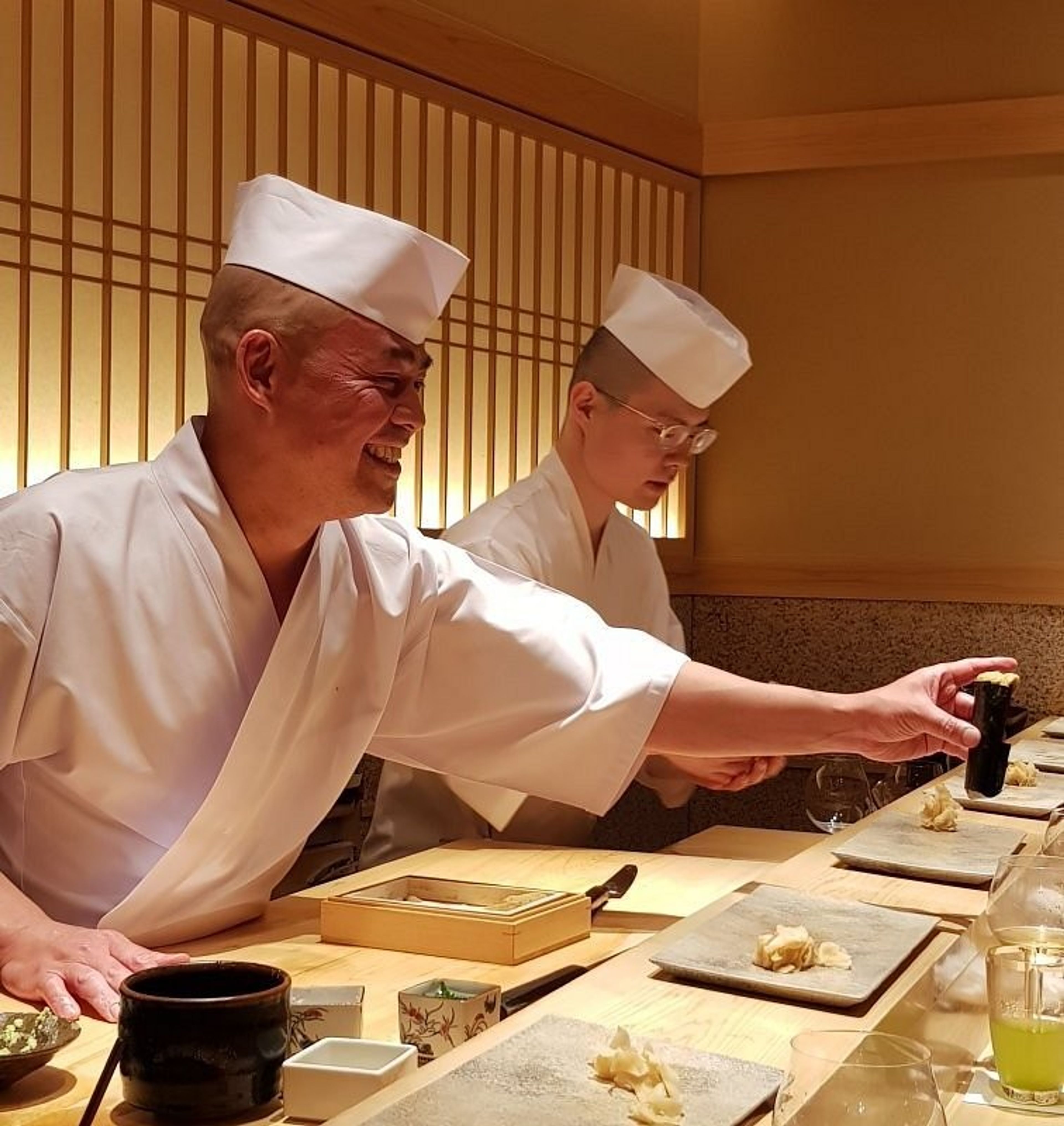
Each disciple keeps Saito's rice, vinegar and seasonings, and his approach to cutting. Beyond that, he says, he keeps quiet. They should make their own mistakes, find their own style and be shaped by their customers. "Rather than a shop that copies me, I want a place where their own style can grow."
ROBOTS, FARMS AND FREEZERS
Saito is a traditional craftsman, but no traditionalist. With the precision-instrument maker AUTEC he is developing a robot for maki rolls. Nigiri, he says, depends on fine adjustments of cut and rice that a machine could not reproduce. A roll needs no cutting, and the robot can match his rice and his hand pressure. He wants rolls for children, filled with karaage, fried shrimp or yakiniku.
He takes the same line on fish. With wild stocks shrinking, he thinks sushi has to use aquaculture and freezing, which technology has improved considerably. He wants farmed, frozen and wild fish judged by their taste, without prejudice.
The rice, the vinegar and the suppliers can be handed down. The hand that cuts and presses cannot. In his words: "Nigiri is the person."
 99.0