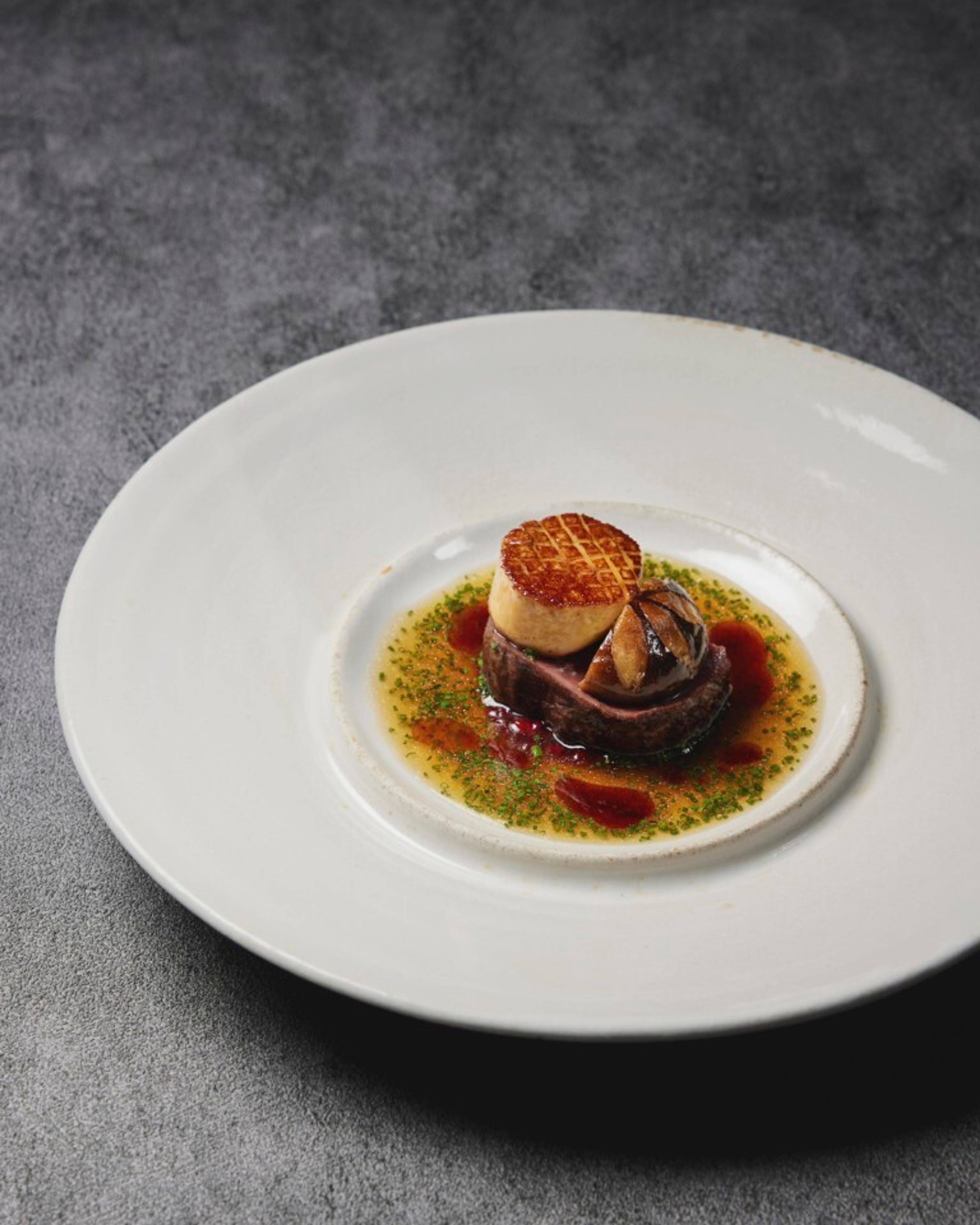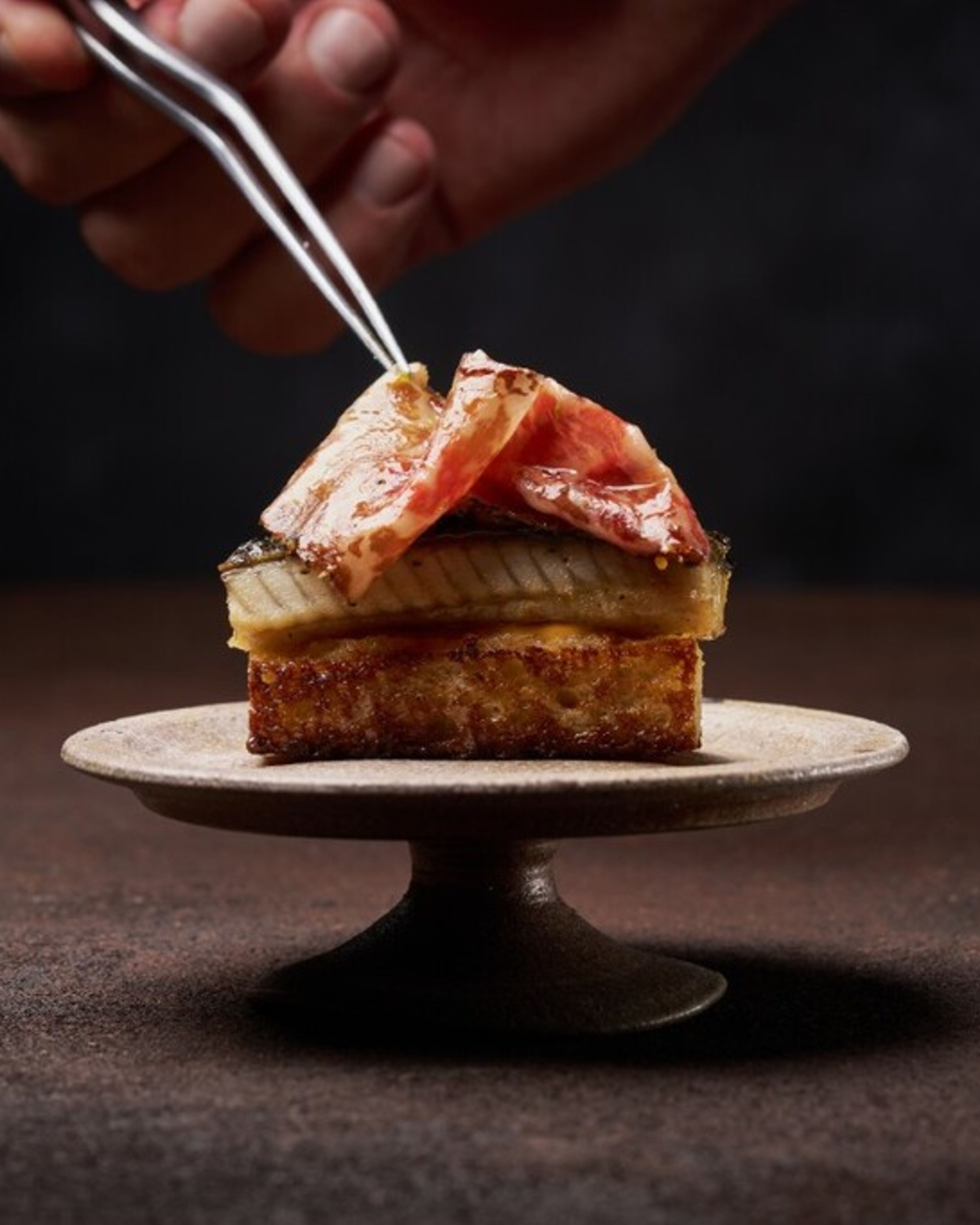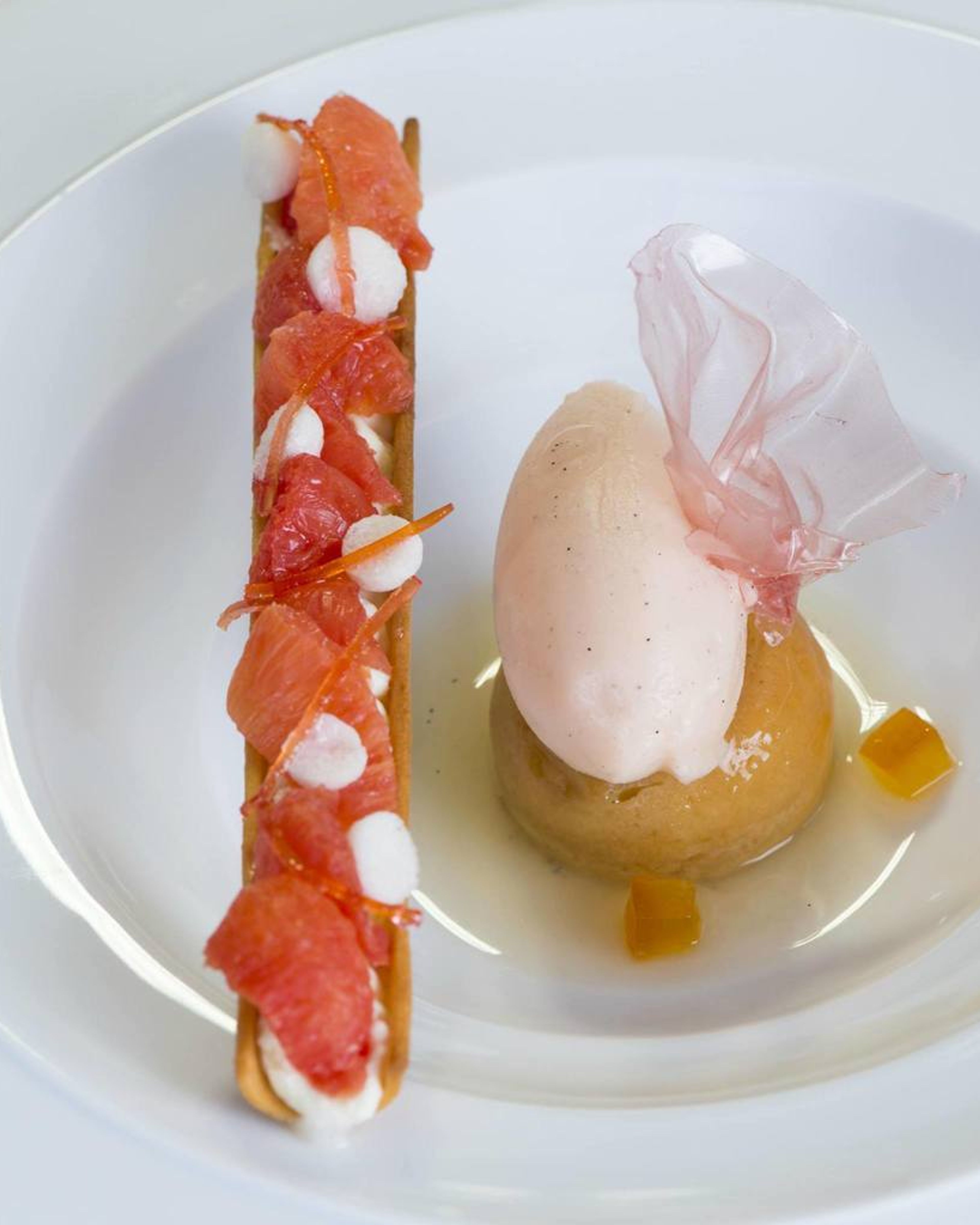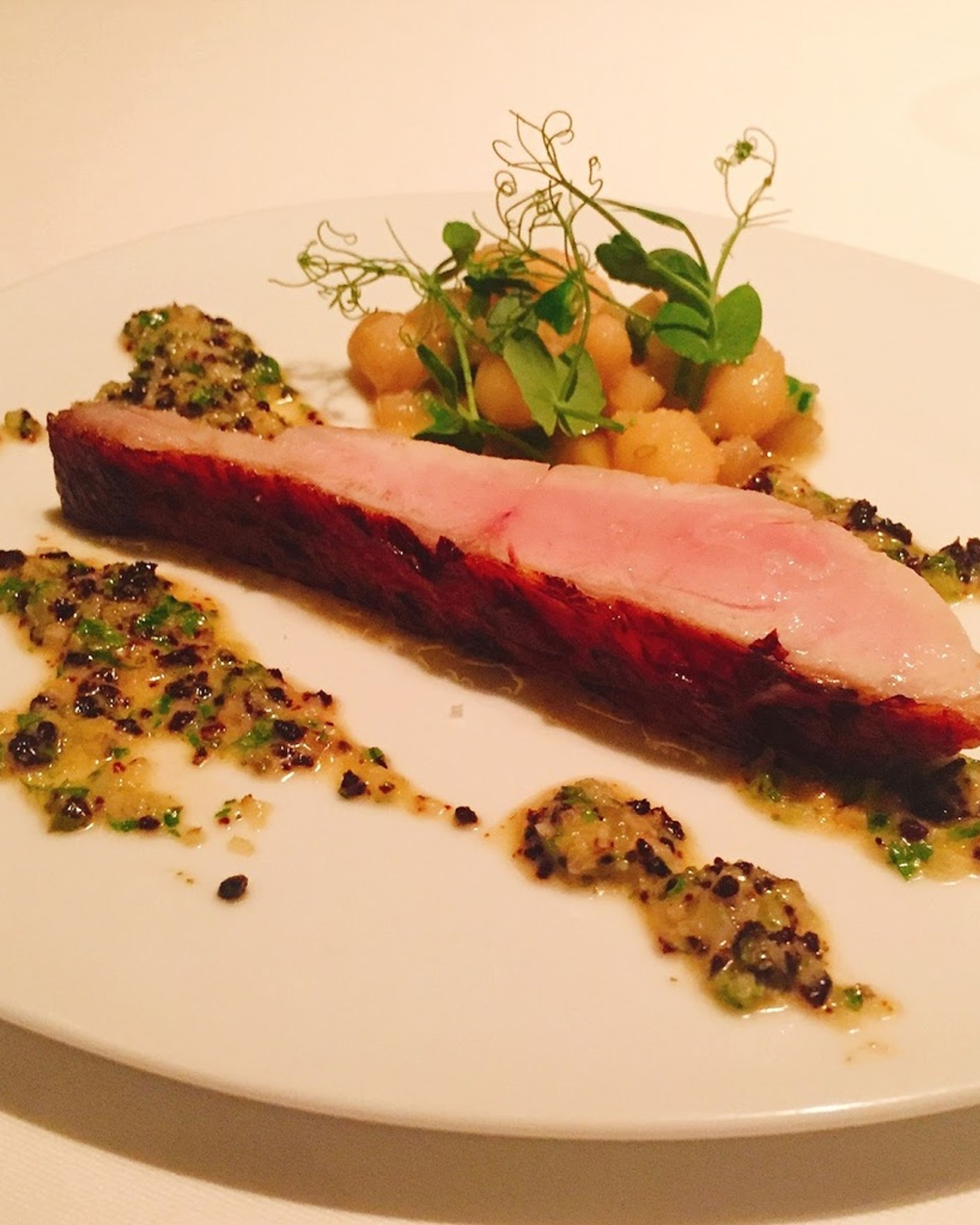
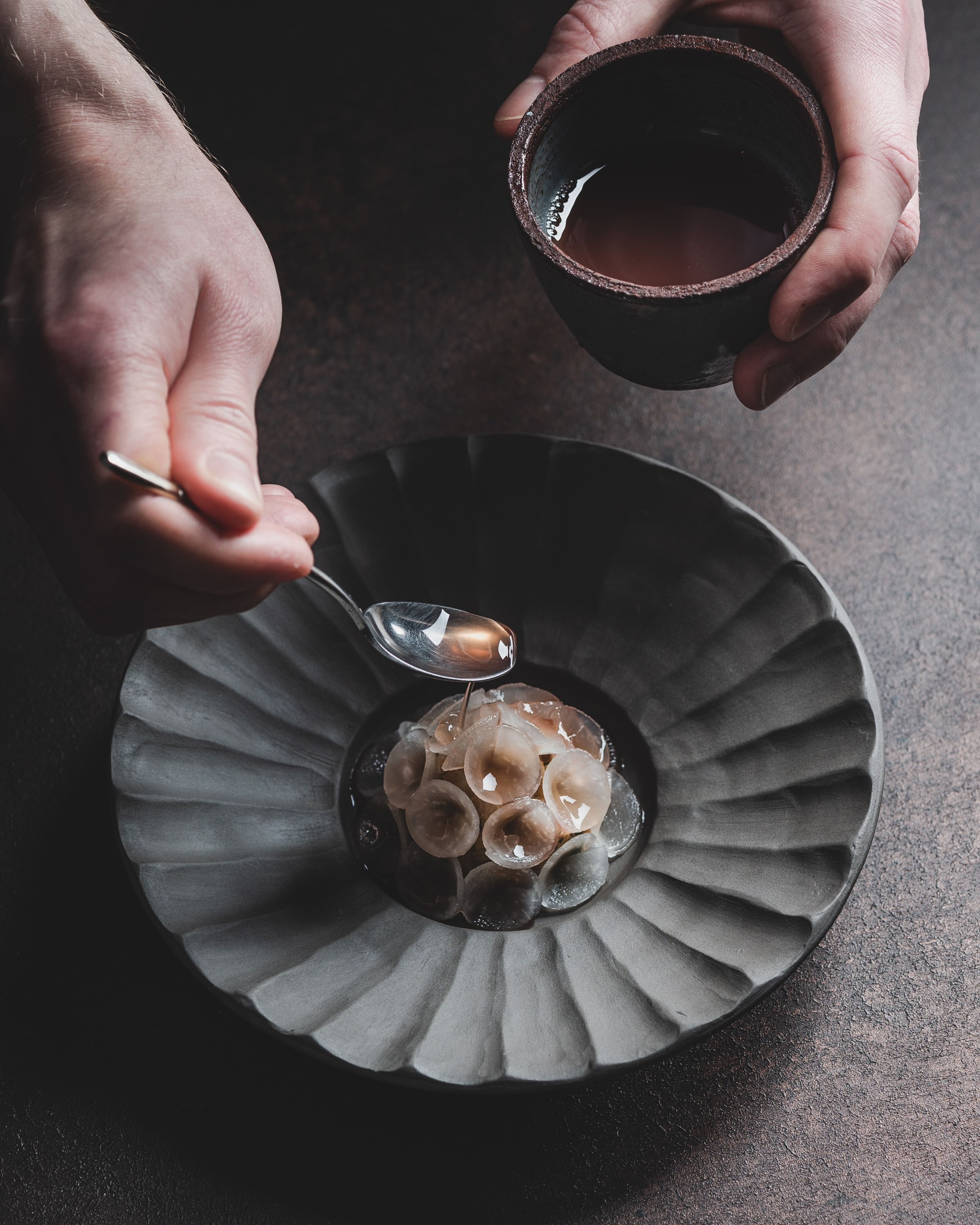
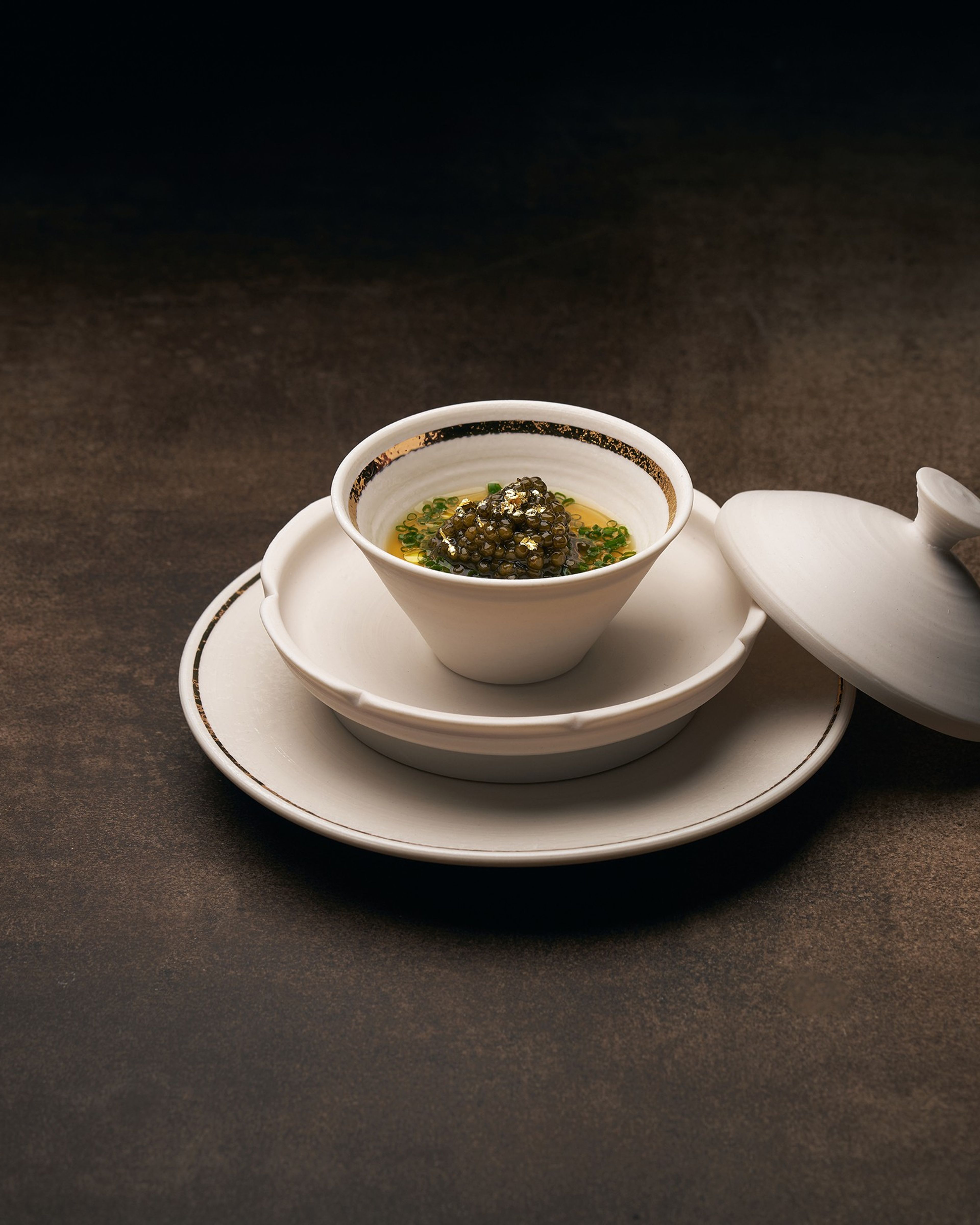
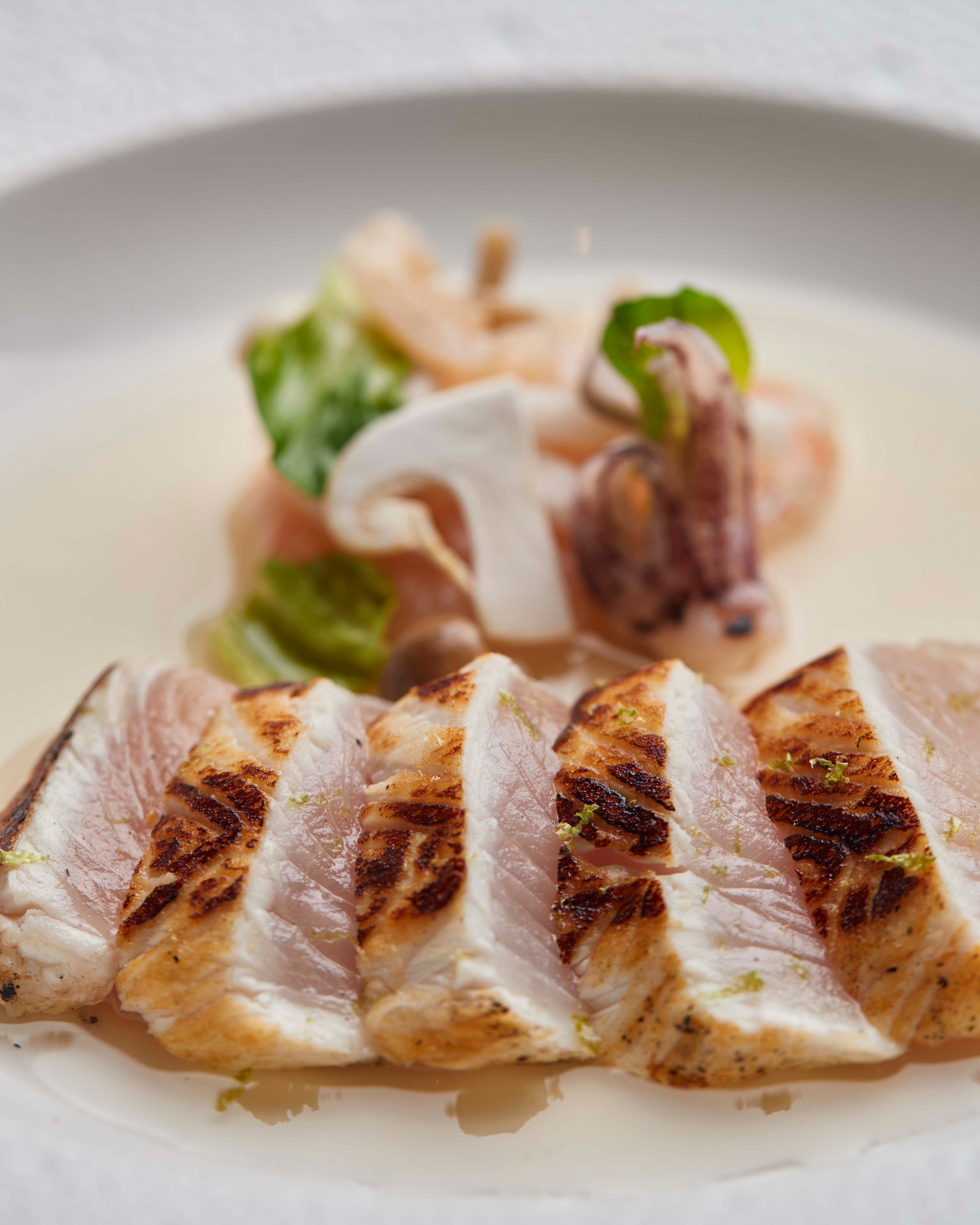
The French toast has been on Björn Frantzén’s menu since his first restaurant opened. A thick slice of fried bread with piped aged Parmesan, hundred-year-old vinegar and a heap of grated white truffle: a Swedish relative of the croque monsieur. The dish he names as his own signature is built from onion, liquorice and almond, “an onion soup made from fairly simple ingredients, built up in layers”. In Stockholm it has accompanied veal sweetbreads glazed with liquorice, with caramelised onion, a roasted-onion velouté and toasted almond milk. Wild turbot has been carved at the table and served with a sauce of fermented white asparagus and brown butter, topped with caviar. King crab has been grilled over birch embers.
Frantzén states his aim plainly: “I want clear and loud flavours.” The guest should feel that something is happening on the plate. His rougher version: the food must “smälla i käften och vara svingott”, hit you in the face and taste terrific.
He also wants it light. In his view French tasting menus carry too much gluten, lactose and fat, so that guests feel full halfway through; the French, he points out, took the idea of the tasting menu from Japan. He travelled through Japan to study kaiseki, and a very restrained meal at Quintessence in Tokyo made him rethink his own portions. In his kitchen this means working harder with acidity and, where fat is reduced, extracting flavour with care. Nordic cooking, with its fermenting and preserving, is in his eyes closer to Japan than to classic European cuisine. The produce comes from where it is best: truffles from Italy, king crab from northern Norway, quail and strawberries from France. Quality ranks above local sourcing.
A Swedish palate
For a chef at this level, his own taste is narrow, and he says so: “Jag har en jävla svennig smak” — I have a damn Swedish palate. He does not like oysters, sardines, fish that tastes too much of fish, or game birds with an iron, gamey taste. Pigeon has no place on his menu; when he serves duck, he marinates, smokes or glazes it to soften it. At Christmas he eats meatballs and prinskorv and leaves the rest of the julbord alone.
This explains a good deal about his cooking. It does not set out to challenge the guest; it sets out to please.
The steak
The palate goes back to one meal. Björn Frantzén, born in Solna in 1977, was eleven when he ate a grilled lövbiff at the Rendez-Vous brasserie in Stockholm, with crisp fries, homemade béarnaise and a tomato and red-onion salad. “A hallelujah experience. The best thing I had ever eaten.” His family did not go to restaurants. In Upplands Väsby, north of Stockholm, where he grew up with his mother and stepfather, a takeaway pizza was a luxury. His mother, he says, still cannot understand that he became a cook.
He is “sick and tired” of telling the steak story, he admits. He keeps telling it because he remembers that meal clearly, and almost nothing else from that age.
Football first
For years cooking was the back-up plan. He played for Bollstanäs SK, joined AIK at fourteen and played a few matches for the first team. A congenital heart defect ended it in his late teens: during an operation the club required before a senior contract, doctors found a problem, with a risk of about one in a hundred that he would need a pacemaker. He gave up football. At catering college he had fallen behind; at nineteen, he recalls, he could hardly tell coriander from parsley.
Football left him a way of working. “The restaurant kitchen is as close as I get to the feeling in a dressing room ten minutes before kick-off.”
The apprenticeship
After hotel and restaurant school in Märsta and a year as an army cook in Boden, he met a former classmate at a bus stop who told him about Edsbacka krog, north of Stockholm. He phoned the same day and offered to work for free; it became half a year without pay, under Christer Lingström. Abroad, his first post, in a country restaurant in England, ended at the salad station after he cooked scallops like meatballs. In London he worked at Chez Nico at 90 Park Lane and at Pied à Terre, in Paris at Alain Passard’s L’Arpège.
The London kitchens taught him precision and showed him its price. Six days a week, eighteen hours a day. “The head chefs were so damn brutal. They hit, burned, kicked and stabbed their staff with knives.” He saw a head chef knock out an Italian waiter who had misunderstood an order; the waiter bled on the kitchen floor while service went on. Frantzén was burned on the forearm with a hot frying spatula for being a few seconds late with a fish, and still has the scar. Some cooks took cocaine to keep going, others smoked to calm down; he got through on snus. In one basement kitchen he became so exhausted that he started taking the Underground in the wrong direction. He packed his knives, took his wages and left. He came home, he says, “with a hell of a lot of snus and one clear goal: to come home and open Sweden’s best restaurant”.
His own house
That restaurant opened in Gamla stan, under the name Frantzén/Lindeberg: nineteen seats, run with the pastry chef Daniel Lindeberg, a colleague from Edsbacka. A bank loan, obtained with a forty-page business plan, paid for it, along with a mortgage on his flat that his wife knew nothing about. The playful side was there from the start: snails served with a music box and a balloon scented of meringue, a cheese course called “Tour de France”.
Lindeberg eventually left, saying that he was not prepared, as Frantzén was, to sacrifice everything. Frantzén has described the split as a painful divorce that still torments him: “We used to be best friends, and now we hardly congratulate each other on our birthdays.” The restaurant kept his name alone.
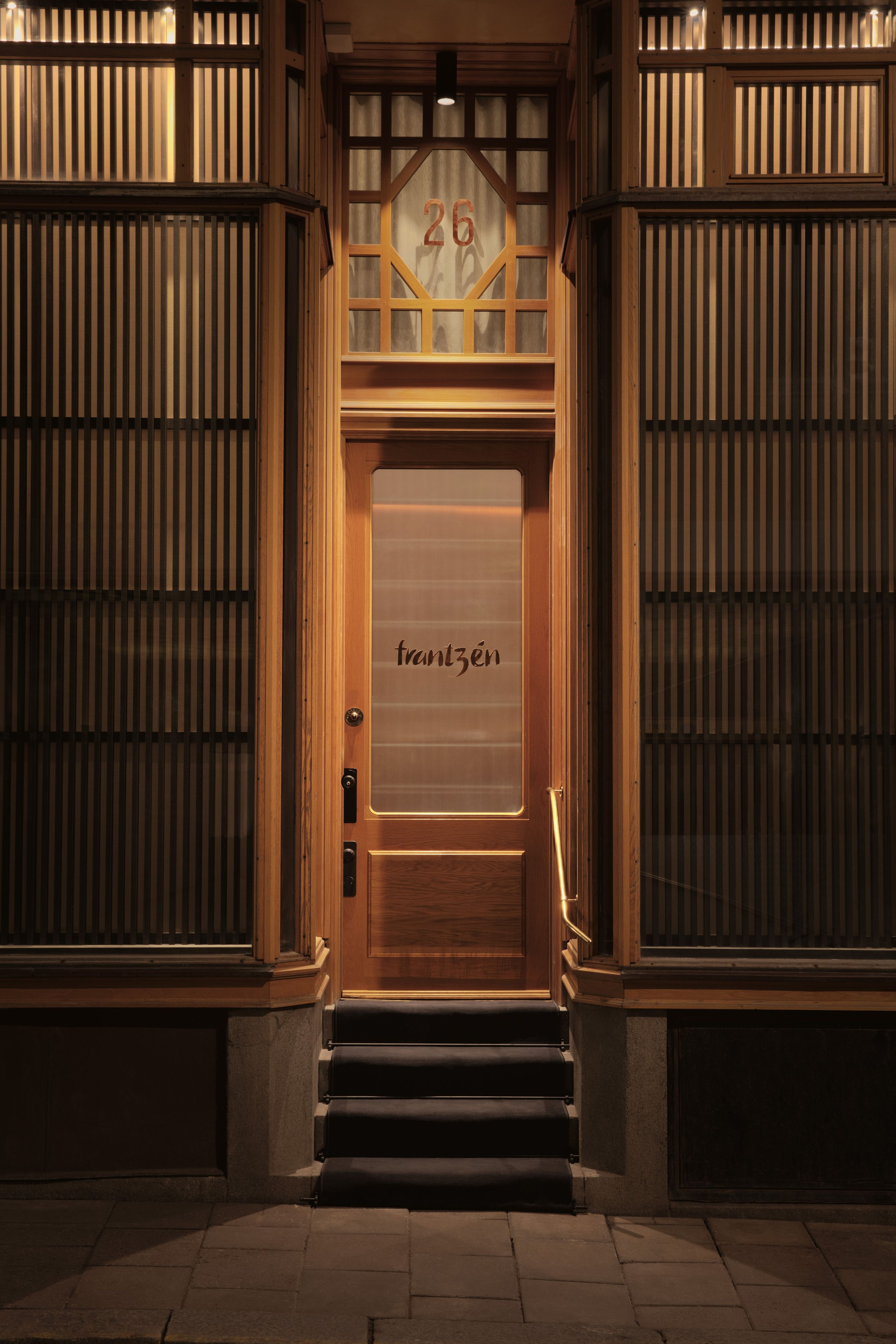
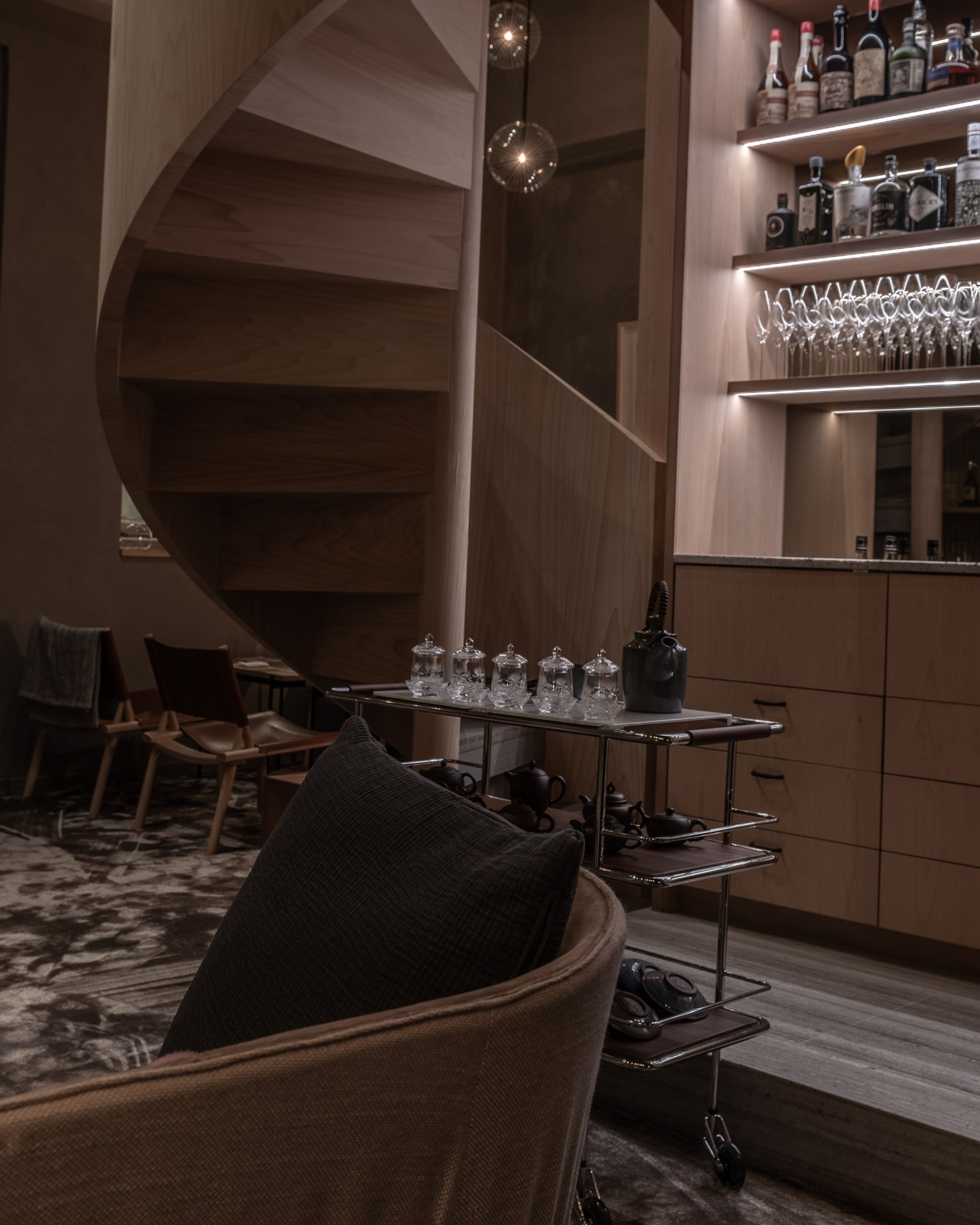
It later moved to Klara Norra kyrkogata 26, a nineteenth-century building on three floors: five times the space, still 23 seats, and a kitchen large enough for cooking over open fire. The meal moves through the house. Guests ring the bell, take an aperitif by the fire in the top-floor lounge, where the day’s produce is shown on crushed ice, then go down to the counter facing the kitchen for the meal itself.
Relaxed in tone, strict in detail
The quiet, almost churchlike mood of classic fine dining “has never been comfortable for me”. He wants chatter, clinking glasses and music, and chooses the tracks himself: Guns N’ Roses with a grand cru, AC/DC with duck liver. Luxury, he says, “is not about gold and marble anymore”. The restaurant holds no tables for influencers or critics; everyone pays.
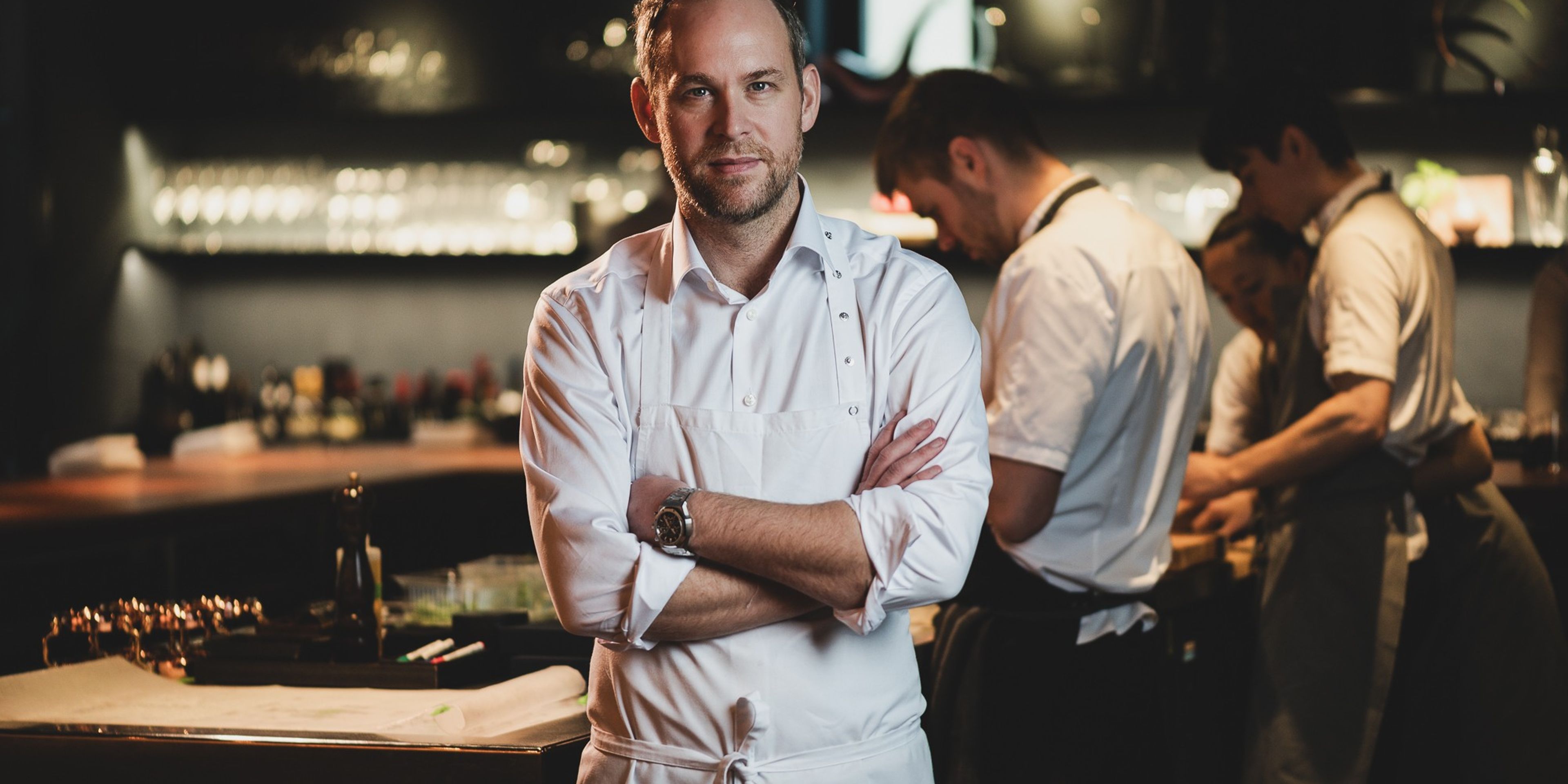
This is the central tension in Frantzén. The tone is relaxed; the control is total. “Nothing may ever go wrong.” He calls himself demanding, fair, detail-driven, a perfectionist, and has worked seventy to ninety hours a week since he was twenty. He creates every dish on every menu himself: “It’s my name above the door, after all.” Technique, he says, takes at least ten thousand hours; creating a tasting menu takes something more, a feel for the game, “bollkänsla”, that he believes fewer than one cook in a hundred has. “It is one thing to cook food and another to create food.”
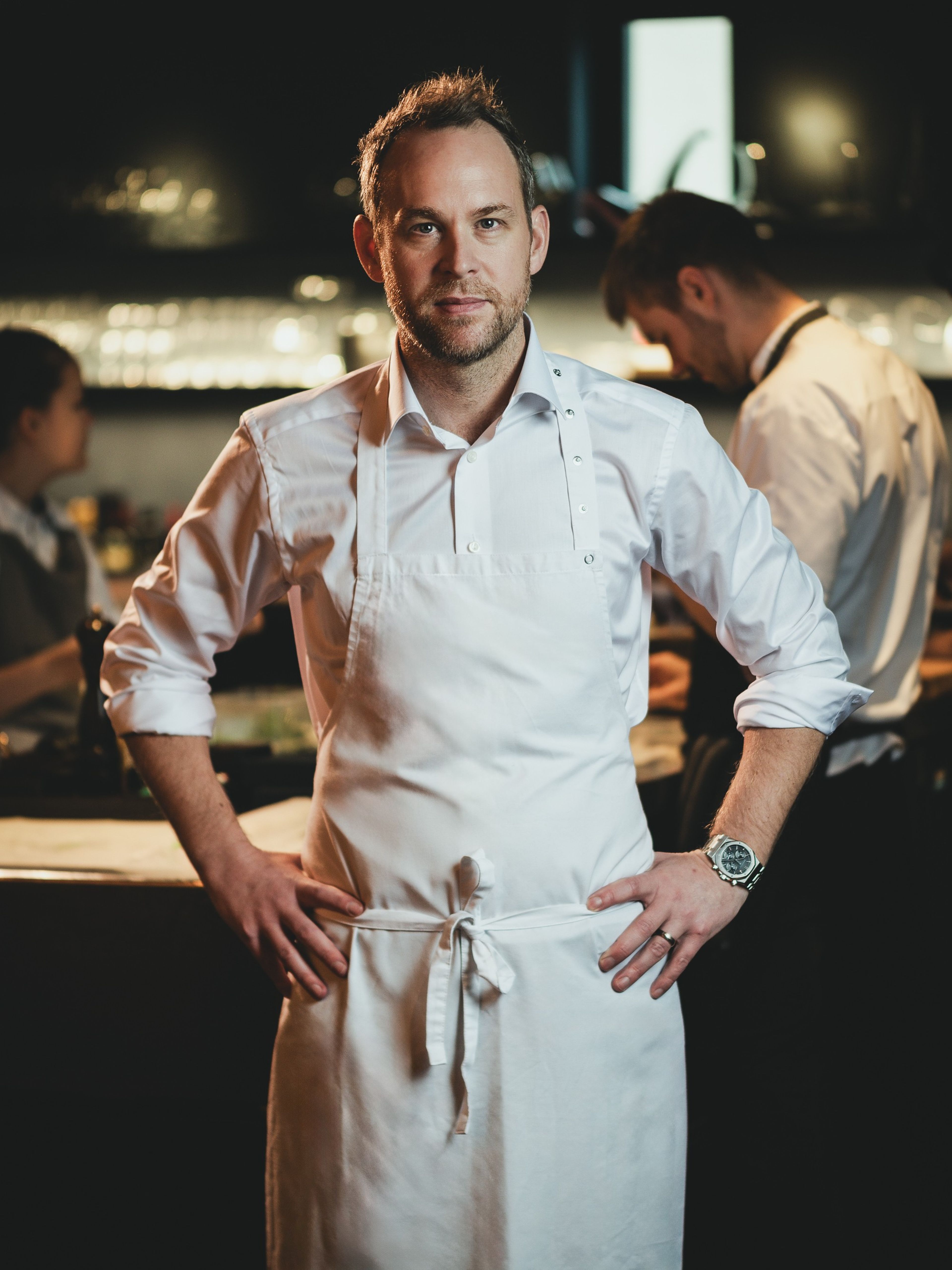
His own kitchens face questions too. Former employees have told SVT’s 30 minuter that the pressure had harmed their mental health. Frantzén denies mistreating anyone and compares his kitchens to the dressing room of a top club: “This is an elite venture. It is not for everyone.” His brigades in Stockholm and Singapore have moved to a four-day week.
A chef with partners
Where many chefs at this level work alone or as a family, Frantzén has built his house with partners from the start. Antonia Ax:son Johnson became a co-owner of Frantzén/Lindeberg. For the move, she and the investors Harald and Jeanette Mix co-financed the new building project, which cost about 75 million kronor; the building belongs to Axfast, the property company of the Axel Johnson group. According to the Swedish company register, Frantzén holds between a quarter and a half of the company that runs the Stockholm restaurant.
Abroad, partners provide the sites and invest. Zén in Singapore was opened with the local group Unlisted Collection, in the former premises of Restaurant André. FZN is at Atlantis The Palm in Dubai, a Brasserie Astoria at the Baccarat hotel in the Maldives, and Én in Sydney and an Astoria in Perth are being built with Crown Resorts. Around these, Frantzén Group runs a chain of brasseries, Astoria, in Stockholm, Singapore, Marbella and Dubai.
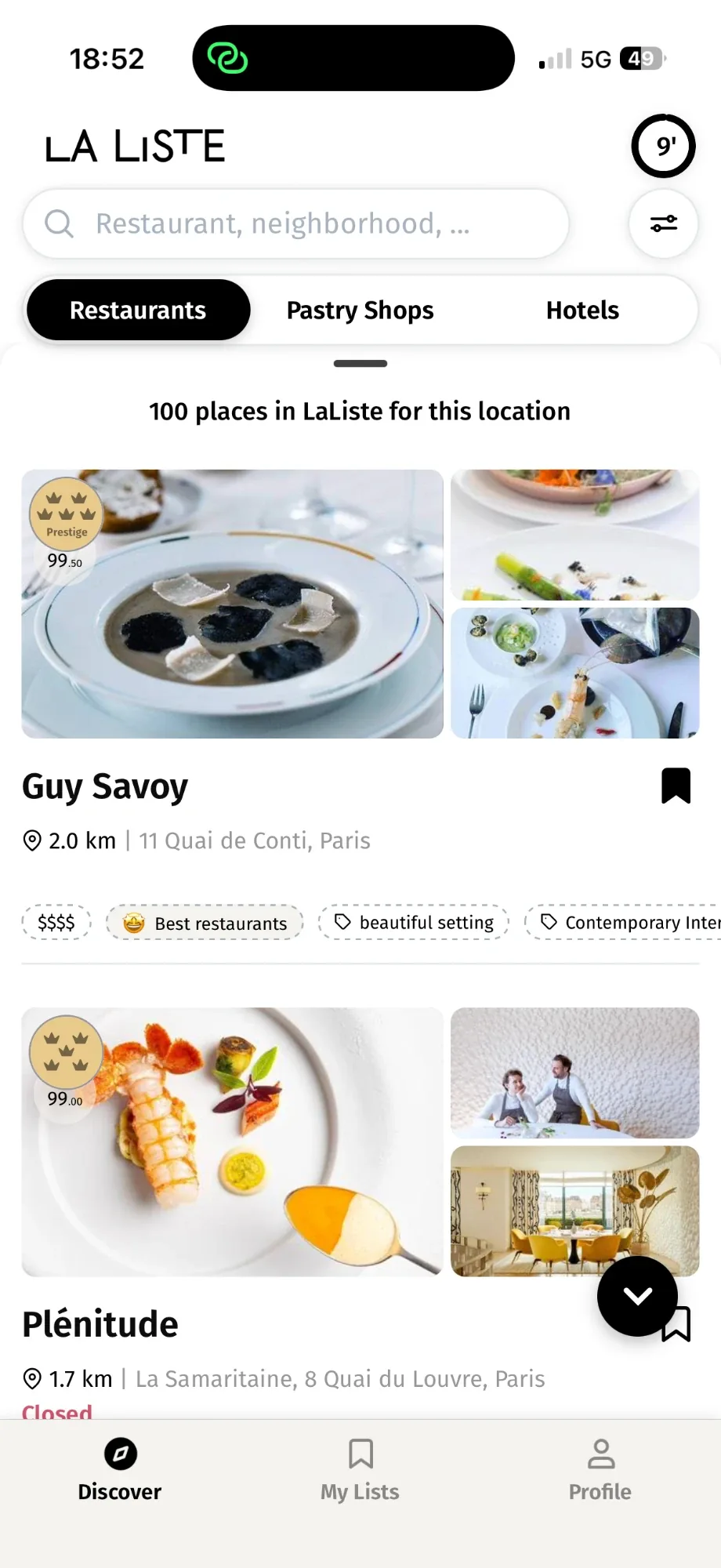
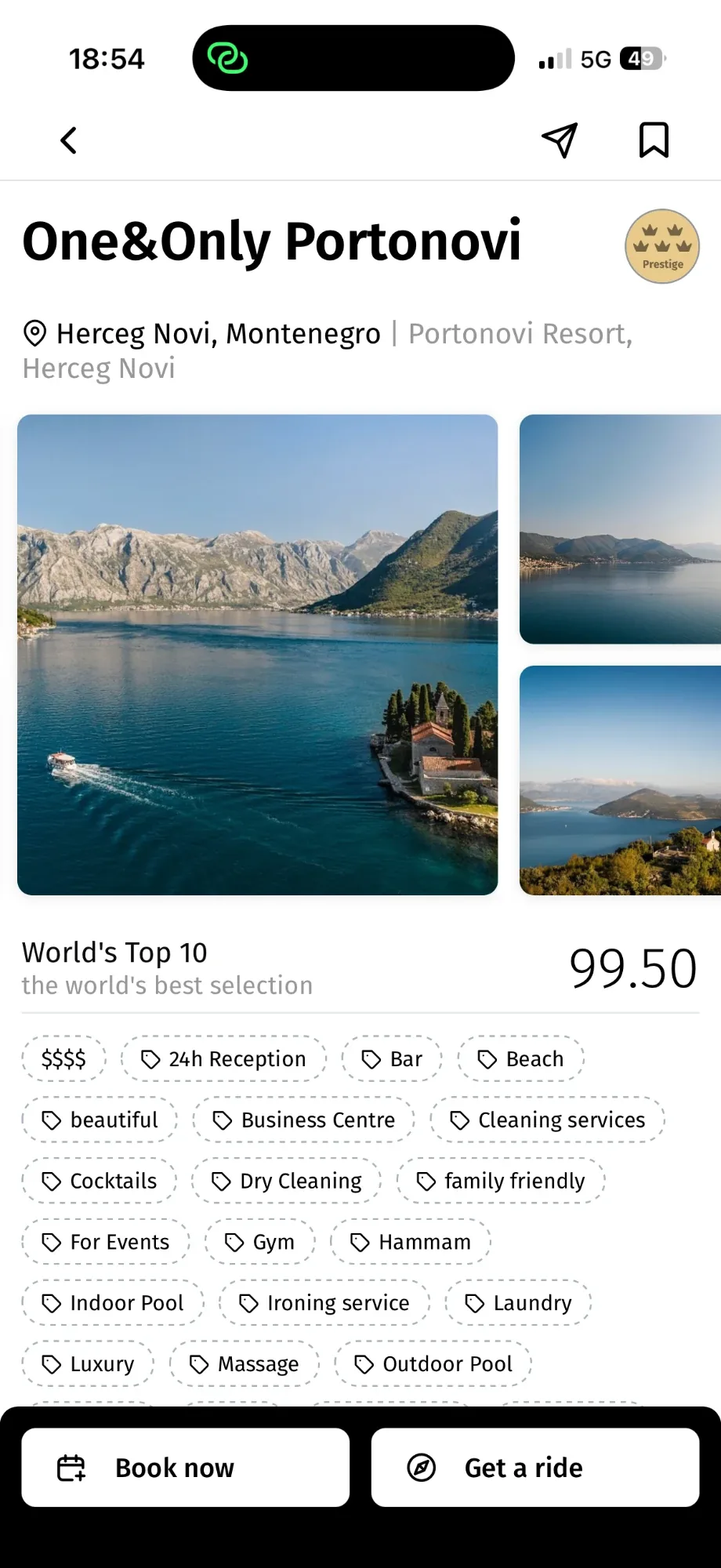
In La Liste 2023, Frantzén shared first place in the world with Guy Savoy in Paris and Le Bernardin in New York.
The steak at Rendez-Vous had no truffle and no hundred-year-old vinegar: grilled beef, fries, béarnaise. Nearly forty years later, Frantzén still applies the test he took from it. “I just want it to taste good.”
 99.5
 99.0