Julien Tongourian: the quiet perfectionist in the dome
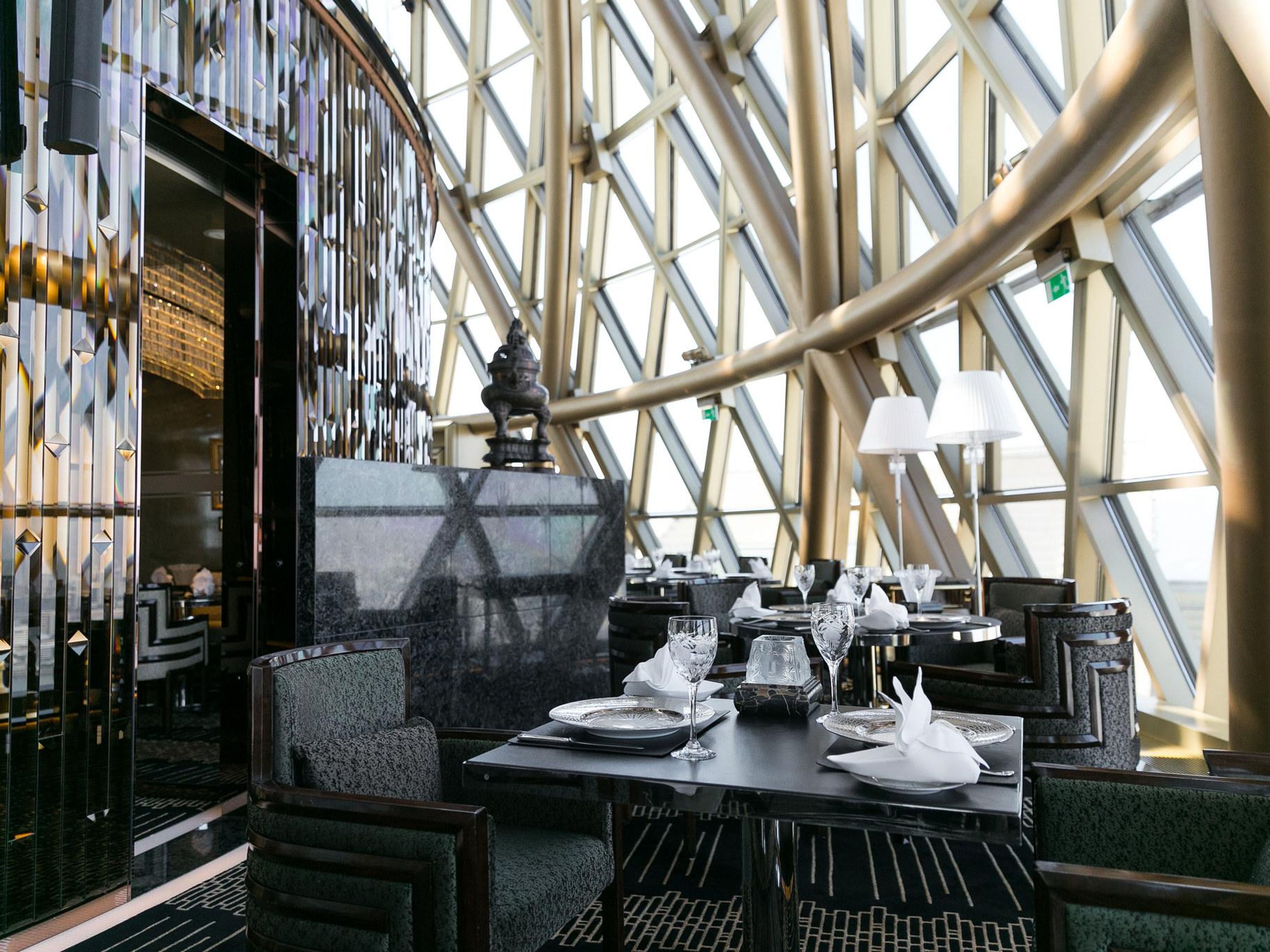
Meet the World’s Best Restaurants 2026 by La Liste — High above Macau, in the glass crown of the Grand Lisboa, Julien Tongourian keeps Joël Robuchon’s philosophy alive at Robuchon au Dôme, one of the rare tables where Eastern and Western critics agree.
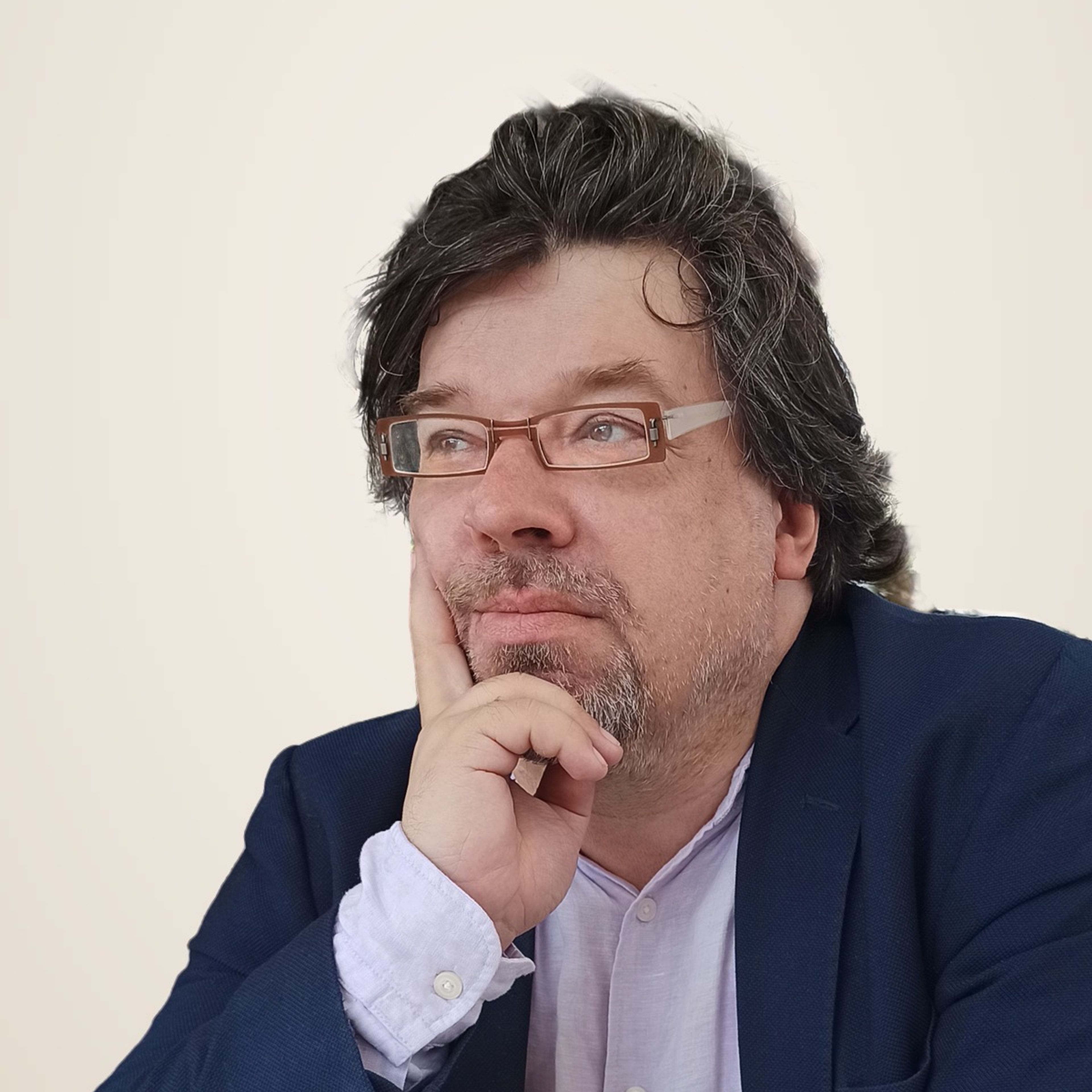
Most diners who ascend to the glass crown of the Grand Lisboa in Macau come for the name on the door: Joël Robuchon. Yet the man who stands in the kitchen each night, calibrating sauces to millimeters and textures to microns, is a far quieter figure. His name is Julien Tongourian, and he represents a kind of chef increasingly rare in today’s world: a craftsman who does not seek visibility, only mastery.
Tongourian leads Robuchon au Dôme, a restaurant with a singular position in global gastronomy — one of the few places where Eastern and Western critics converge in a shared admiration. For Western diners, it offers the reassurance of classical French technique, the discipline of Robuchon’s “cuisine of intelligence,” and a wine list widely regarded as the most formidable in Asia. For Eastern diners, it offers what matters most: the refinement of texture, the primacy of temperature, and a reverence for luxurious ingredients — abalone, blue lobster, Wagyu — that speak directly to Cantonese gastronomic codes.
To satisfy either tradition is difficult. To satisfy both is nearly impossible. Yet this is what Tongourian achieves, quietly and consistently, night after night.
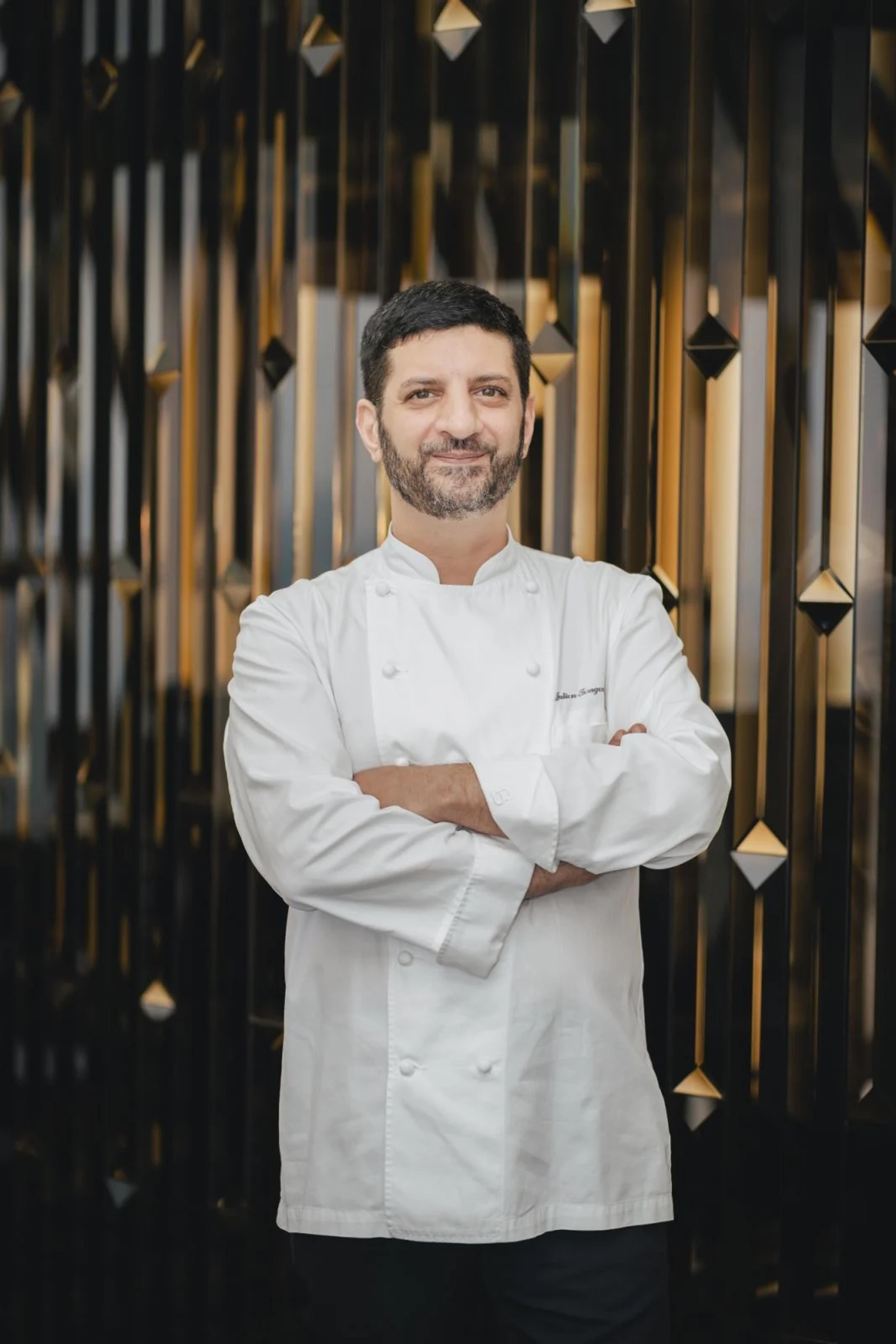
The invisible craftsman
Little about Tongourian’s life is publicly documented, and that silence is not incidental. He comes from a lineage where chefs are shaped in kitchens rather than in media narratives. What is clear is the depth of his immersion in the Robuchon universe. His cooking displays its unmistakable grammar: impeccable sauces, silken purées, precise reductions, and a structural intelligence that places technique above ego.
Robuchon au Dôme is not just an opulent dining room perched above a casino city. It is a test of consistency, precision, and orchestration. It demands a chef capable of translating Robuchon’s philosophy into every service — from the first amuse-bouche to the final mignardise — under the pressure of global expectations and an audience deeply attuned to the nuances of luxury. Tongourian’s talent is not theatrical. It is methodical. His gift lies not in reinvention but in execution at a level where improvisation would be a failure.
The forge of Paris
To understand what Tongourian protects, one must return to the Paris that shaped Joël Robuchon — a city where great hotels were temples of discipline, where the hierarchy of the kitchen mattered as much as the hierarchy of government, and where the emerging culinary star system was beginning to redefine ambition.
Robuchon was not born into this world; he fought his way into it. At fifteen, he entered the Compagnonnage, the toughest training route in France, moving from master to master across the country, absorbing technique through repetition and hardship. His early Parisian years were spent in kitchens of vast scale: the Concorde-Lafayette, with its thousand rooms and endless banquets; the Hôtel Nikko, a modernist fortress where he was finally able to reveal the precision and clarity that defined his style.
These were not glamorous environments. They were crucibles. In such spaces, a chef learned to command systems, not plates. It was here that Robuchon’s obsession with discipline took form — the belief that culinary excellence is built not on inspiration but on structure.
Then, in the early 1980s, he opened Jamin, and Paris was confronted with something it had forgotten: simplicity sharpened by intelligence.
Reordering the Parisian palate
Jamin arrived at a moment when the city was weary. The exuberance of Nouvelle Cuisine had faded; diners had endured a decade of mousses and minimalist arrangements that sometimes concealed a lack of flavor. Robuchon responded with a philosophy both radical and ancient: return to the heart of French tradition, then refine it with absolute precision.
He served lamb in a salt crust, merlan Colbert, terrines and confits built on clarity rather than nostalgia. His cuisine rejected decoration and embraced essence. Every element was tested — weighed, tasted, adjusted — until it reached what he called the “just moment,” the point where temperature, texture, and flavor aligned in perfect harmony.
His potato purée, half butter yet impossibly light, became emblematic of this method. It was not indulgence; it was engineering. For weeks he tested potato varieties, starch levels, techniques. He brought the logic of experiment into the realm of pleasure, proving that sensuality and discipline were not opposites but partners.
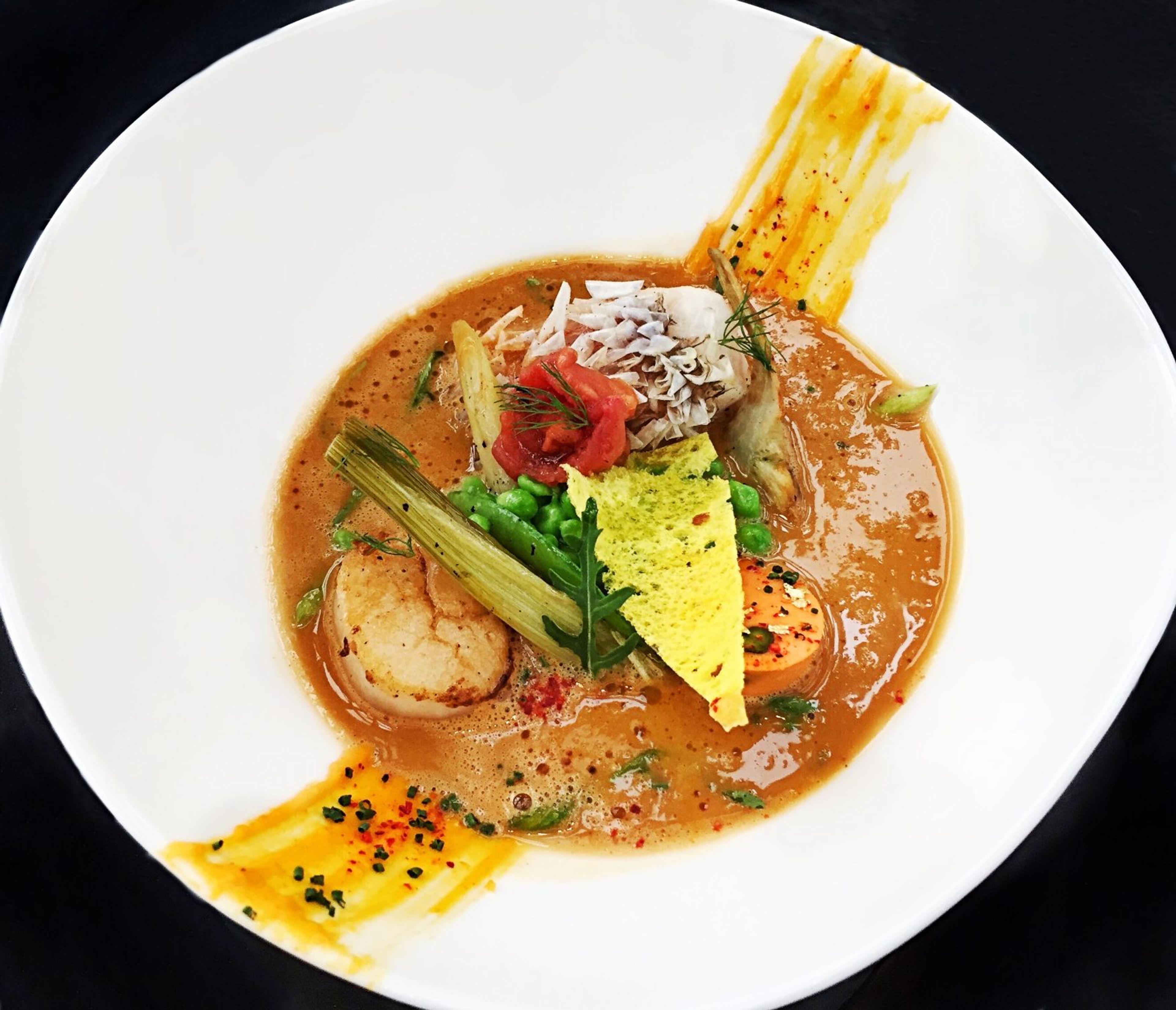
This Paris — the Paris that Robuchon reshaped — is the Paris that lives on in Macau, translated through a quiet chef whose fidelity is his greatest strength.
Asia, the cathedral of the legacy
Robuchon’s influence flourished in Asia more vibrantly than anywhere outside France. Japan admired his purity and balance. Hong Kong, Taipei, Shanghai, and Macau recognized a deep alignment between his precision and their own culinary values. The idea that cooking should be judged through texture, temperature, and the integrity of ingredients found a natural home.
Macau, with its scale, spectacle, and appetite for grandeur, became the site of the most theatrical expression of Robuchon’s universe. Robuchon au Dôme is not a museum of his recipes; it is a cathedral of his philosophy. Its vast wine list satisfies Western expectations of heritage and connoisseurship. Its refinement of texture and respect for luxurious products resonate profoundly with the Cantonese palate, where mouthfeel is not an embellishment but the heart of culinary truth.
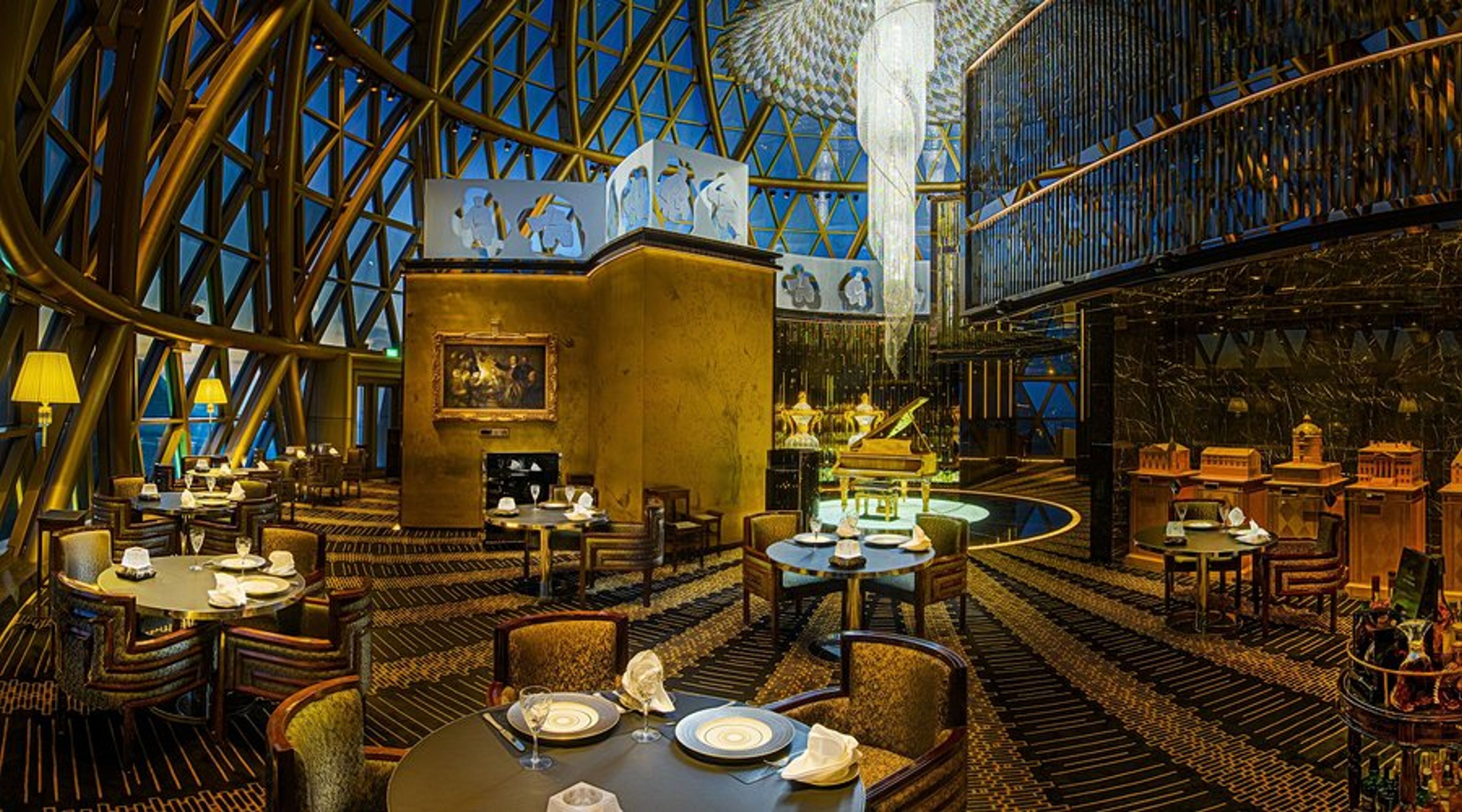
This is where Tongourian’s gift becomes essential. He does not reinterpret Robuchon for Asia; he understands that the Robuchon method was always, in spirit, aligned with Asian values. Precision. Balance. Respect for ingredients. The pursuit of perfect cooking rather than perfect appearance.
East and west, finally aligned
La Liste, which aggregates thousands of reviews and evaluations from around the world, is designed to detect patterns of agreement in a landscape defined by divergence. It is therefore remarkable that Robuchon au Dôme stands as a place where both Western and Eastern perspectives converge. Western critics find reassurance in technique, refinement, and structure. Eastern critics celebrate the textures, temperatures, and luxurious ingredients that speak directly to their culinary traditions.
A restaurant that satisfies both ways of seeing the world is rare. One that excels in both domains is exceptional.
What endures
Robuchon believed that he was merely one link in a long chain of transmission stretching back through the great codifiers of French cuisine. His legacy was never just a set of dishes. It was a way of thinking: disciplined, exacting, and devoted to the integrity of flavor.
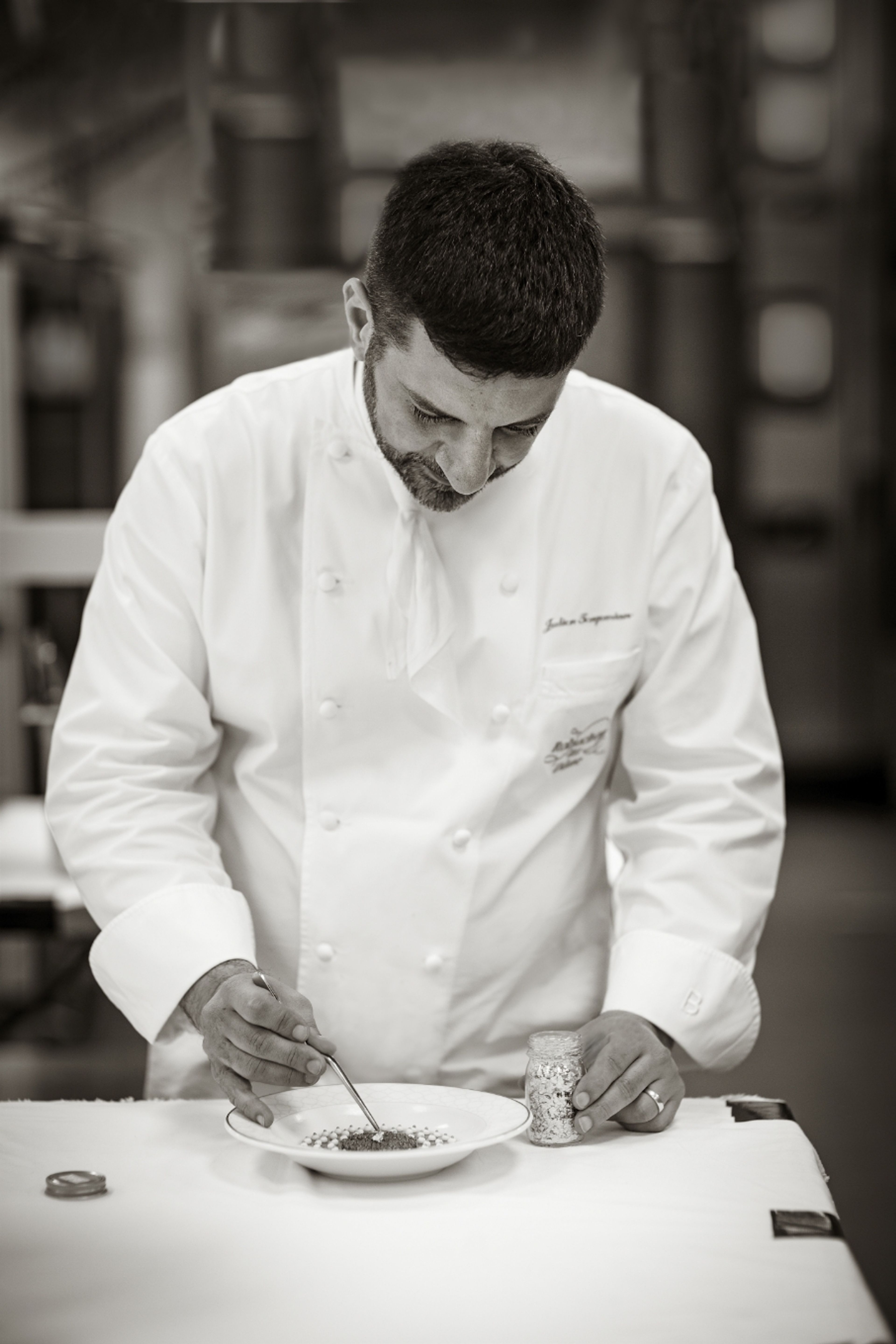
Julien Tongourian stands within that lineage. He does not seek fame, only correctness. He does not amplify the tradition; he sustains it.
In the shimmering dome above Macau, he keeps alive a philosophy that once reshaped Paris and now resonates across continents. Each night, through precision rather than flourish, he proves that culinary heritage endures not in monuments but in practice — repeated, refined, and honored.
Robuchon built the architecture. Tongourian keeps it alive. And in the quiet perfection of his kitchen, the legacy continues — not as memory, but as mastery.