Martin Berasategui: the quiet giant of global gastronomy and the man who still believes that “those who work will eat”
Meet the World’s Best Restaurants 2026 by La Liste — At Lasarte-Oria, Martin Berasategui has transformed a lifetime of discipline, memory, and Basque devotion into a global culinary legacy, where every dish carries the echo of his mother’s kitchen and the quiet conviction that whoever works, will eat.
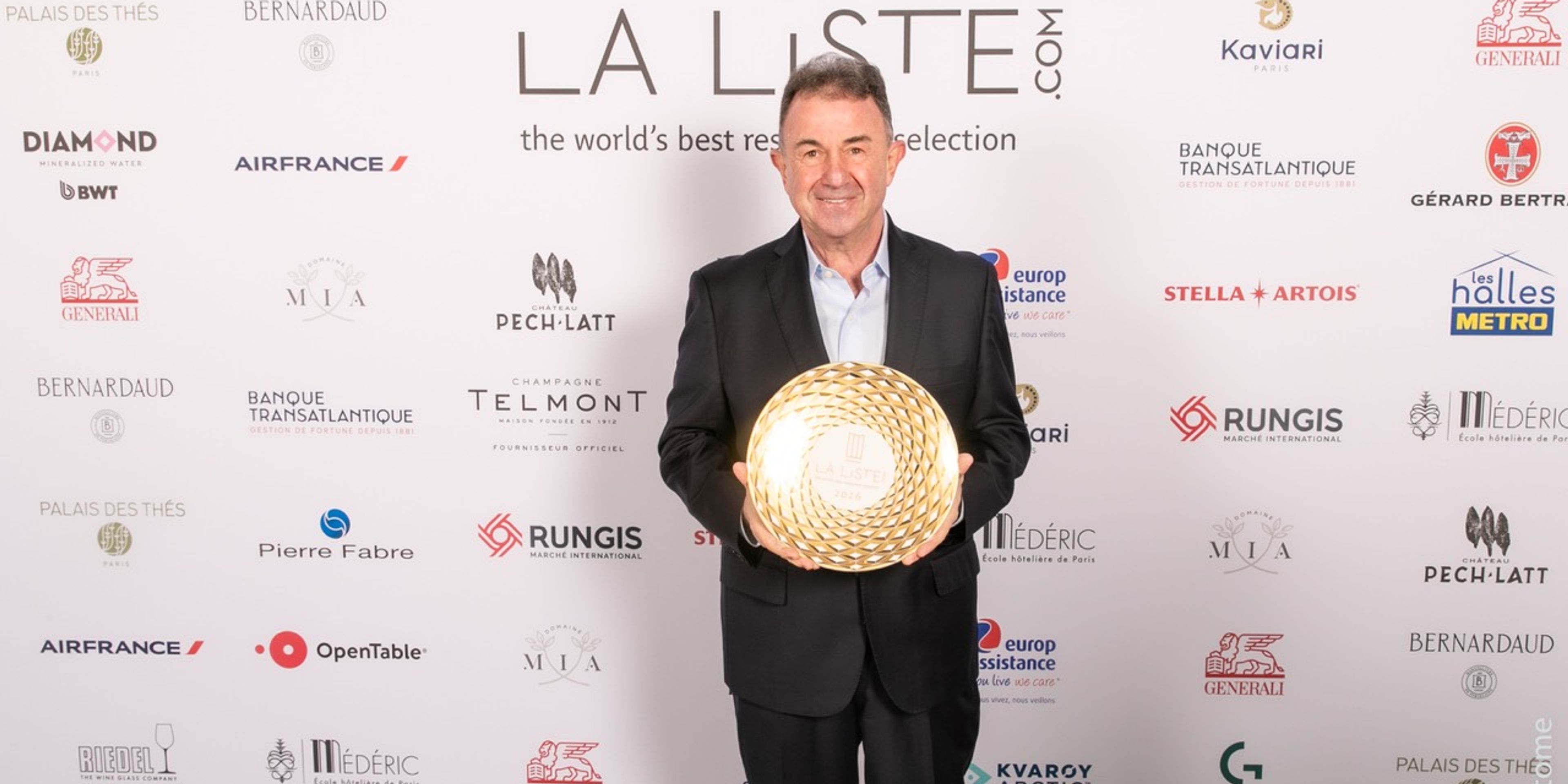
Early in the morning, long before the first reservation is confirmed, Martin Berasategui, today in his early sixties and newly crowned World’s Best Restaurant 2026 by La Liste, is already running through the misty Basque mountains. Three hours of altitude, fresh air, the scent of fields and farmhouses. Then he sprints up the steps to his home in the village of Lasarte-Oria. Beside the entrance stands a small metal stele engraved in Euskera: Whoever works, will also eat.
It is both proverb and prophecy. A distillation of a life that began in the most modest of kitchens and ascended, dish by dish, to a global summit.
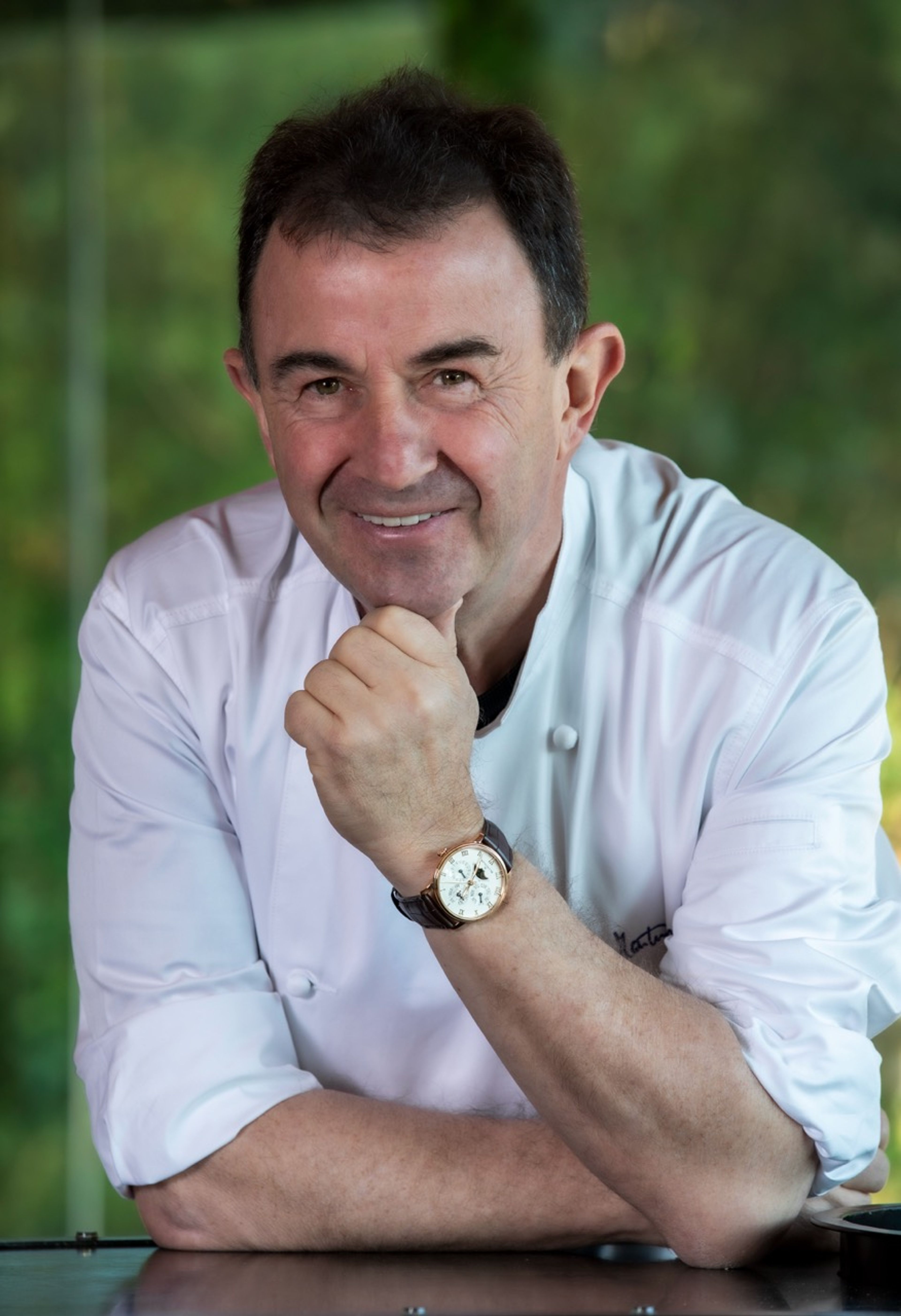
From the Old Town of San Sebastián to the summit of La Liste
Berasategui learned the craft where Basque food lives: inside Bodegón Alejandro, the humble tavern run by his mother and aunt in San Sebastián’s old town. Money was scarce, work abundant. At 15 he picked up the apron; at 17 he lost his father, a butcher, and threw himself even deeper into the kitchen.
He worked six days a week at the restaurant. The seventh was reserved for an almost monastic ritual: learning every culinary trade — baker, pâtissier, chocolatier, butcher. “That taught me discipline,” he says. It also taught him something far more important: to see cuisine not as a job, but as a system of interconnected crafts.
But the decisive moment arrived in 1982, across the French border, at Pain, Adour et Fantaisie, a micro-restaurant in the Landes. The chef was Didier Oudill, former disciple of Michel Guérard, and one of the most quietly visionary cooks of his generation. Oudill’s generosity was as legendary as his culinary imagination.
“Didier became everything for me — friend, mentor, a father figure,” Berasategui says, raising his arms as if offering the whole of Donostia to the sky. Oudill introduced him to a new culinary universe: visits to Michel Bras, Alain Ducasse, Jacques Maximin, Olivier Roellinger. Technique, rigor, precision — he absorbed all of it.
When Berasategui returned to San Sebastián, the cuisine at Bodegón Alejandro rose sharply. Fishermen and workers found themselves dining next to gastronomic pilgrims. The Basque Country had begun its quiet transformation into one of the world’s great culinary regions — and Berasategui was central to that metamorphosis.
Lasarte: a home, a refuge, an empire disguised as a family house
In 1993 he opened his eponymous restaurant in Lasarte-Oria, after three years of construction. The villa is discreet, almost anonymous, tucked into a residential neighborhood. Upstairs he lives; downstairs he cooks. The terrace looks out over a green valley. It is hard to imagine that this serene home would one day become one of the world’s most influential gastronomic addresses, with a constellation of Michelin stars across his restaurants and a network of chefs trained in his kitchen.
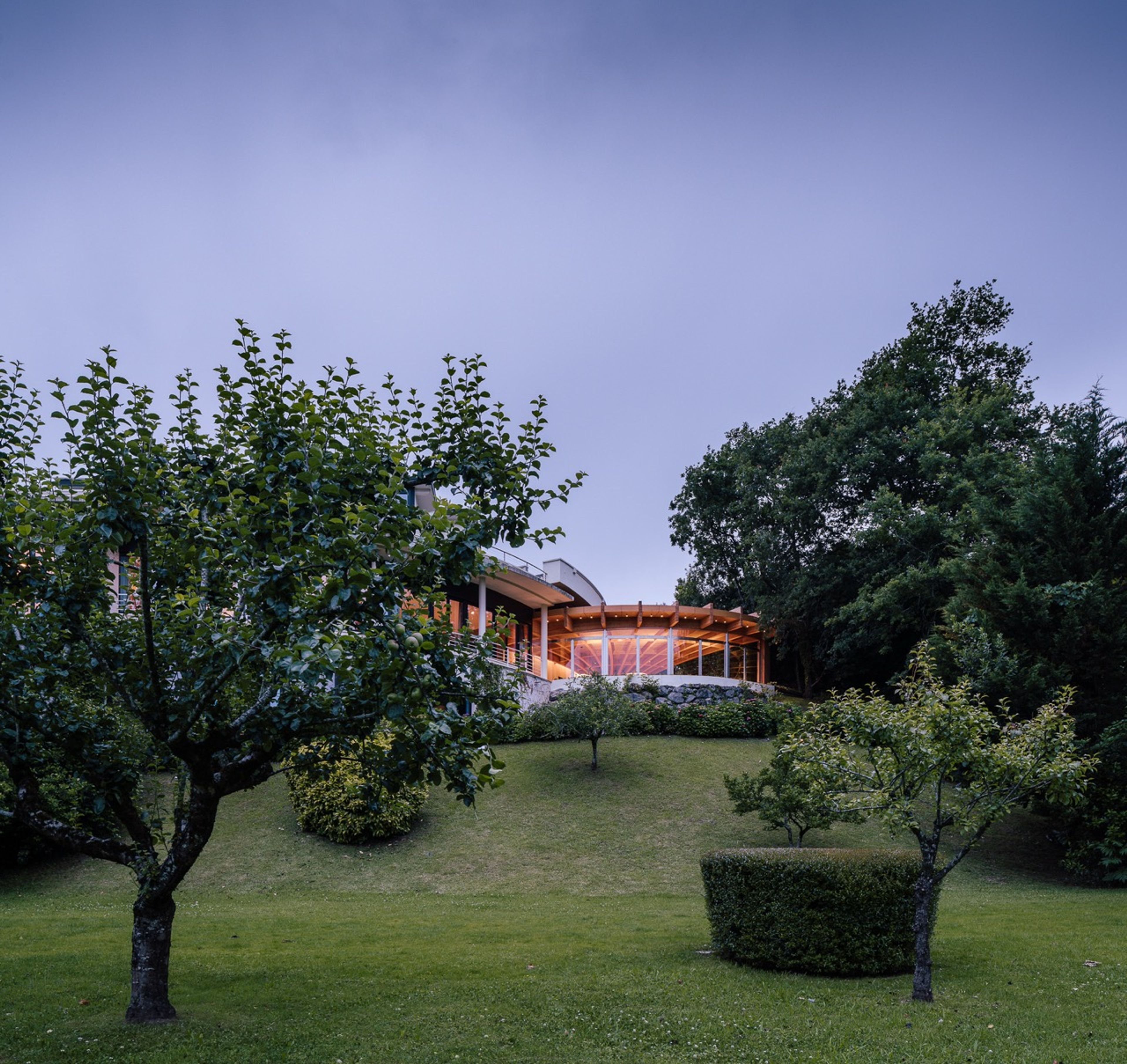
Inside, the operation resembles a finely tuned atelier. To the left, salads are plucked leaf by leaf. To the right simmers a stock. A large flat screen dominates one wall, but not for football: “We annotate recipes here.”
Then the human choreography begins. A pinch of the cheek for one chef, a quick shoulder rub for another. Almost half the brigade consists of young women — unsurprising in a region where mothers and aunts have long been the backbone of culinary knowledge. “I don’t understand why this is a topic for some chefs,” he shrugs. “We Basques have always loved women — in life and in the kitchen.”
Behind the main building lies a small garden for micro-vegetables, a grill over open fire, and then a wooden hut that resembles a provincial hobby cellar: beer tap, table, fridge, stove, television. But this is the innovation lab. “Here I test new dishes with three team members. We film everything, then show it to the rest of the brigade.” The internal videos circulate through his restaurants in Bilbao and San Sebastián, and receiving an invitation to this hut is considered a badge of honor.
A cuisine rooted in Basque soil — and in deep personal memory
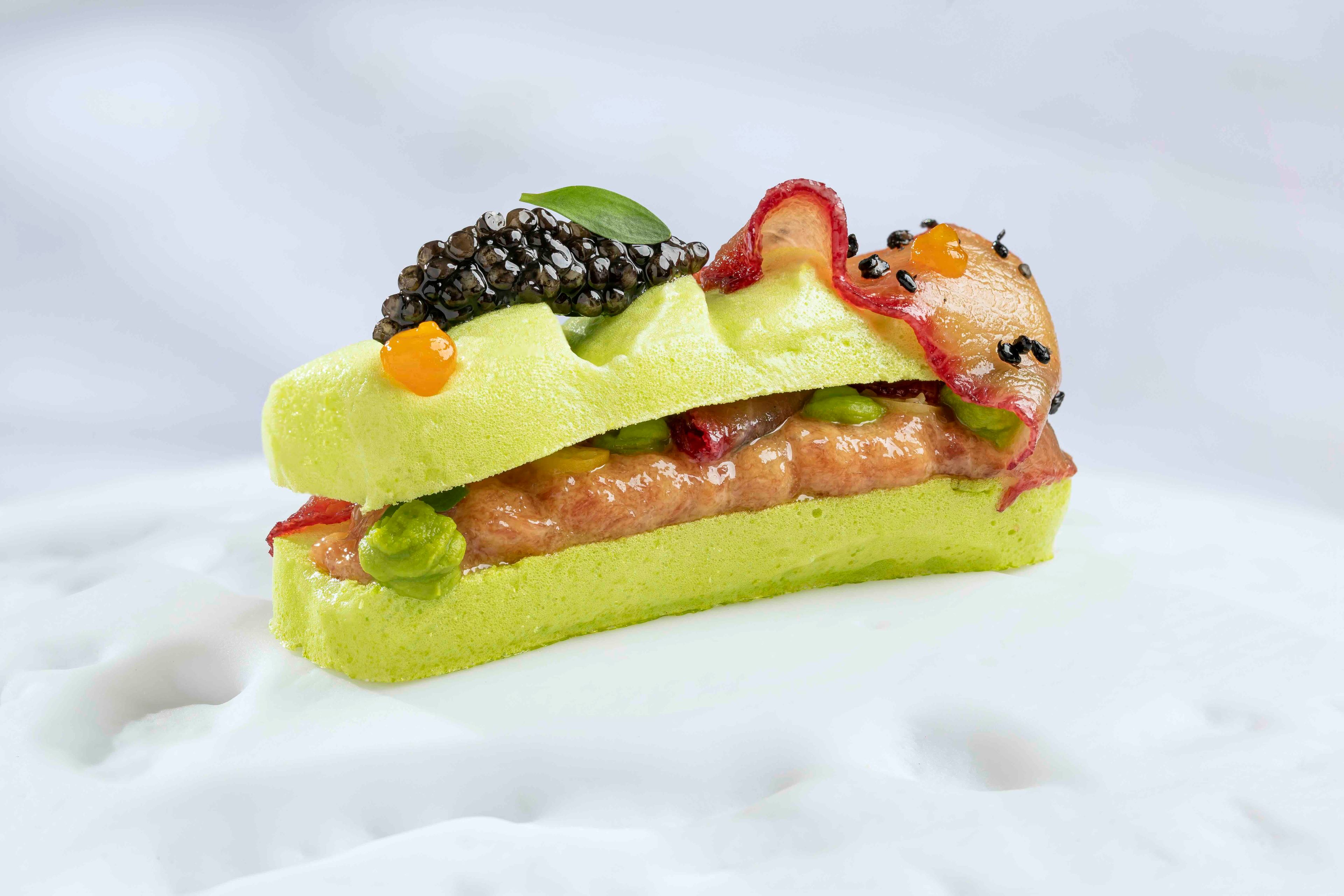
Even newcomers must master four dishes. Three are Basque canon: hake cheeks, hake in mussel sauce, and stewed veal tripe. These are the homage to his mother, aunt, and father. The fourth is the legendary millefeuille of eel and foie gras with onion and apple, a dish that sounds improbable but tastes inevitable. Many chefs have copied it; none have equaled its balance.
Berasategui records each dish on the menu with its year of creation — a personal timeline of both struggle and exuberant invention. He has moved through phases of technical experimentation, of edible gardens and multi-plate salads, of near-scientific reduction and pure rustic clarity. But he has never abandoned Basque identity. His tasting menu can begin with a farmer’s egg — sometimes served with a “liquid” puréed salad — because an egg, in Basque culture, is shape, life, morning, continuity.
The red mullet with crispy scales is dedicated to Oudill. The preparation is disarmingly simple but technically demanding: cleaned mullet with scales intact, brushed against the grain, placed on a tray, then anointed with hot oil. The scales puff like crystal. The iodine note harmonizes with a rockfish jus that gives the dish the gravity of the ocean.
Desserts, too, emerge from the landscape: celery ice cream with leaves and shoots, icy mango, fruit compote. A whisper of celery, a whisper of memory. “An idea from my morning walks past the farmhouses,” he says.
When orders come in, he scans them with quiet satisfaction: red mullet, eggs, and nearly as often, his mother’s hake cheeks. Proof that the emotional architecture of his cuisine remains intact.
The measure of a life
Ask him about awards, and he waves them away. Not the opening of Lasarte, not the global recognition. The proudest moment of his life came at 25, when he told his mother she never had to work again.
Everything else — the fame, the rankings, the brand, the empire — is secondary to that moment. Yet it is precisely this humility that has propelled him to the top of La Liste, a ranking built on thousands of guides, critics, and user reviews from around the world. Berasategui’s ascent mirrors the values that define him: constancy, craft, generosity, and reverence for origins.
In an era of culinary spectacle, he remains, above all, a worker. A man who believes in the simple Basque truth:
Whoever works, will eat.