Matsukawa, Tokyo
At Matsukawa, in every season, the meal ends with a bowl of white rice. Beside it come four things: salmon roe marinated in soy sauce, toasted nori, chirimen sansho (tiny dried sardines simmered with sansho berries) and fresh karasumi, mullet roe salted and only lightly dried, so that it stays soft. Red miso soup and pickles go with it, and the rice is refilled as often as the guest asks. In autumn a matsutake rice comes first; the white rice follows anyway. Everything before it changes month by month. Guests who write about Matsukawa, after a meal that may have included snow crab, fugu and abalone, often name this bowl as the high point.
The plate
Tadayoshi Matsukawa cooks in the kaiseki tradition, and his method is to take things away. A regular guest counts no more than three ingredients on a plate, often only one, and little seasoning. A Japanese reviewer describes the style as removing elements until the dish is refined; another says it relies on flavour rather than decoration. What remains has to carry the dish. Abalone is served thick-cut with a squeeze of sudachi; or scored finely with a knife and grilled over charcoal; or steamed, then grilled, and served with kuchiko (dried sea-cucumber roe) and a sauce of its own liver, bound with a little rice.
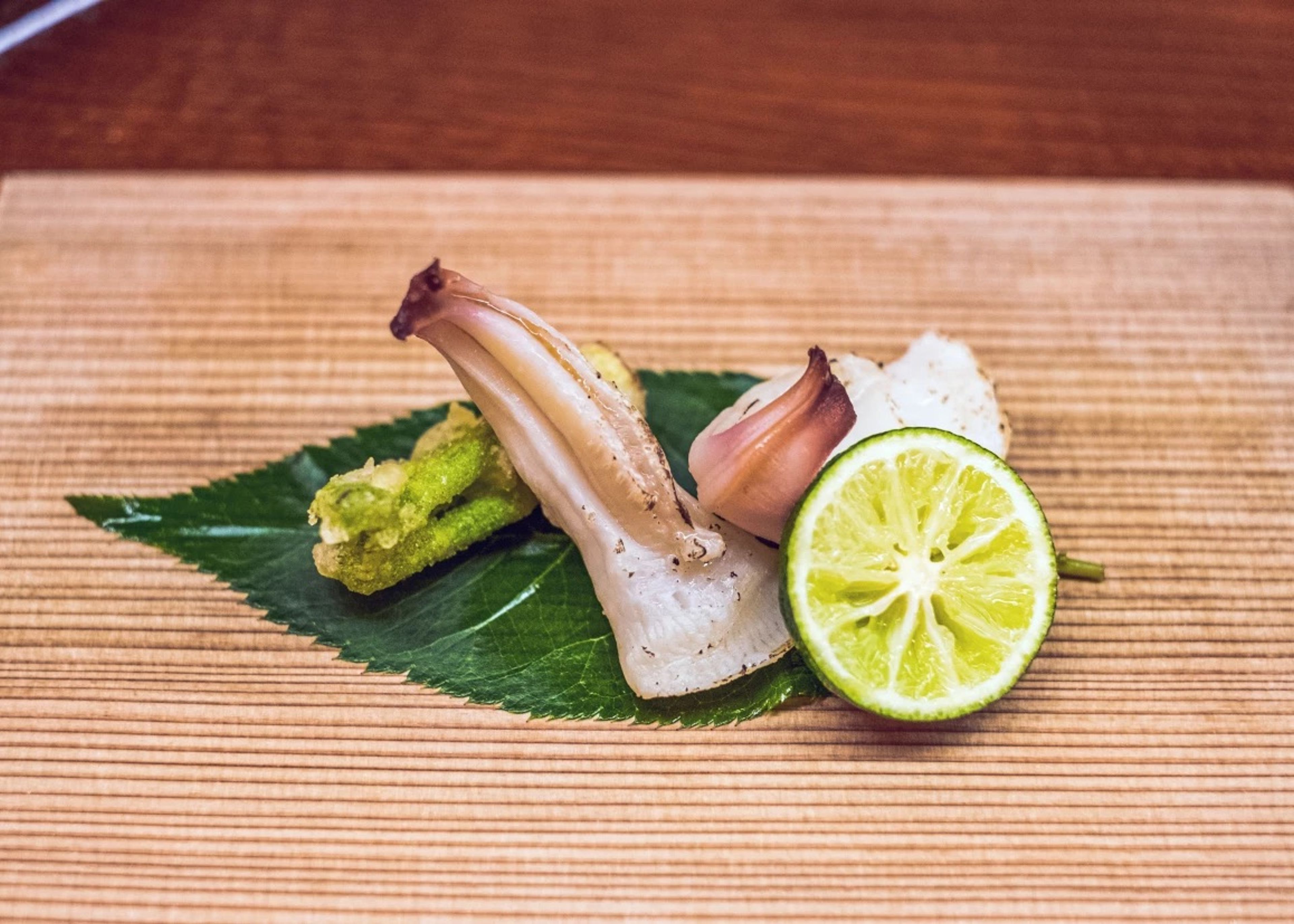
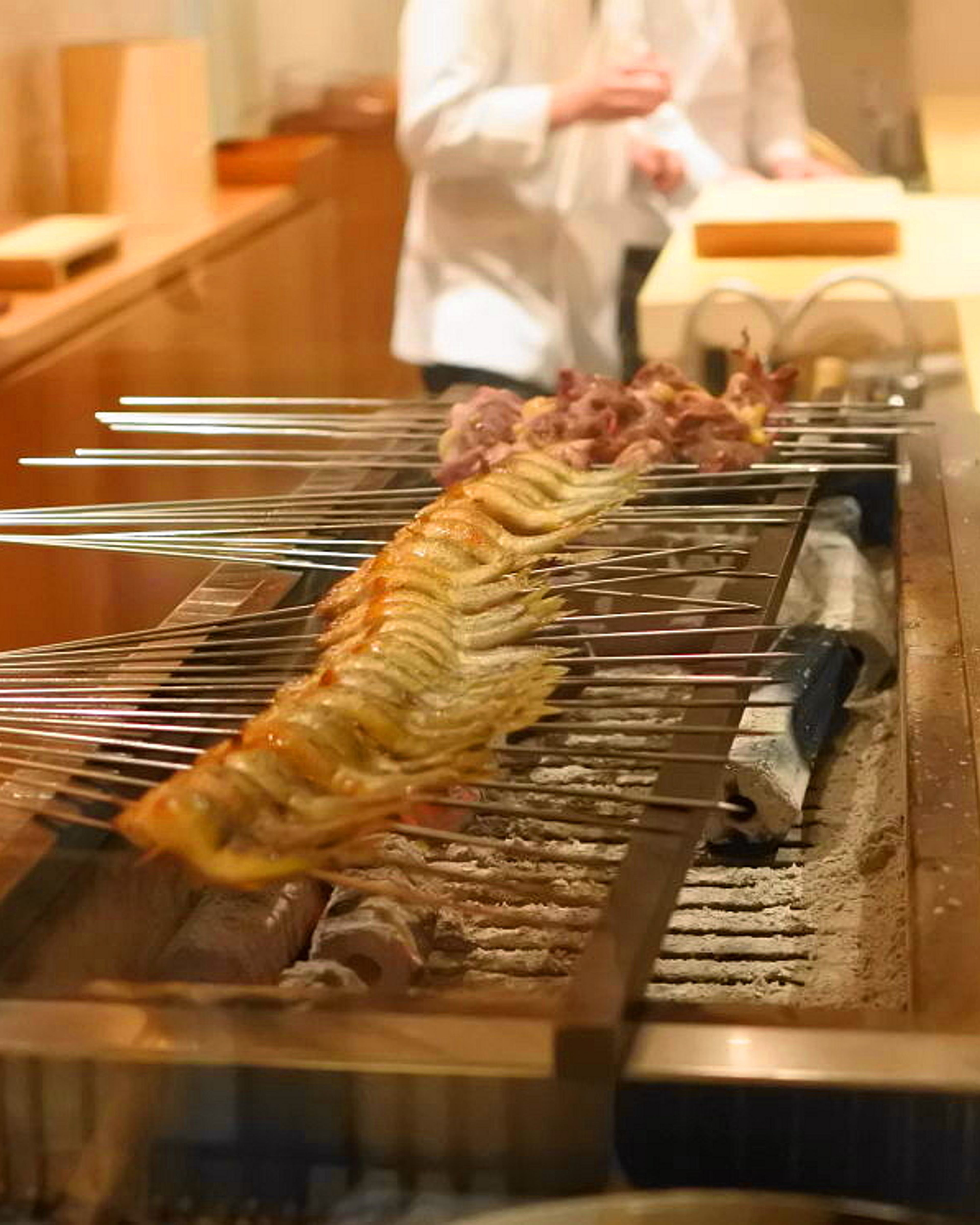
The technique is precise and not put on show. Hamo, the pike conger, is cut through its fine bones by knife and served as shabu-shabu in a strong dashi of Rishiri kombu; one critic credits the knife work for its texture. A crab claw goes into ice water so that its fibres open out like a flower. Kamo eggplant is grilled slowly until creamy. Many dishes are finished over a clay brazier in front of the guest, at the counter or in the private room: crab legs, karasumi mochi, hon-moroko from Lake Biwa grilled one by one.
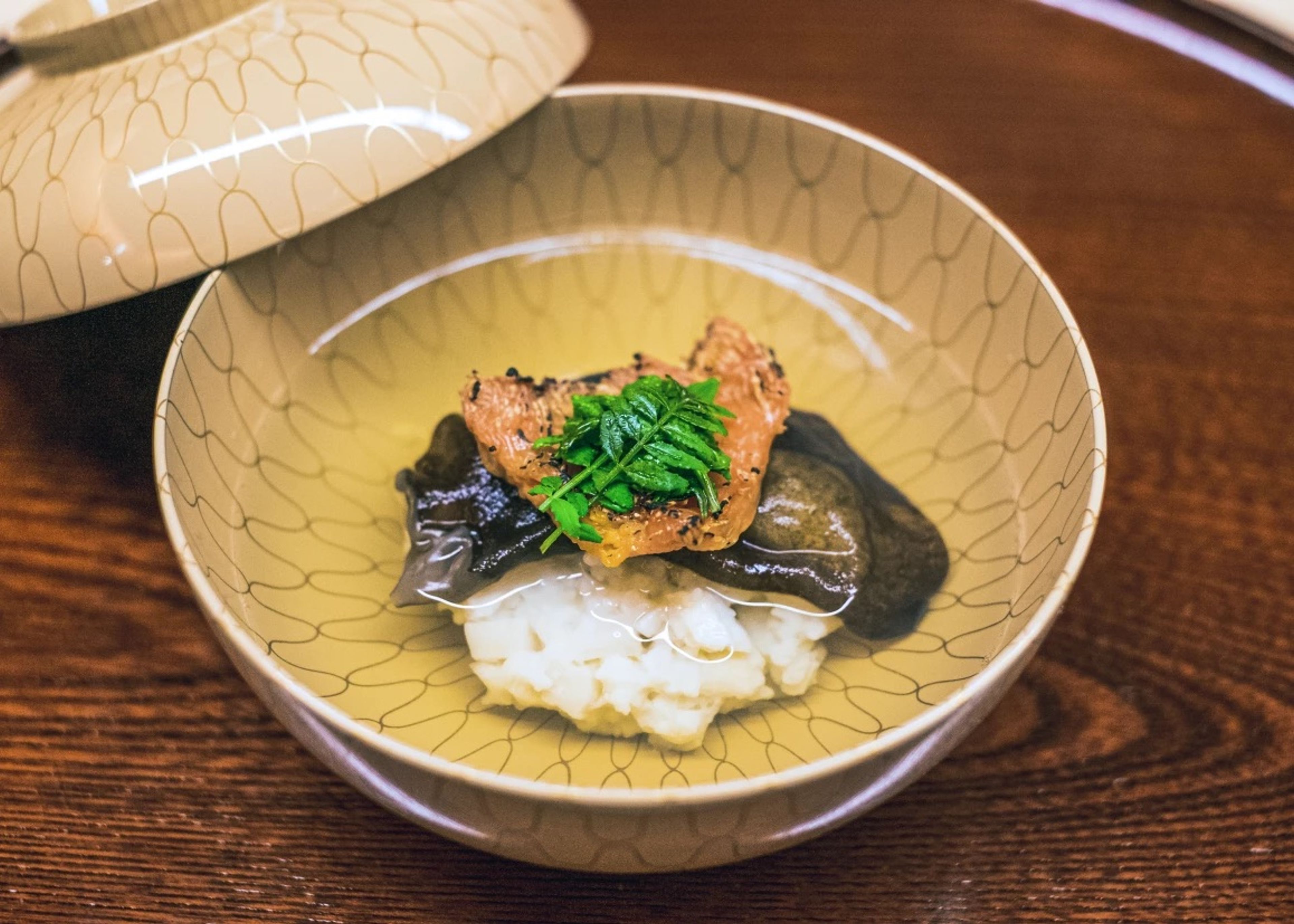
The base of the cooking is the dashi, adjusted for each dish. Visitors note a heavy use of kombu, which gives the food a western, Japan Sea character rather than a Tokyo one. One writer links this to Shiga, where Matsukawa trained: the region lay on the route by which kombu from Hokkaido reached Kyoto.
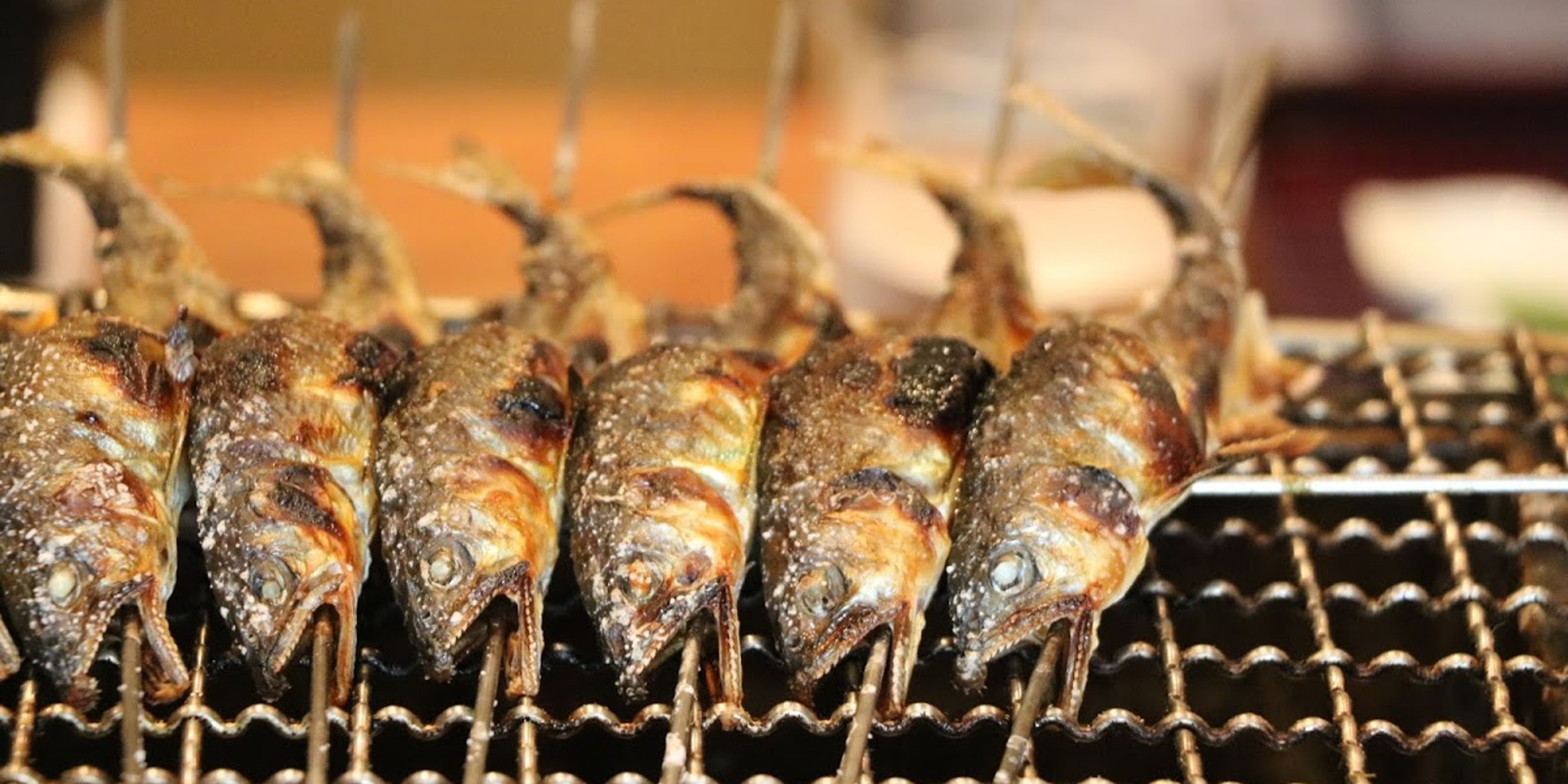
Not every plate convinces every guest. A Japanese critic who rated the dashi very highly found too much ginger in a soup, one of two sweetfish overgrilled, and questioned caviar on flounder. Caviar is the one imported luxury that returns regularly, on whitebait tempura or on steamed rice with crab. Beef appears too, Omi beef with matsutake or grilled beef with sansho and burdock; the same critic would rather not see beef in a Japanese restaurant.
The calendar
The Japanese calendar does not divide the year as Europe does. Spring begins at Risshun, around 4 February, not at the March equinox. The year has twenty-four solar terms, the sekki, taken from China around the sixth century, and each is split into three kō of about five days: seventy-two micro-seasons. Kaiseki cooks also distinguish three moments within an ingredient's season: hashiri, the first arrivals; sakari, the peak; and nagori, the last of it, eaten as a farewell. A menu built on this calendar does not change four times a year but almost continuously.
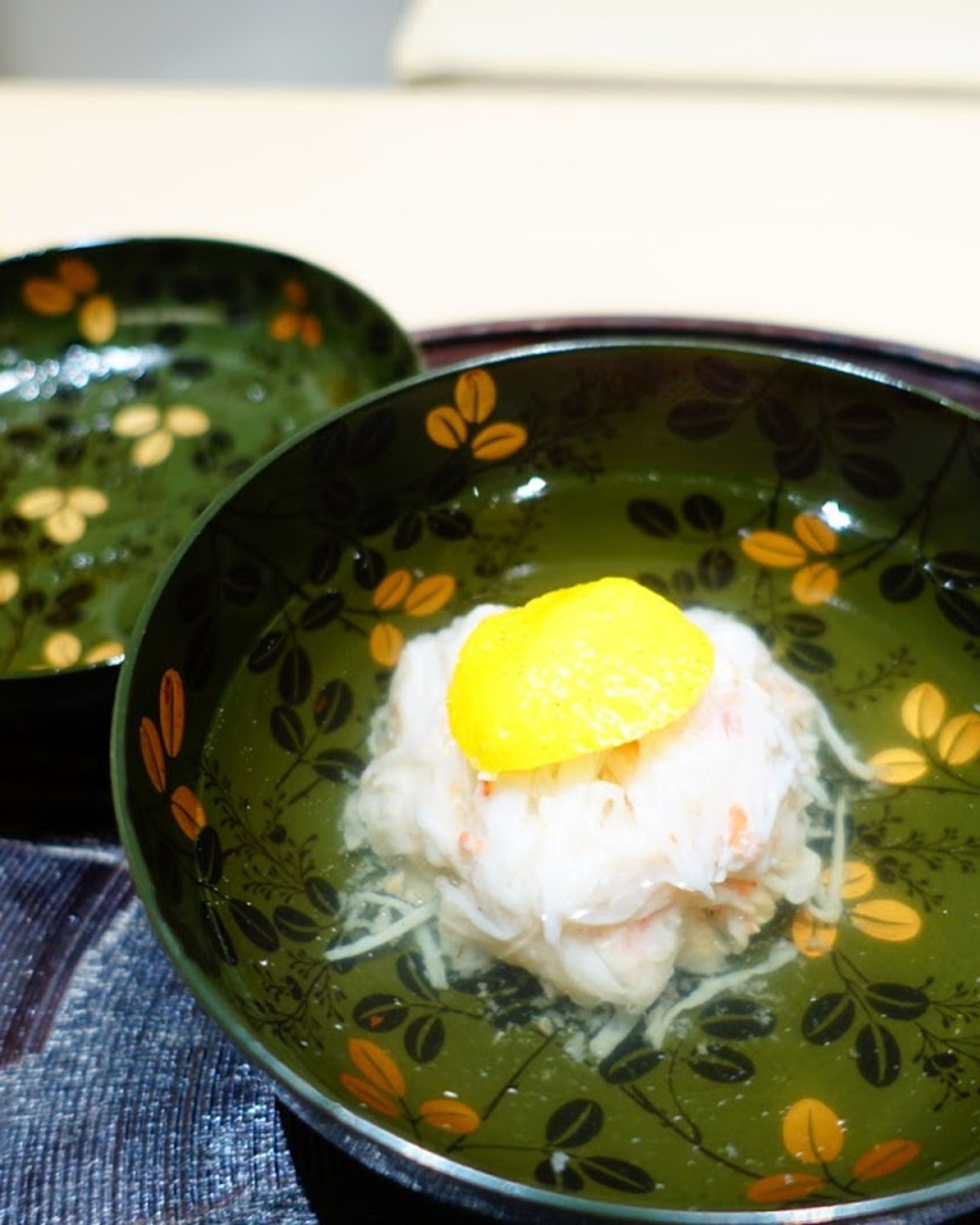
Seasonality is the structure of the meal, not a selling point. December belongs to the crab from Taiza, the small port on the Tango coast north of Kyoto: female crab eaten from its shell with its roe and miso, legs grilled over the brazier, crab dumpling in a clear soup, crab marinated in Shaoxing wine. Because a Tokyo kitchen cannot match the freshness of the port, Matsukawa also cures crab between sheets of kombu; one regular named it the dish he remembered most. Winter continues with fugu dressed with its own milt, salted sea-cucumber entrails, soft-shell turtle glazed with tare, and a soup of bear meat with daikon and sansho.
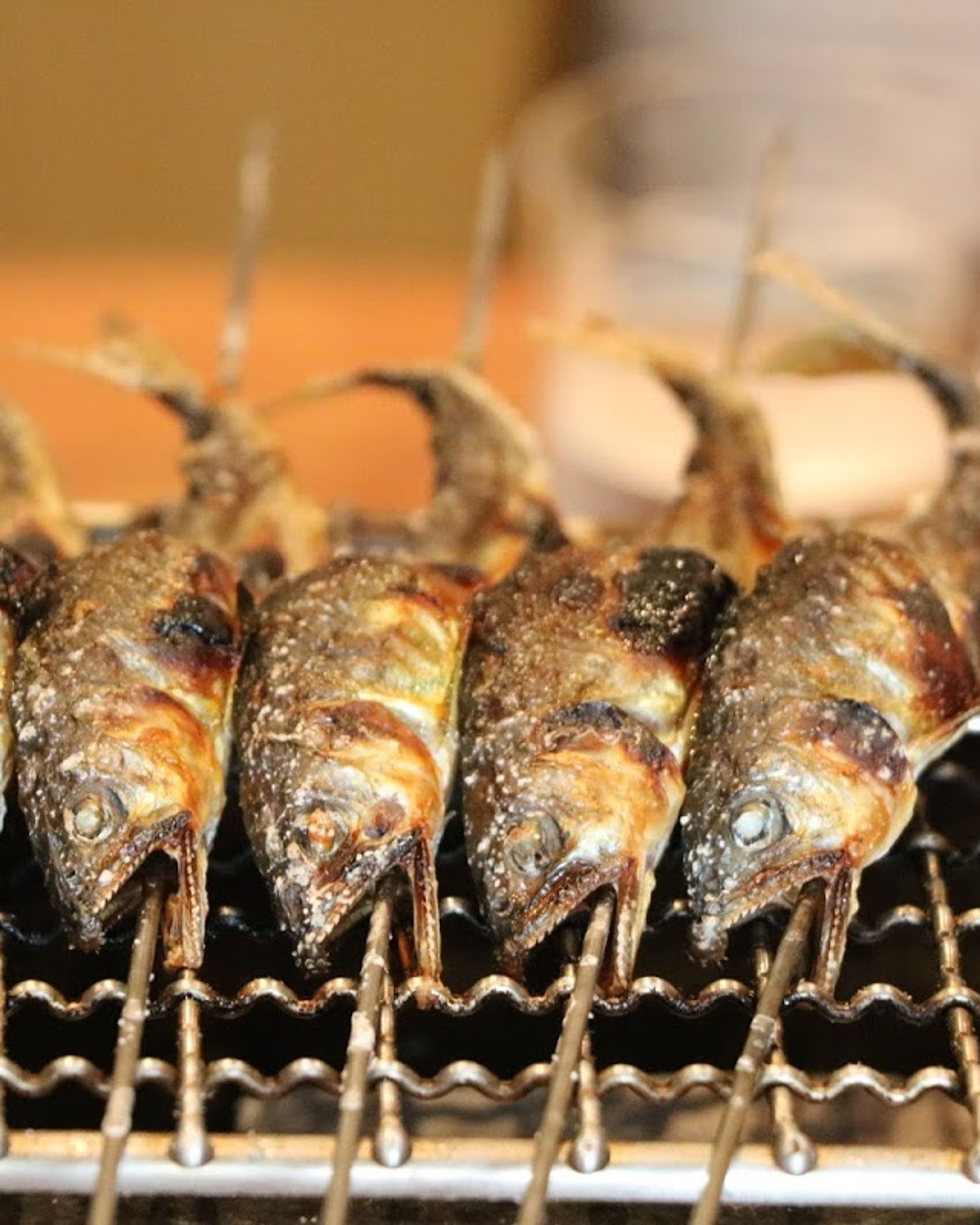
Spring brings whitebait tempura pressed into the shape of sushi, bamboo shoot stuffed with shellfish, moroko from Lake Biwa, tilefish with bitter rapeseed shoots and Tamba wild boar with burdock. Summer is hamo; a comparison of sweetfish from two rivers, the Miyama in Kyoto and the Ado in Shiga, grilled side by side; and cold noodles, soba or hiyamugi, served in a bowl carved from a block of ice. In autumn come the matsutake, two per guest in one meal: in a clear soup with crab dumpling, grilled with abalone, in a shabu-shabu with hamo, and at last in the rice.
The cook from Shiga
Tadayoshi Matsukawa gives no interviews. What is known of his career comes from guests and from the trade. He trained at Shofukuro in Yokaichi, today Higashiomi, in Shiga prefecture: a house that began as a teahouse at the start of the Meiji era and bases its cooking on Zen and the tea ceremony. Shofukuro has trained a number of the cooks who now run Japanese restaurants in Tokyo, among them Ginza Shinohara and Taninomoto. Matsukawa rose to head chef there; one account gives his age at the time as 28.
He then led the kitchen at Seisoka, a restaurant in the grounds of Tenkenji temple in Minami-Azabu, Tokyo, founded by Sanae Nagasaka, a student of the Mushanokōji Senke school of tea. Several other Shofukuro cooks worked there. After Seisoka he opened a restaurant under his own name. It is run by his own company, with him at its head: an owner-chef, with one address.
His reticence extends to praise. A guest who told him in 2013 that his was the best restaurant in Tokyo reported that Matsukawa declined the compliment and named Kyo Aji, the Shinbashi restaurant of Kenichiro Nishi, as the real one. Matsukawa's reputation was not built by press or campaigns. It grew through the recommendations of his guests.
The house behind the embassy
Matsukawa occupies the ground floor of a residential building, Akasaka Terrace House, on a quiet side street behind the United States Embassy, near Jōkoku-ji temple. Few people pass. Large windows face the street, the blinds half-drawn, so that a passer-by sees only the lower half of the private rooms. Inside are a counter of six or seven seats in dark, grained wood, a tatami room and private rooms with shoji, a tokonoma with a hanging scroll and a single flower, and a window onto a small garden; about twenty-two seats in all. The light is low, the cooks wear white, and dinner lasts close to three hours.
A table is hard to get. Most seats go to regulars, who rebook at the end of each meal, and counter seats are said to be taken two to three years ahead. Walk-ins are not accepted. Newcomers arrive through a regular or through a cancellation. Payment is in cash; dinner costs from around 60,000 yen.
Matsukawa shared first place in the world in LaListe 2025, 2026 and 2027.
The menu changes every month. The bowl of white rice at the end does not.
 96.0
 82.5
 99.5