The Schwarzwaldstube: a family and its cook
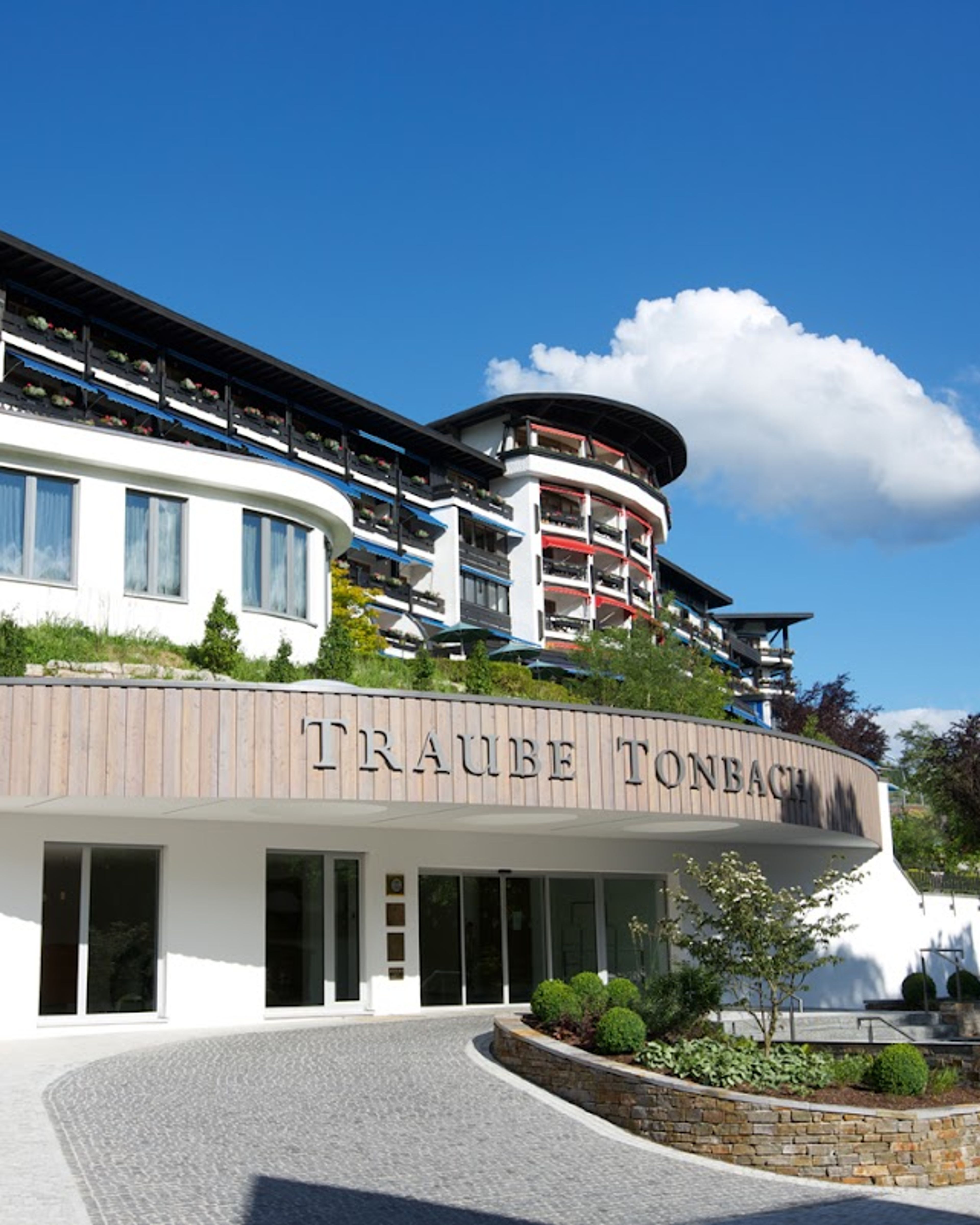
Schwarzwaldstube, Traube Tonbach, Baiersbronn
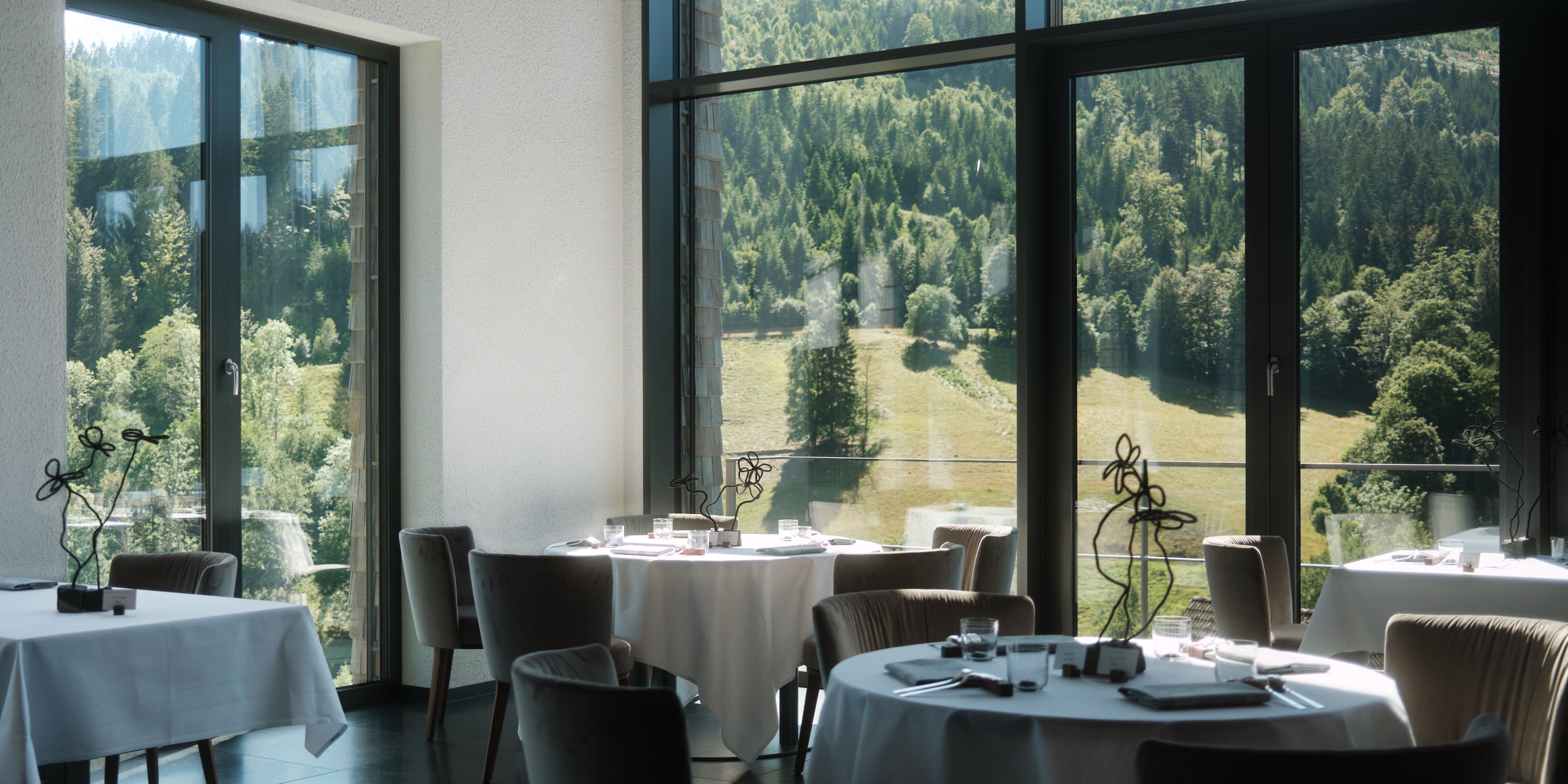
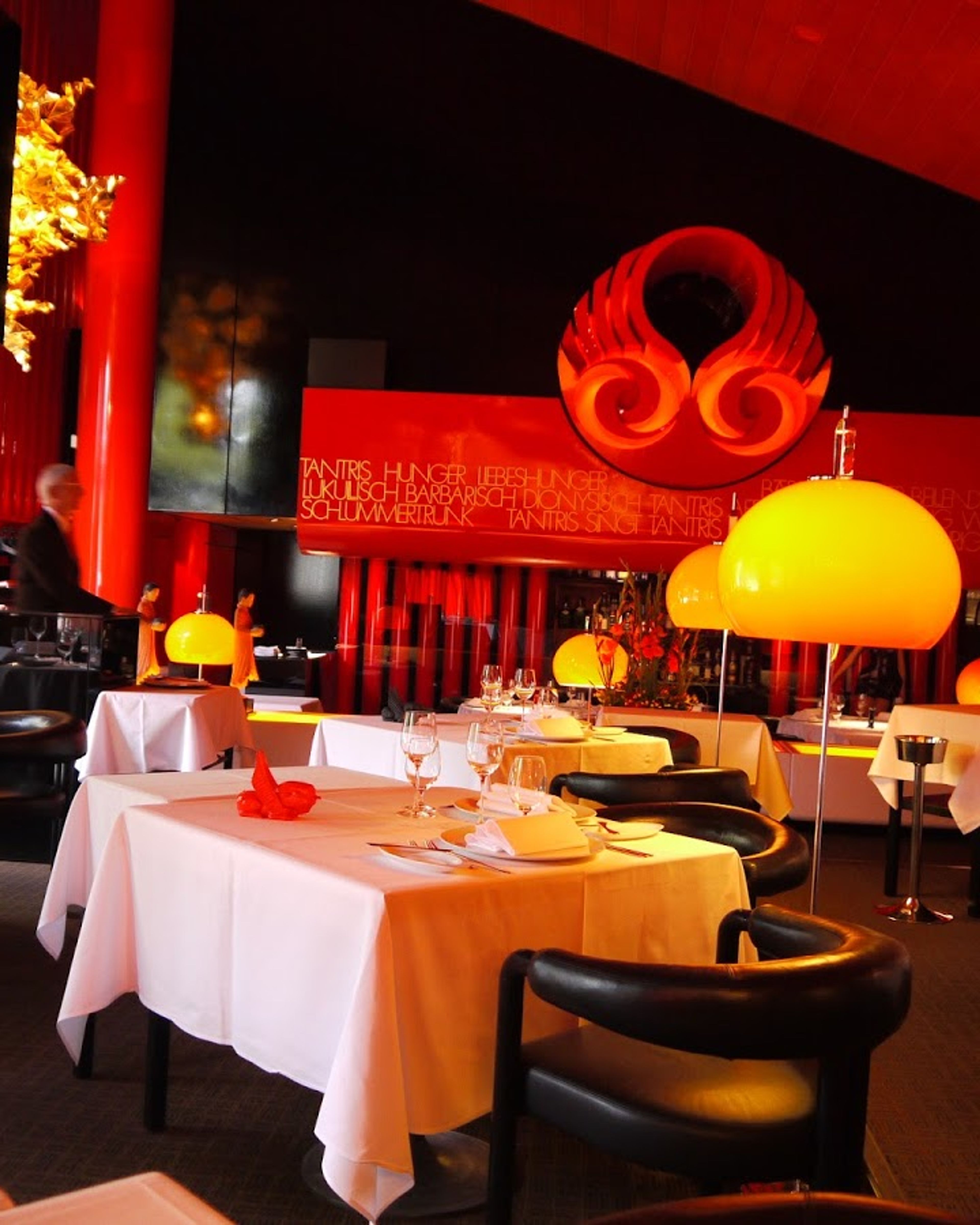
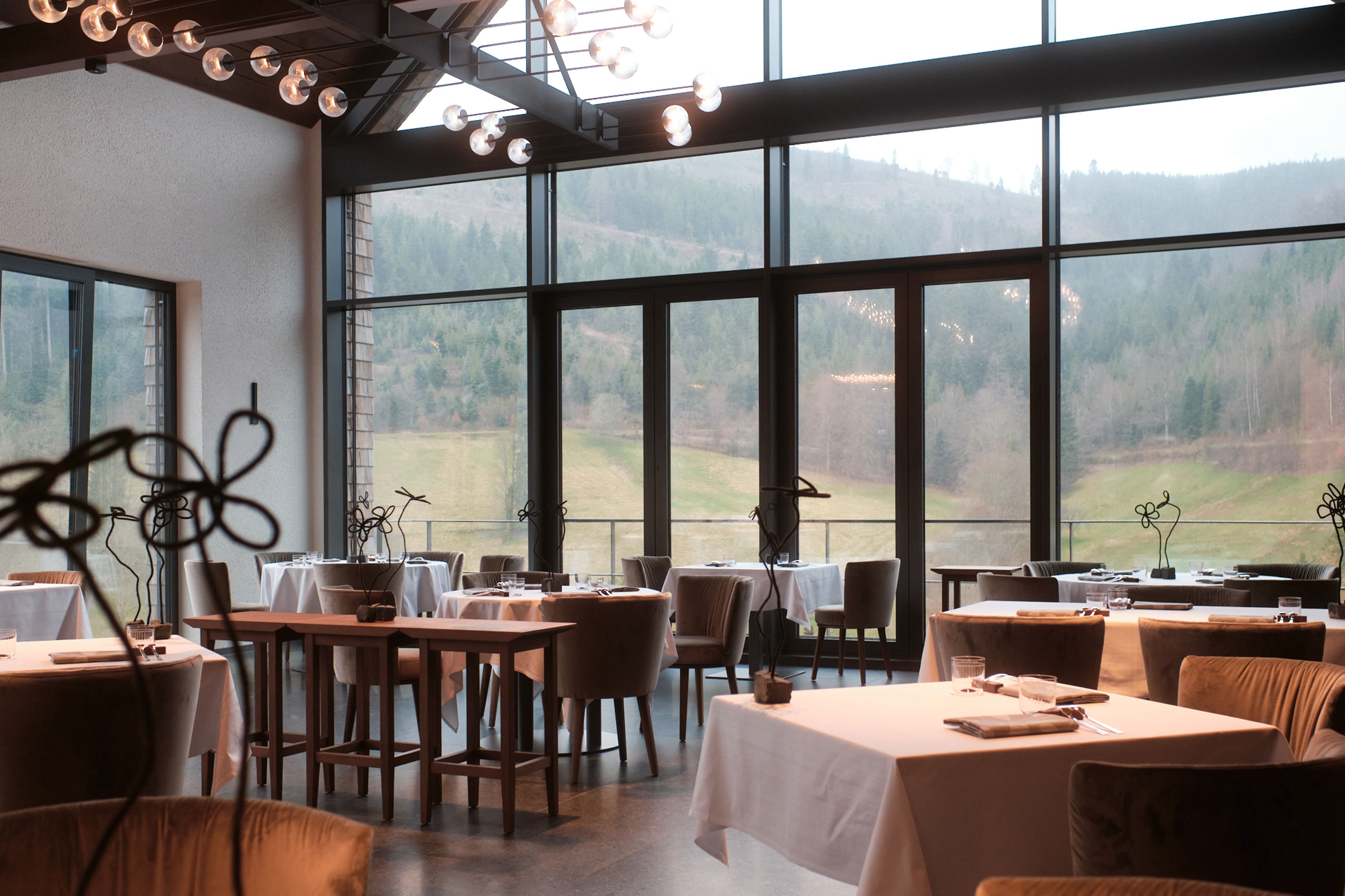
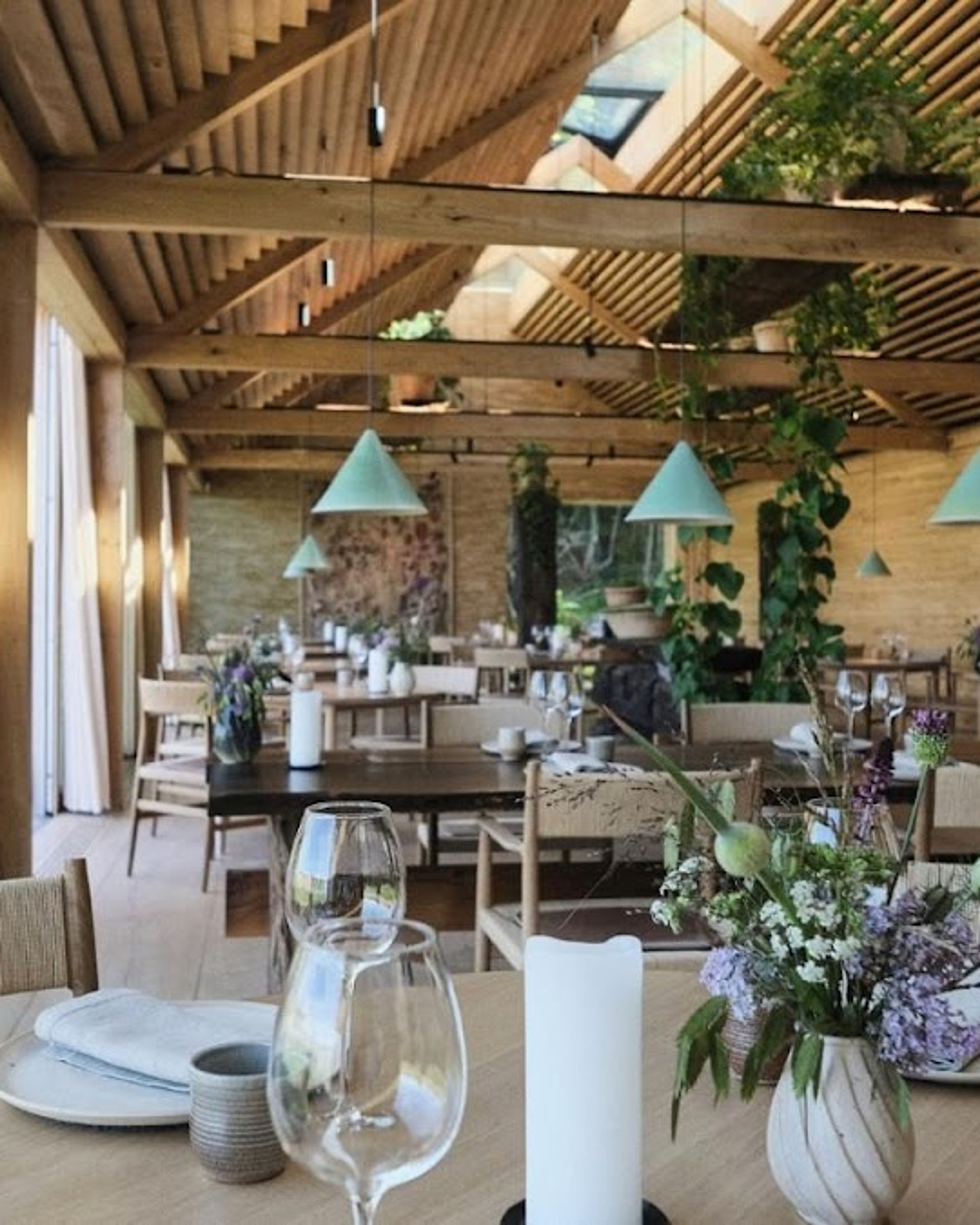
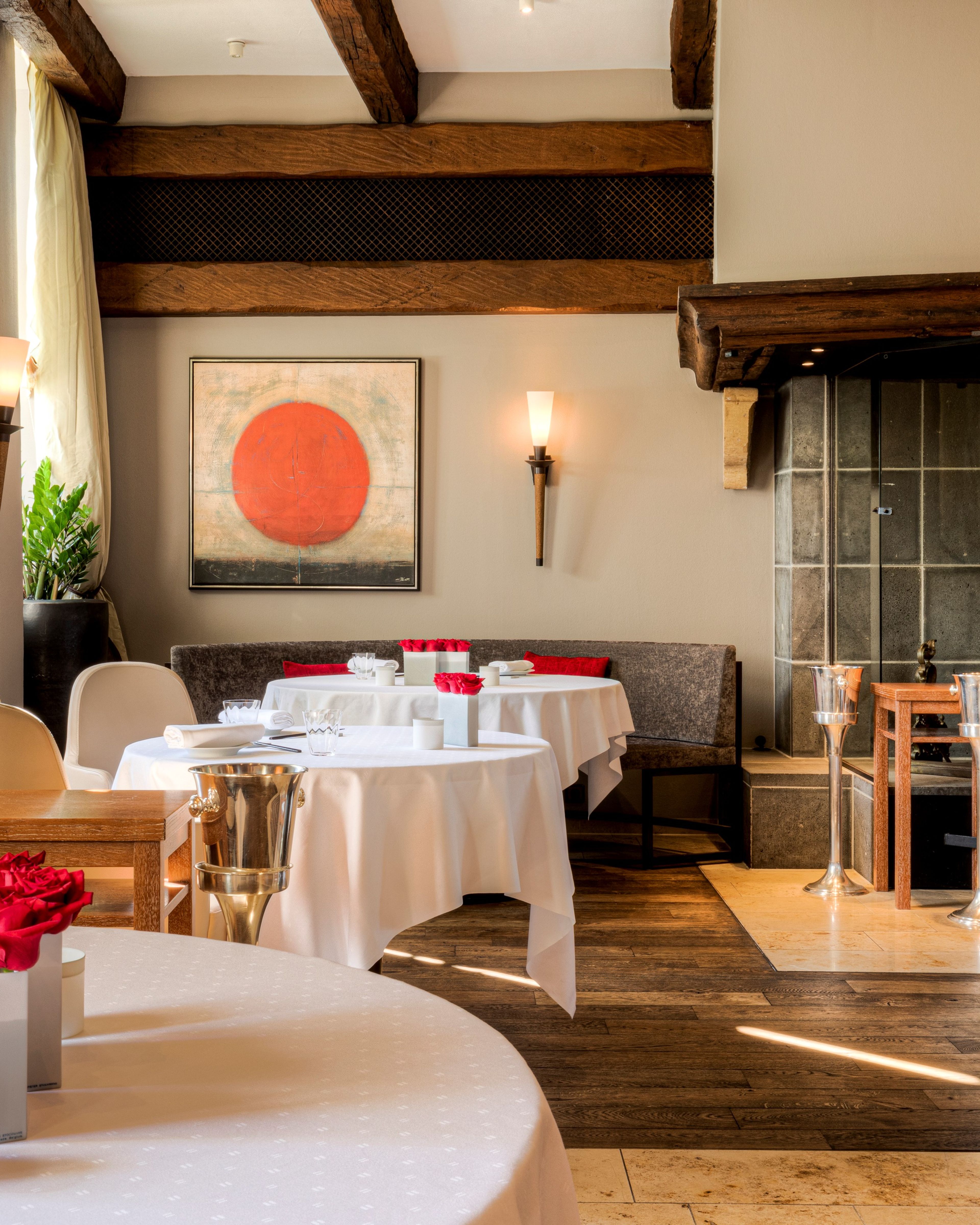
The dining room faces the hotel across the road. Its gable is glass from the floor to the ridge, and the ceiling rises high under a timber frame, like a village chapel. Through the windows: the meadows of the Tonbach valley, the shingled farmhouses, the dark line of the forest, and on the slope two herds, one of goats, one of sheep. Eleven tables, about thirty guests in an evening. The house on the other side of the road has belonged to the same family since 1789. The Finkbeiners built this room, twice; Torsten Michel cooks in it.
The plate
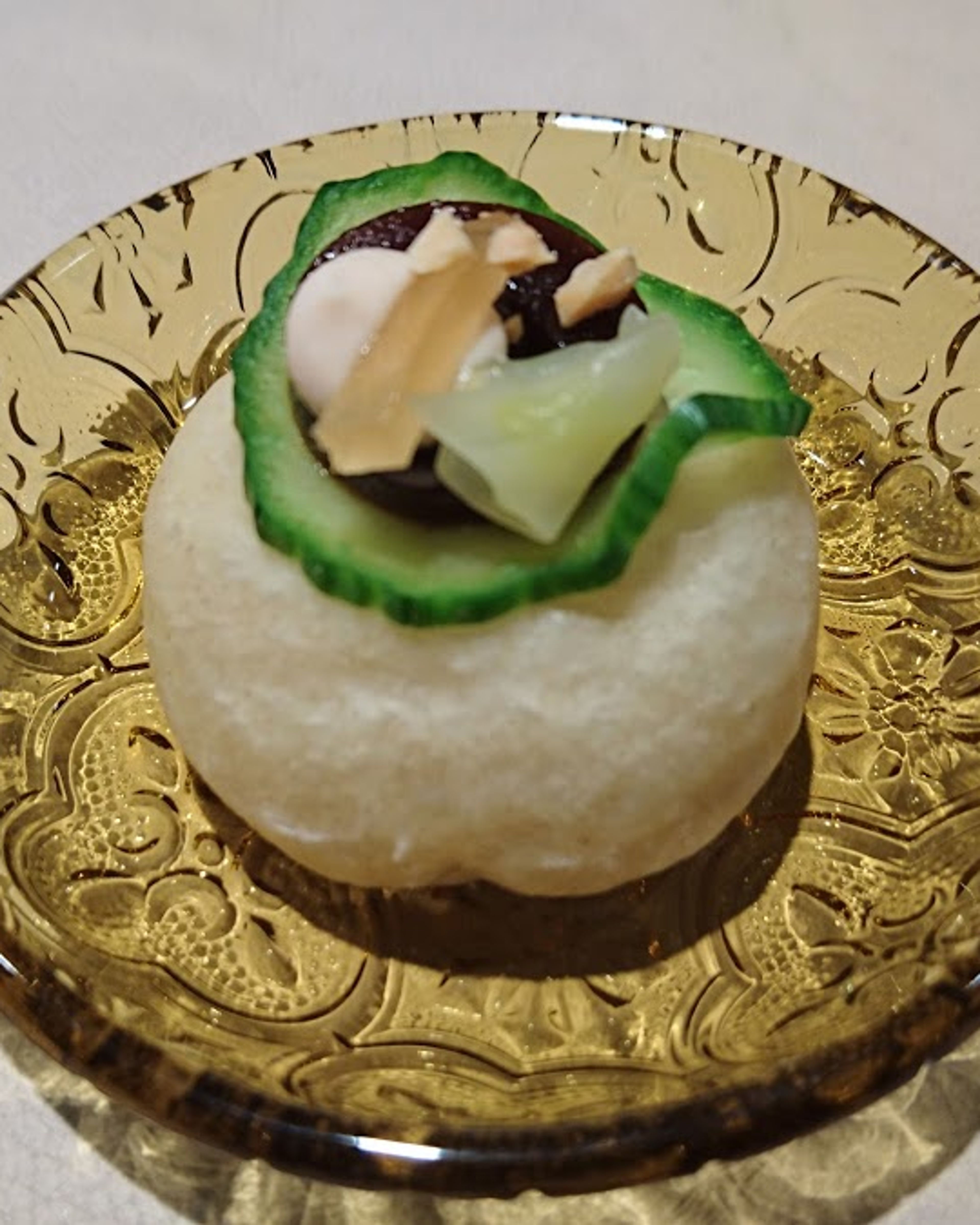
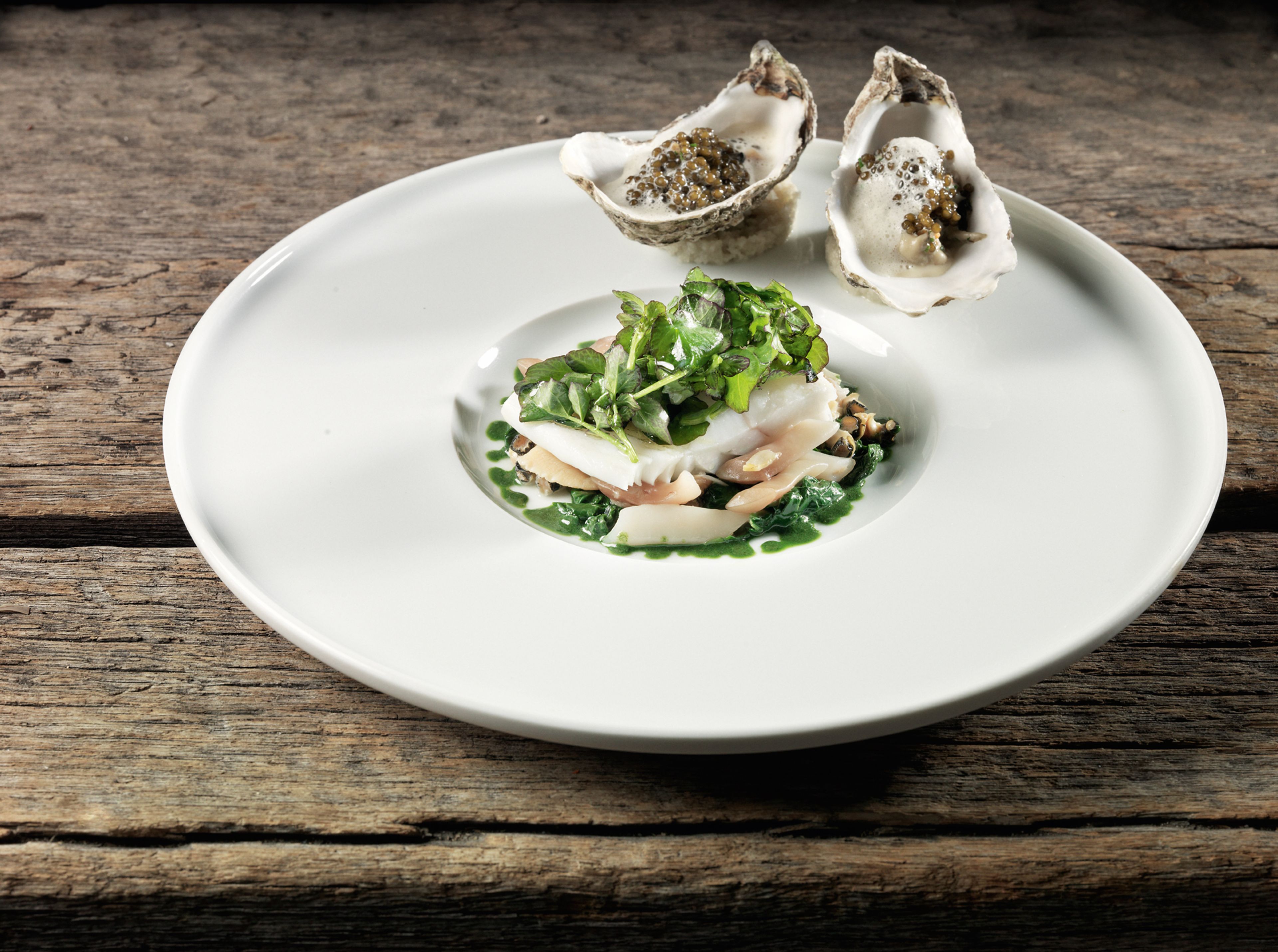
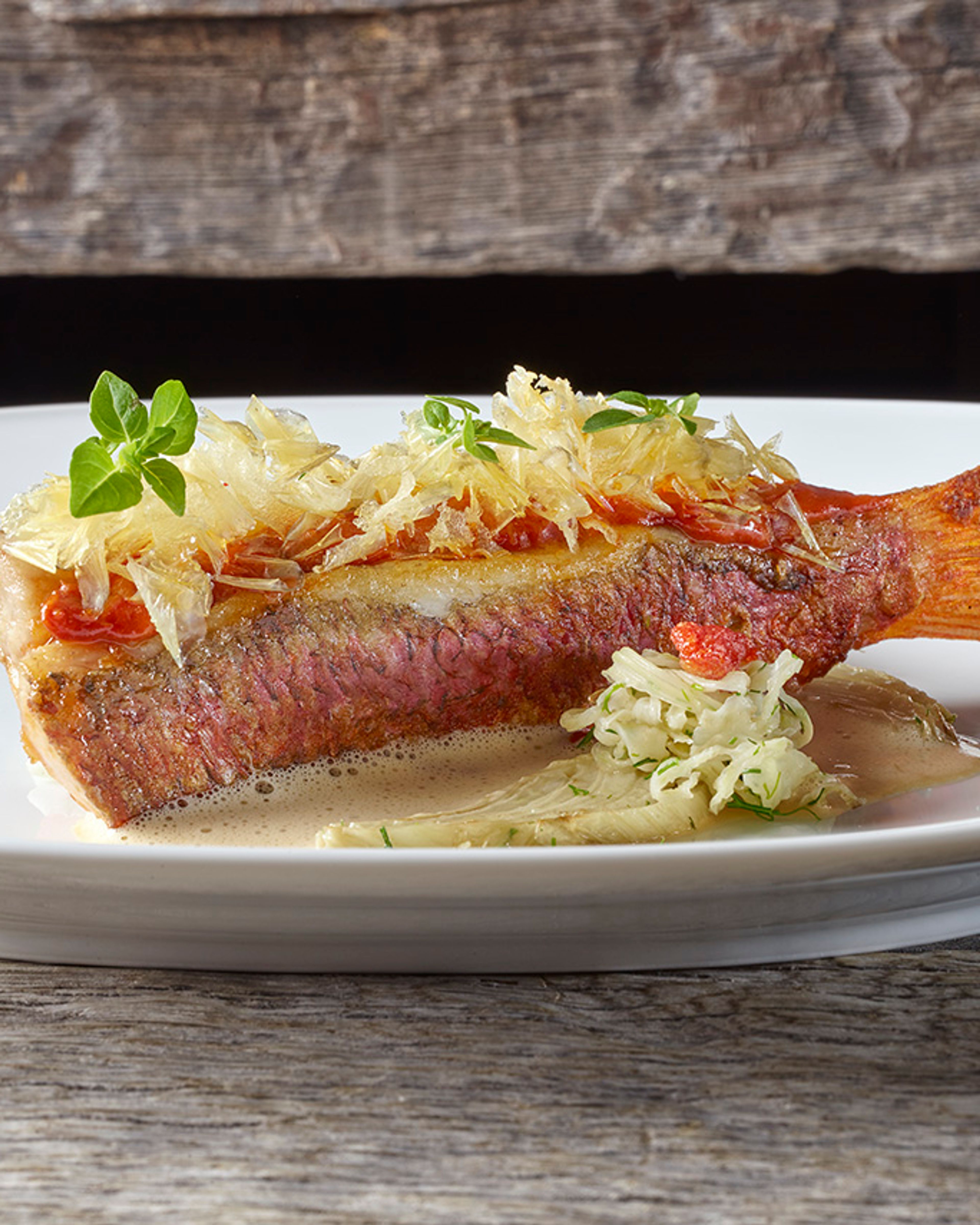
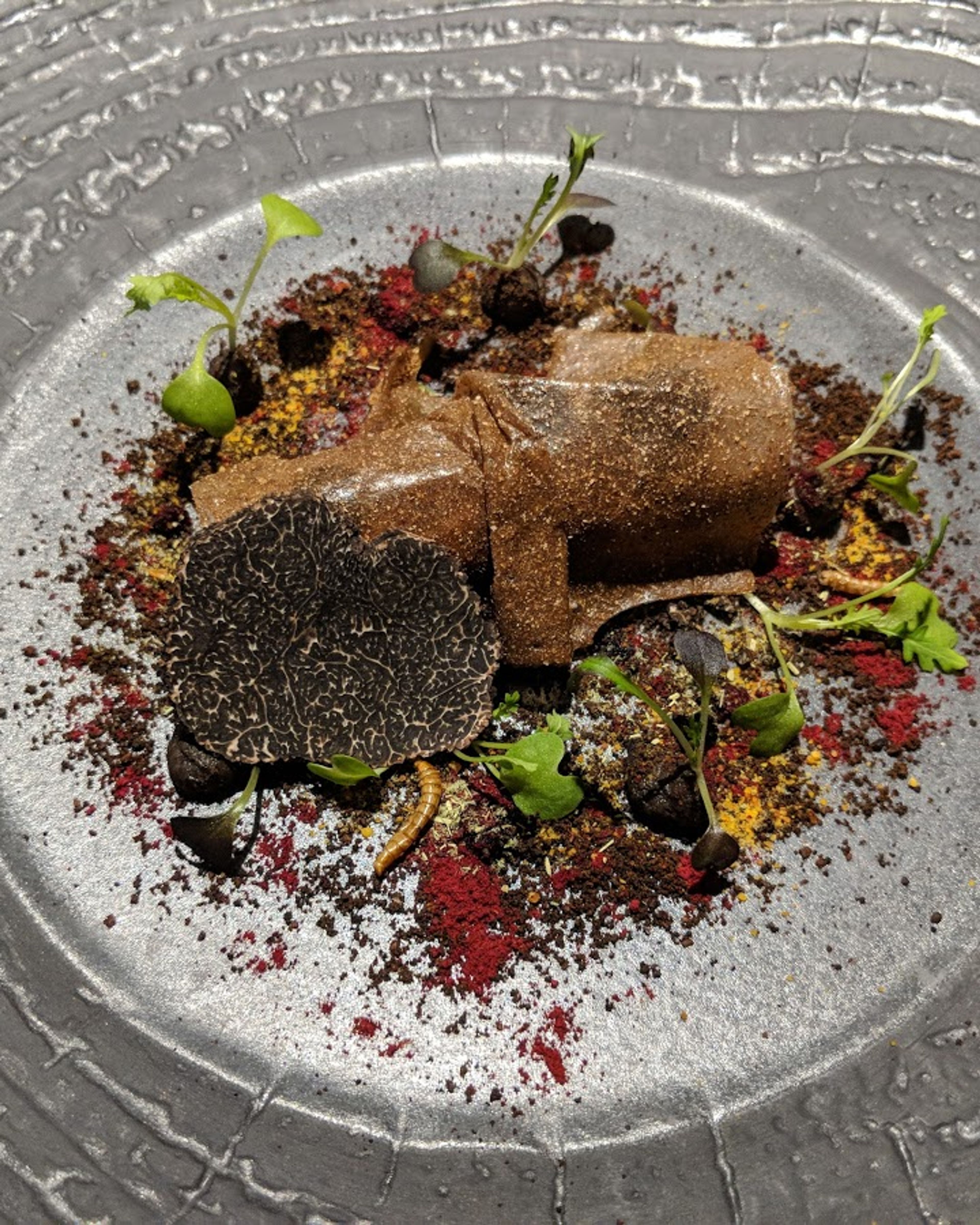
The autumn menu opens, à la carte, with a gesture Paul Bocuse made famous: a clear essence of young wild boar from the local forest, baked under a lid of puff pastry. Under the crust come braised boar shoulder, pickled mushrooms and black truffle; beside it, small samosas spiced with mace. Wild hare follows the old French order: the saddle gratinated, the shoulder braised à la royale, with a sauce rouennaise sharpened by sour cherry and Arabica coffee. A grenadin of veal loin wrapped in lardo di Colonnata comes under a crust of wild mushrooms and walnuts, with a sauté of sweetbreads and kidneys and a jus from the braised breast, finished with sherry. A whole sea bass, baked in salt dough for two, is served on steamed spinach with razor clams, a watercress emulsion and an oyster mousseline with caviar. The Norwegian langoustine sits on wild mushrooms, with a shellfish jus and a mushroom butter scented with vin jaune.
At the bottom of the same card, at forty euros, the price of the cheese trolley, is a dish every Swabian household knows: Käsespätzle, made here with Comté Grande Garde and Beaufort, with a dressed lettuce, pickled garden cucumbers, sour cream and dill.
The kitchen is French and classical, and does not hide it. Michel calls it contemporary French cooking, entirely focused on the best products of each season. Its strength is the sauce: rouennaise, royale, mousseline, a white-wine butter sauce for scallops, the vin jaune butter for the langoustine. The borrowings travel far, but they season rather than lead: doubanjiang, the Sichuan bean paste, in the bouillon of braised venison shoulder; a kabayaki glaze, smoked eel and ginger with Japanese beef from Kagoshima; a Mumbai curry vinaigrette and a radish raita on the vegetarian menu. Each time, the French structure holds the dish together.
Most of the produce comes from farmers in the region, the rest from Austria, France and Switzerland: the fennel of Jean-Luc Le Gall in Brittany, Gillardeau oysters, Styrian pumpkin-seed oil in an ice cream. Michel uses the whole animal. The veal loin arrives with sweetbreads, kidneys and breast; the hare and the venison each come as saddle and shoulder. He likes asparagus, morels, ceps, young carrots and game from the Black Forest, and has no signature dishes: each season brings its own. Cheese comes from the van of the Alsatian affineur Antony. The pastry chef Piet Gliesche takes the Black Forest apart: a chocolate soufflé of Guanaja and Abinao with fermented long pepper, a sour-cherry broth, cherry compote and an ice cream made with Black Forest kirsch.
The family
In 1789 Tobias Finkbeiner opened a tavern for woodcutters in the Tonbach valley. His descendant Heiner Finkbeiner, born there in 1949, is the man who brought haute cuisine to the Black Forest, and he did it as a cook. After an apprenticeship in Bad Wildbad he cooked at the Bayerischer Hof in Munich and at the Bachmair on the Tegernsee, studied at the hotel school in Heidelberg, and worked at the reception of the Hôtel des Bergues in Geneva and the Park-Hilton in Munich. From 1974 to 1976 he was demi-chef, then chef de partie, at the Tantris in Munich under Eckart Witzigmann, the Austrian who brought nouvelle cuisine to Germany. "That time shaped me," he says. "It was what made me want to experience nouvelle cuisine and bring it to Baiersbronn." He took his master chef's examination in Heidelberg, with Dieter Müller at the next desk, and worked at Brenners Parkhotel in Baden-Baden. Then his uncle Willi, who owned the Traube, wanted him home, and a scathing review of the house in a trade paper settled it.
From 1977 he ran the new Schwarzwaldstube, with a cook he had brought from the Tantris at the stoves. Fine produce did not reach Baiersbronn. With borders still closed, he brought shellfish back from France hidden under the vegetables in his car, his son recalls. In 1976 he had married Renate Fischer, a trained hotelier, who has shaped the house beside him ever since: its style, its rooms, and later its reconstruction. He became director of the hotel in 1984 and its owner in 1993.
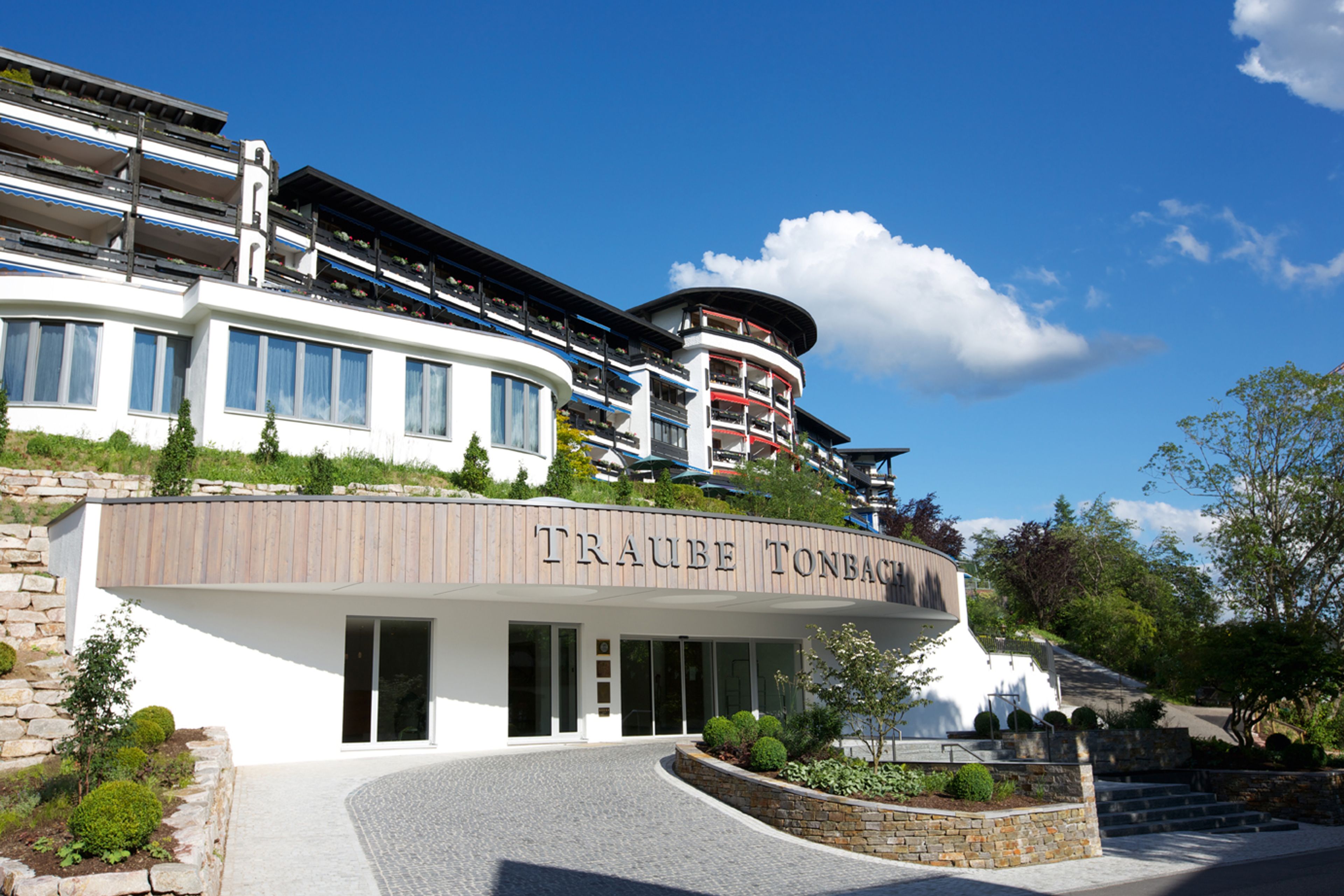
The family raised its successors the same way. The children were free to choose, but anyone who wanted to come back had to gain experience elsewhere first. Sebastian Finkbeiner trained as a cook, among other places at the Tantris under Hans Haas, his father's old school, and returned to Tonbach at twenty-nine. This year Heiner and Renate handed the Traube Tonbach to their sons Matthias and Sebastian, the eighth generation.
The kitchen they built
In April 1976 a twenty-one-year-old cook named Harald Wohlfahrt joined the Traube's kitchen. Four years later he ran the Schwarzwaldstube, and he stayed for some forty years. Heiner Finkbeiner gave him the room and kept the house running around him. Wohlfahrt's kitchen trained a generation of German cooks who went on to lead their own houses, among them Christian Bau, Kevin Fehling and Thomas Bühner, and a forest village became a place people travel to for dinner. When Wohlfahrt left, the family looked for no star from outside. The successor came from inside the kitchen.
The pilot who became a cook
Torsten Michel was born in Dresden in 1977. "As a boy I only ever wanted to fly," he says. He took his Abitur to get into the cockpit; a red-green colour weakness ended the plan just before it came within reach. He trained instead in the kitchen of the Hotel Bellevue in Dresden, then cooked at the Bülow Residenz under Stefan Hermann, the Dresden chef who later founded bean&beluga. It was Hermann who recommended him to the Traube Tonbach.
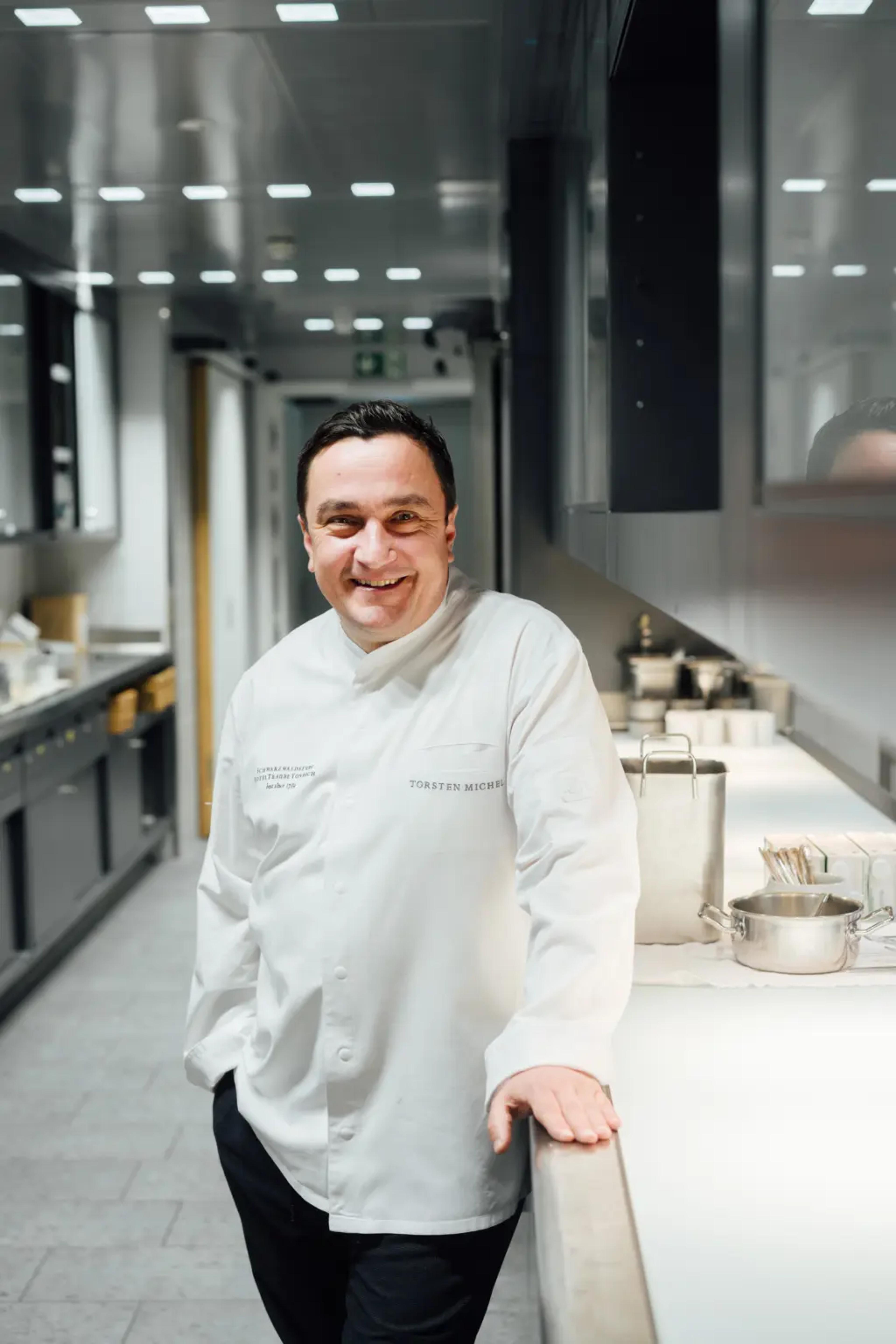
He arrived in Baiersbronn as a commis, aged twenty-six, intending to stay a year or two and then move on to Alain Ducasse. He worked through every station, became Wohlfahrt's sous-chef, and spent short periods at The Fat Duck, L'Arnsbourg and Noma. He stayed because Wohlfahrt offered him the succession. Michel has a long memory for food: of a dinner of forty-five courses at El Bulli, he can still name thirty-eight. "In principle I want to be curious about everything," he says, "otherwise I'm only limiting myself."
His definition of the job is short: "Anyone can cook well once. Cooking well every day is the art." He speaks of continuity the way others speak of creativity, and does not run the room alone. The sommelier Stéphane Gass has been in charge of the wine for more than three decades and watches over some 23,000 bottles. The two have worked side by side for two decades, on either side of the pass. "Stéphane takes care of the wine, we make the dishes. He knows the structure of my cooking."
The fire
One January night, the main building of the Traube Tonbach, some 230 years old, burned down, and the Schwarzwaldstube with it. Michel lost everything in the kitchen: knives, cookbooks, pots, silver, porcelain, about 10,000 bottles of wine. No one was hurt. Before the embers were out, Heiner and Renate Finkbeiner had decided: "We carry on." "We stand together as a family now, and we want to rebuild," said their son Matthias.
Four months later the family opened a temporary restaurant in containers on the roof of the hotel's garage, and Michel's team cooked there. Renate Finkbeiner took charge of the new building and gave it one rule: preserve history, do not copy it. It opened a little over two years after the fire. Heiner Finkbeiner credits Michel with keeping the team together through those years.
A family house
The restaurant belongs to the hotel, the hotel to the family, and the chef is one of the house. Michel has cooked there for more than twenty years. "Torsten Michel is someone for whom his job always comes first," says Heiner Finkbeiner, who ran the house for four decades.
The Schwarzwaldstube shared first place in the world in LaListe 2024, 2025, 2026 and 2027.
At home, Michel cooks Spätzle too, made the day before so they hold their shape, with a good sauce, and a Zwiebelrostbraten every four weeks. In the restaurant or at home, the test is the same: not once, but every day.
 80.0
 99.5
 92.5
 99.0